Saving Private Ryan In Normandy: Real Places Behind The Film
The opening sequence of Saving Private Ryan put Omaha Beach into millions of memories. The real beach, the cemetery above it and the cliff at Pointe du Hoc are all open to visitors, and this guide maps the film's places onto the tours that actually reach them.
Short answer
The film's Omaha landing scenes correspond to the real Omaha Beach at Saint-Laurent-sur-Mer, the cemetery scenes to the Normandy American Cemetery at Colleville-sur-Mer, and Pointe du Hoc, the Ranger cliff the film itself does not show. Half-day tours from Bayeux from $112 per person cover all three, and Paris day trips from $124 per person do the same in 12 to 14 hours.
The opening minutes of Saving Private Ryan did something few films manage: they made a specific stretch of Norman sand feel personal to people who had never heard of Saint-Laurent-sur-Mer. Visitors arrive at Omaha Beach every week carrying that memory, and many of them ask the same question in different words. They want to know whether the places on screen are the places on the map, and how to stand on them without spending a week working out the logistics.
The short answer is yes, the places are real and reachable. Omaha Beach is a public shoreline, the Normandy American Cemetery above it at Colleville-sur-Mer is free and open daily, and Pointe du Hoc is free to enter. The Normandy D-Day Tour homepage compares the tours that connect them, and this guide narrows that comparison to what a film-led visit actually needs: the beach, the cemetery, the cliff, and enough time at each. The Omaha Morning Half Day Tour from Bayeux, from $112 per person and rated 5 from 260 reviews, visits all three in about four hours, which is why it anchors most of the recommendations below.
One boundary first, because it matters. This guide is about the real places and how to visit them, not about how the film was made. Production details, filming locations, budgets and cast trivia are somebody else's article. The connection worth exploring is narrower and more interesting: a work of fiction that sent a generation of visitors to a coastline where about 160,000 Allied troops, including about 73,000 Americans, came ashore on 6 June 1944.
How Does The Film's Omaha Opening Relate To The Real Beach?
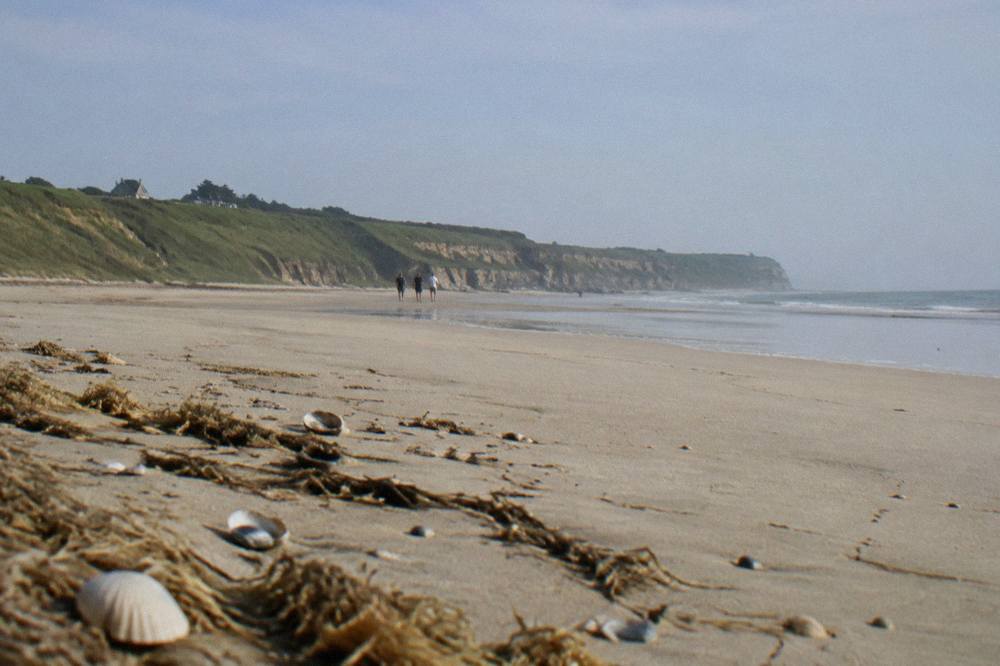
The film's landing sequence corresponds to Omaha Beach, the American-angled stretch of shoreline between Saint-Laurent-sur-Mer and Vierville-sur-Mer, roughly 8 kilometers of sand backed by low bluffs. It is a public beach today, free to walk at any time, and every serious American-sector tour from Bayeux, Caen or Paris stops here. What the film compressed into minutes took hours in reality and cost more than any frame suggests.
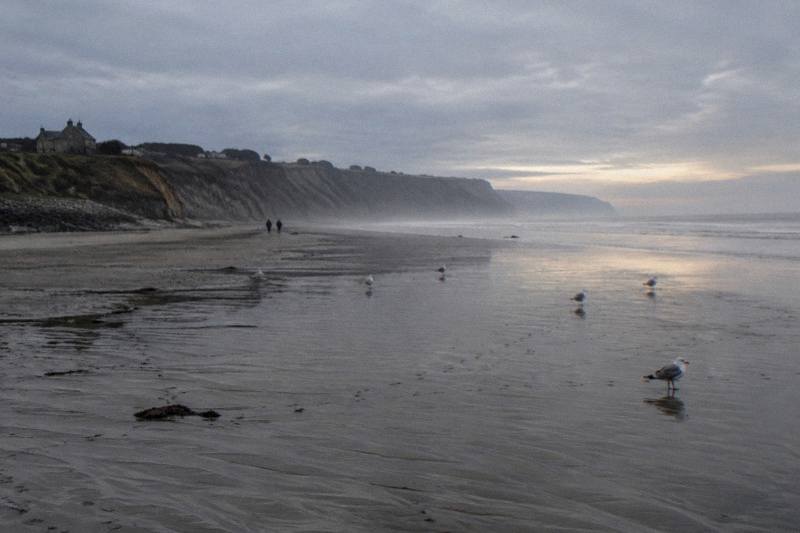
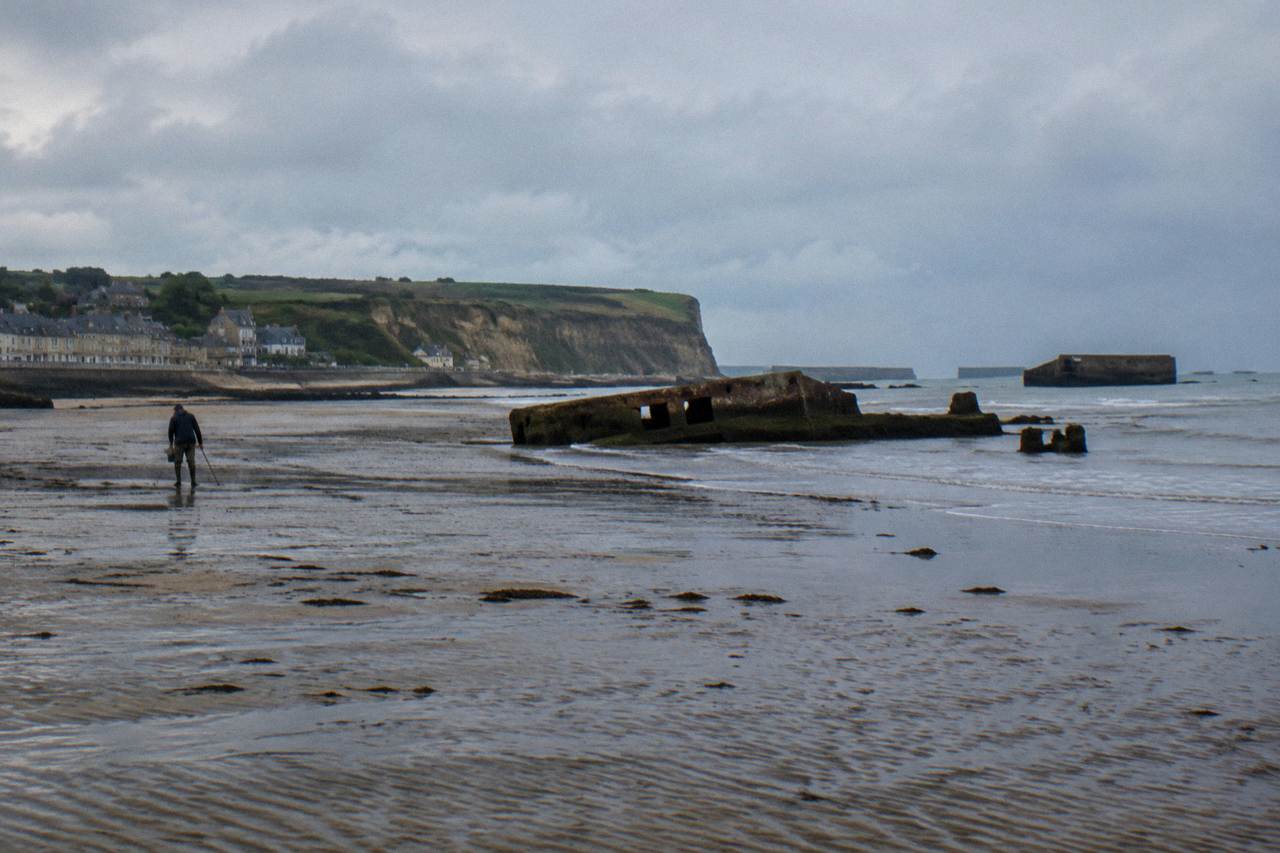
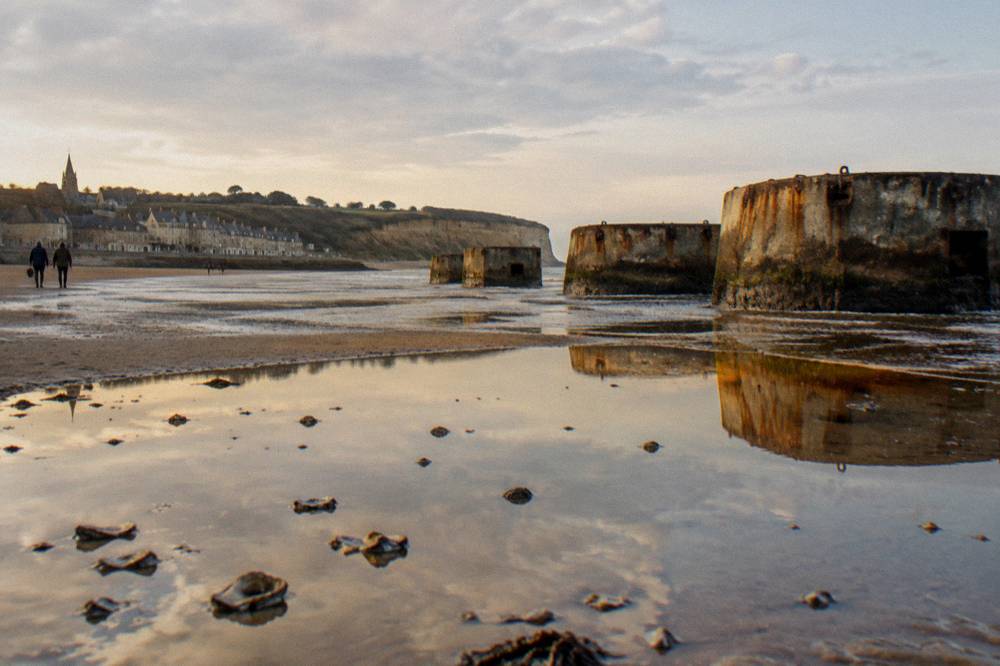
The first thing that surprises film-led visitors is the quiet. Omaha is a wide, pale beach with a low tide that pulls the water far out, and on most days you hear surf and gulls rather than anything else. The bluffs the film's soldiers struggled toward are modest in height, and that dissonance, between an ordinary summer shoreline and what happened across it, is the thing most visitors describe afterward. The German defenses themselves are largely gone; what remains at the waterline near the beach exits are memorial markers, memorial markers and a monument to the 1st US Infantry Division on the bluff. For visitors who want to see what has physically survived from the landings beyond these markers, the guide to D-Day wreckage still visible around Normandy explains exactly where to look.
The practical geography is simple. The main visitor access points are at Saint-Laurent-sur-Mer, where the beach memorials sit, and Vierville-sur-Mer to the west. The Overlord Museum stands near the cemetery road at Colleville-sur-Mer, open with seasonal hours and an adult ticket of 9.90 euros, and it is a frequent stop on tours that give the American sector a full day. There is no single "Omaha Beach attraction" with a gate; the beach is the attraction, and the museums around it carry the interpretation. If you're weighing whether that museum stop earns its place on your itinerary, the look inside the Overlord Museum's exhibits and ticket options lays out what to expect before you commit.
A note on tone, because it comes up. Omaha is a place where a great many people died, and the communities around it treat it that way. Visitors walk the dog there, and families swim in August, and both are normal. Basic courtesy applies here: keep off the memorial slabs, leave anything you find in the dunes where it lies, and respect at the ceremonies that still take place here each June. Film fans who arrive expecting a movie set find something better, which is a working coastline that remembers.
Tours handle the beach differently, and the difference is worth knowing before you book. Some listings give free time on the sand; the big Paris coach day trip, for instance, lists free time at Omaha Beach among its stops. Others, especially the half-day formats, keep the stop shorter and spend the saved time at the cemetery and Pointe du Hoc. If standing on the sand itself is the core of your visit, check the itinerary wording on the listing before choosing; "photo stop" and "free time" are different experiences.
Is The Cemetery In The Film The Real Normandy American Cemetery?
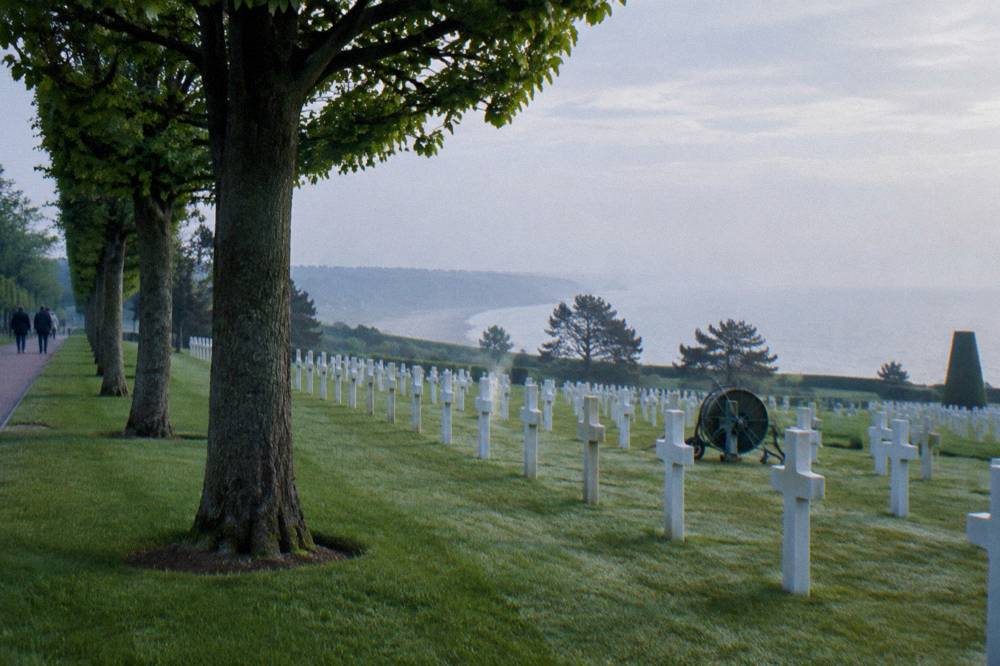
The cemetery scenes were staged, but the place they depict is real: the Normandy American Cemetery at Colleville-sur-Mer, on the bluff above Omaha Beach. It is run by the American Battle Monuments Commission, admission is free, and it is open daily from 9 a.m. to 5 p.m. with last admission at 4:30 p.m., closed only on 25 December and 1 January. Walking these rows hits differently when you know some of the men who came ashore below are still with us, a question the article on whether any D-Day veterans are still alive answers in detail.
The rows of white marble crosses and Stars of David against the English Channel are the image most visitors carry away from Normandy, and the film's framing of them is faithful to the emotional weight of the place if not to its details. Thousands of Americans lie here, arranged in plots that curve across a bluff-top lawn kept immaculate by ABMC staff. The visitor center tells the story of the landings and the campaign that followed. Photography for personal use is generally allowed, but the setting imposes its own restraints: respectful dress and conduct, no sitting or lying on the grass or monuments, no running, no games, no real or replica weapons, and service and guide dogs only.
Two access points matter for planning. The cemetery is free and no ticket is needed, though capacity pre-registration has been anticipated, so check the ABMC's Normandy cemetery page before you go. And the walking path from the cemetery down to Omaha Beach itself has been closed since 2016, so you cannot walk directly from the graves to the sand; the beach is reached by road from Saint-Laurent-sur-Mer. Tours plan around this, which is why cemetery and beach appear as separate stops on nearly every American-sector itinerary.
For film fans the cemetery is usually the emotional core of the day, and tour formats reflect that. The Paris coach day trip that includes lunch lists a guided visit and free time at the cemetery, and rates 4.8 across 10,452 reviews, which makes it the most reviewed listing in this sector by a wide margin. The smaller minibus tours from Paris, up to 8 passengers, include the cemetery alongside Omaha Beach and Pointe du Hoc. From Bayeux, most American-sector tours include it; the question is only how much time each one gives.
A plan worth considering if the cemetery is your priority: the morning half-day format from Place du Quebec in Bayeux reaches the cemetery before the midday coach waves arrive from Paris, then continues to Pointe du Hoc. Details on that tour sit further down this page, and its stops, Omaha Beach, the cemetery and Pointe du Hoc, are exactly the film's three places in one four-hour loop.
Can You Visit Pointe Du Hoc, The Rangers' Cliff Near Omaha?
Yes, Pointe du Hoc is free to enter and open daily, on the coast road between Omaha and Utah Beaches. A major ABMC restoration project runs into mid-2027, the visitor center is closed, and east-side paths, bunkers and the crater bridge close at times, with access limited to the west path in some periods. The bomb-cratered clifftop remains walkable.
Pointe du Hoc is the site that most exceeds expectations, and film fans often arrive thinking of it as a side note and leave calling it the highlight. The clifftop is a landscape of craters, shattered concrete and collapsed gun emplacements, left largely as the war finished it, perched on a cliff face the US Army Rangers scaled on the morning of 6 June 1944. You can walk through it freely within the areas currently open. The restoration work is aimed at preserving exactly that raw experience against cliff erosion, so the trade-off of temporary fences and rerouted paths buys the site's future.
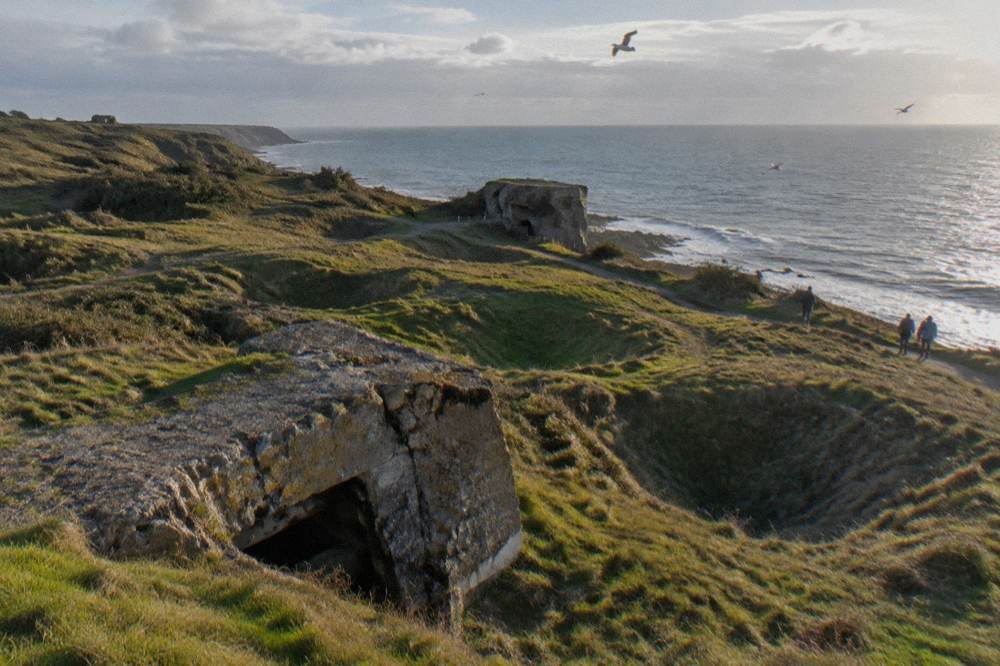
What most American-sector tours from Bayeux still list is the stop itself: Pointe du Hoc appears in the listed stops of the full-day American sites tour from Bayeux, from $213 per person, rated 4.9 from 620 reviews, which pairs it with Omaha, Utah Beach, Sainte-Mère-Église and the cemetery across eight hours in a minivan of up to 19.
Time budgeting at Pointe du Hoc is generous on small-group tours and tight on big coach itineraries, simply because the Paris day trips have so much ground to cover. The 13-to-14-hour day trip from Paris, from $309 per person and rated 4.9 from 95 reviews, lists Pointe du Hoc first among its stops and gives the sector a full-day pace with a driver-guide in an air-conditioned vehicle. If the clifftop is the place you most want to linger, a Bayeux-based tour will almost always give you more minutes there than a Paris round trip can.
Which Tours From Bayeux And Caen Cover The Film's Places?
From Bayeux, the Omaha Morning Half Day Tour, from $112 per person, rated 5 from 260 reviews, visits Omaha Beach, the American Cemetery and Pointe du Hoc in four hours. The full-day American sites tour from Bayeux, from $213 per person, adds Utah Beach and Sainte-Mère-Église. From Caen, the guided sites tour with a Caen Memorial ticket, from $169 per person, covers Pointe du Hoc, Omaha and the cemetery in five hours. If you're torn between the shorter and longer Bayeux departures, the Omaha Beach tour comparison guide spells out what each itinerary includes so you can pick with confidence.
Bayeux is the practical base for a film-led visit, and the meeting point for most of these tours is Place du Quebec in the town center, a five-minute walk from most Bayeux hotels; the listings that offer hotel pickup say so explicitly, and the Bayeux full-day minivan tour from $160 per person, rated 4.9 from 2,637 reviews, meets at Place du Quebec in Bayeux. If you are still choosing between the two towns, the comparison of Caen versus Bayeux as a base settles most of the trade-offs, and the wider Bayeux tours overview lists every departure.
| Tour | Departs | Duration | Price from | Rating | Film's places covered |
|---|---|---|---|---|---|
| Omaha Morning Half Day Tour | Bayeux, Place du Quebec | 4 hours | $112 per person | 5 from 260 reviews | Omaha Beach, cemetery, Pointe du Hoc |
| American Sites Full Day (minivan, up to 19) | Bayeux, Place de Québec | 8 hours | $213 per person | 4.9 from 620 reviews | All three plus Utah, Sainte-Mère-Église |
| Full Day from Bayeux (minivan, up to 8) | Bayeux, Place du Quebec | 9 hours | $160 per person | 4.9 from 2,637 reviews | American sector, stops per itinerary |
| Guided Sites Tour and Caen Memorial ticket | Caen, Esplanade Eisenhower | 5 hours | $169 per person | 4.8 from 570 reviews | Pointe du Hoc, Omaha, cemetery |
The Caen option deserves a word because it bundles something the others do not: an entrance ticket to the Caen Memorial museum, one of the region's strongest museums for understanding the whole campaign rather than the landing day alone. Adult admission to the Memorial runs 20.80 euros if bought separately, so the bundled tour, from $169 per person for the five-hour guided circuit plus the self-guided museum visit, suits visitors who want the film's three places and the deeper story in one purchase. The Memorial's own hours run 9 a.m. to 7 p.m. April through September, with occasional closure days listed on its site.
For visitors who want the sites to themselves, private formats exist in every direction. The Private D-Day Experience from Bayeux, from $394 per person and rated 5 from 638 reviews, includes hotel pickup in Bayeux and lists the full circuit: Omaha, the cemetery, Pointe du Hoc, Sainte-Mère-Église, Utah Beach and Angoville-au-Plain, across eight hours with a private guide in a minivan for up to 7. The trade-offs between private and small-group formats are laid out in the private versus small-group comparison; the short version is that private buys pace control and time to linger where the film pulls you hardest.
Can You See These Places On A Day Trip From Paris?
Yes. Several Paris day trips cover the film's places, including: the coach day trip with lunch, from $124 per person, rated 4.8 from 10,452 reviews; the minibus tour of up to 8, from $298 per person, rated 4.9 from 791 reviews; and the 13-to-14-hour vehicle tour, from $309 per person, rated 4.9 from 95 reviews. All three list free cancellation, and none lists hotel pickup; each meets at a stated Paris point.
The day-trip question is really a time question. Normandy's American sector sits roughly three hours from Paris by road, so a day trip spends six to seven hours in transit and leaves the rest on the ground, which is enough for Pointe du Hoc, Omaha Beach and the cemetery if the itinerary is tight. The most reviewed option, the coach day trip with a two-course lunch and cider included, lists Utah Beach Museum entry and a guided Pointe du Hoc visit among its inclusions and departs from near Place du General Koenig in the 17th arrondissement. The full Paris day-trip guide compares every departure.
| Paris day trip | Duration | Price from | Rating | Group size | Meal listed |
|---|---|---|---|---|---|
| Coach day trip with lunch | 14 hours | $124 per person | 4.8 from 10,452 reviews | Coach, up to 50 | Yes, 2-course lunch with cider |
| Landing Beaches full-day minibus | 12 hours | $298 per person | 4.9 from 791 reviews | Minibus, up to 8 | Yes, food included |
| Pointe du Hoc focus day trip | 13 to 14 hours | $309 per person | 4.9 from 95 reviews | Vehicle, up to 7 | Not listed |
The counter-argument is the train. Paris Saint-Lazare to Bayeux takes about 2h19 with fares from roughly 17 to 90 euros, and the train guide works through the timetable. Ride out the evening before, take the morning half-day tour from Place du Quebec, and you get more time on the ground for less money than any Paris round trip, at the cost of one night in Bayeux. Film fans making a once-only pilgrimage usually find that trade worth it; visitors squeezing Normandy between meetings usually take the coach.
One thing the Paris trips and the Bayeux tours share is a hard ceiling: the cemetery closes at 5 p.m. with last admission at 4:30, so late-running itineraries sometimes swap the cemetery to the morning. If the graves are the reason you are coming, check the stop order on the listing, and favor tours that put the cemetery before the lunch break.
How Much Time Do You Need For The Film's Three Places?
A focused half day of about four hours covers Omaha Beach, the American Cemetery and Pointe du Hoc at a steady pace, which is exactly what the morning half-day tour from Bayeux delivers. A full day of eight to nine hours adds Utah Beach and Sainte-Mère-Église with museum time, and a Paris day trip spends 12 to 14 hours including about five hours of driving.
Time on site is the variable people underestimate. The cemetery deserves ninety minutes at minimum: the visitor center alone can absorb a good part of that, and the plots ask for slow walking. Pointe du Hoc asks for forty-five minutes to an hour if paths are open as usual, less under the current phased closures. Omaha Beach itself can be five minutes or an hour depending on what you bring to it. That totals a comfortable half day before you add Utah, whose museum, adult ticket 10 euros and open daily outside a mid-November to mid-December closure, is worth an hour on its own.
| Site | Typical time on site | Admission | Key constraint |
|---|---|---|---|
| Omaha Beach | 20 to 60 minutes | Free, public beach | Tides change the shoreline width dramatically |
| Normandy American Cemetery | 90 minutes | Free | Open 9 a.m. to 5 p.m., last admission 4:30 p.m. |
| Pointe du Hoc | 45 to 60 minutes | Free | Restoration into mid-2027, some paths closed |
| Utah Beach Museum | 60 minutes | Adult 10 euros | Closed 16 November to 14 December |
Visitors with two days can slow everything down, and the question of how many days Normandy needs has its own answer page. But for the film-led traveler, the half-day-plus-museum formula is hard to beat: morning at the three places, lunch in Bayeux, and an afternoon at the Bayeux Museum of the Battle of Normandy, adult ticket 8.50 euros, which carries the campaign beyond the landing day the film dramatizes.
What Should Film Fans Know Before Visiting The D-Day Beaches?
Bring layers and walking shoes, expect wind on the clifftops, plan around fixed closing times at the cemetery and museums, and read the film as a doorway rather than a documentary. Independent visits are possible since the beaches are public and free, but the sites are dispersed and guided tours handle the distances, the parking and the interpretation in one purchase.
Practicalities first. Normandy weather is maritime and changeable; the wind on Pointe du Hoc is a constant, and the walk from tour parking to the cemetery entrance is several minutes of exposed ground. The packing question has a full answer in what to wear on a Normandy tour. Access in the fuller sense, wheelchairs, strollers, mobility limits, varies by site and by vehicle, so check the listing rather than assuming; group-size caps, where they exist, are printed on each tour's own page.
Then the temperamental point. Saving Private Ryan is a fiction built on real ground, and the ground does not perform on request. Some visitors describe the beach as anticlimactic until they stand at the waterline at low tide and do the arithmetic the film dramatized: the width of sand, the weight of wet gear, the distance to the bluffs. Others find the cemetery, not the beach, is where the film's themes land for real. The question of whether the beaches are worth visiting is asked often enough to have its own answer, and it is nearly always yes, for reasons that have little to do with cinema.
Finally, go with a guide if you can. The interpretation is the product: which exit draw you are standing at, what the craters at Pointe du Hoc were, why the cemetery sits where it does. Every tour named on this page includes a guide or driver-guide in its listed inclusions, and the small-group formats from Bayeux, up to 8 or up to 19 passengers depending on the listing, keep the guiding conversational. Visitors who prefer to go alone can do it, and the guide to visiting without a tour explains how; the film's places, unlike its plot, hide nothing and charge nothing at the door.
Common Questions About Saving Private Ryan Sites
Was Saving Private Ryan filmed at Omaha Beach?
No. The film's landing sequence was a production reconstruction, not location footage, and this guide deliberately steers clear of production trivia. The real Omaha Beach at Saint-Laurent-sur-Mer is a public shoreline you can walk freely, and every American-sector tour from Bayeux, Caen or Paris stops there.
Is the cemetery in the film the real one in Normandy?
The film's cemetery scenes are staged, but the place they evoke is the Normandy American Cemetery at Colleville-sur-Mer, above Omaha Beach. It is free, open daily 9 a.m. to 5 p.m. with last admission at 4:30 p.m., and closed only 25 December and 1 January.
Can you visit Pointe du Hoc from Saving Private Ryan?
Yes, Pointe du Hoc is free to enter and open daily. A restoration project runs into mid-2027, the visitor center is closed, and some paths and bunkers close at times, with access limited to the west path in some periods. Check the ABMC page for what is open.
Which tour covers all the Saving Private Ryan places?
The Omaha Morning Half Day Tour from Bayeux, from $112 per person and rated 5 from 260 reviews, visits Omaha Beach, the Normandy American Cemetery and Pointe du Hoc in about four hours, meeting at Place du Quebec in Bayeux.
How long do you need to see Omaha Beach and the cemetery?
About four comfortable hours covers the beach, the cemetery and Pointe du Hoc. Give the cemetery ninety minutes on its own, and remember the walking path from the cemetery to the beach has been closed since 2016, so the two are visited by road.