Can You Visit D-Day Beaches Without A Tour?
Yes, the D-Day beaches are public and free to walk, but the train only reaches Bayeux and Caen while the beaches sit apart. Here is what self-drive visitors can realistically see.
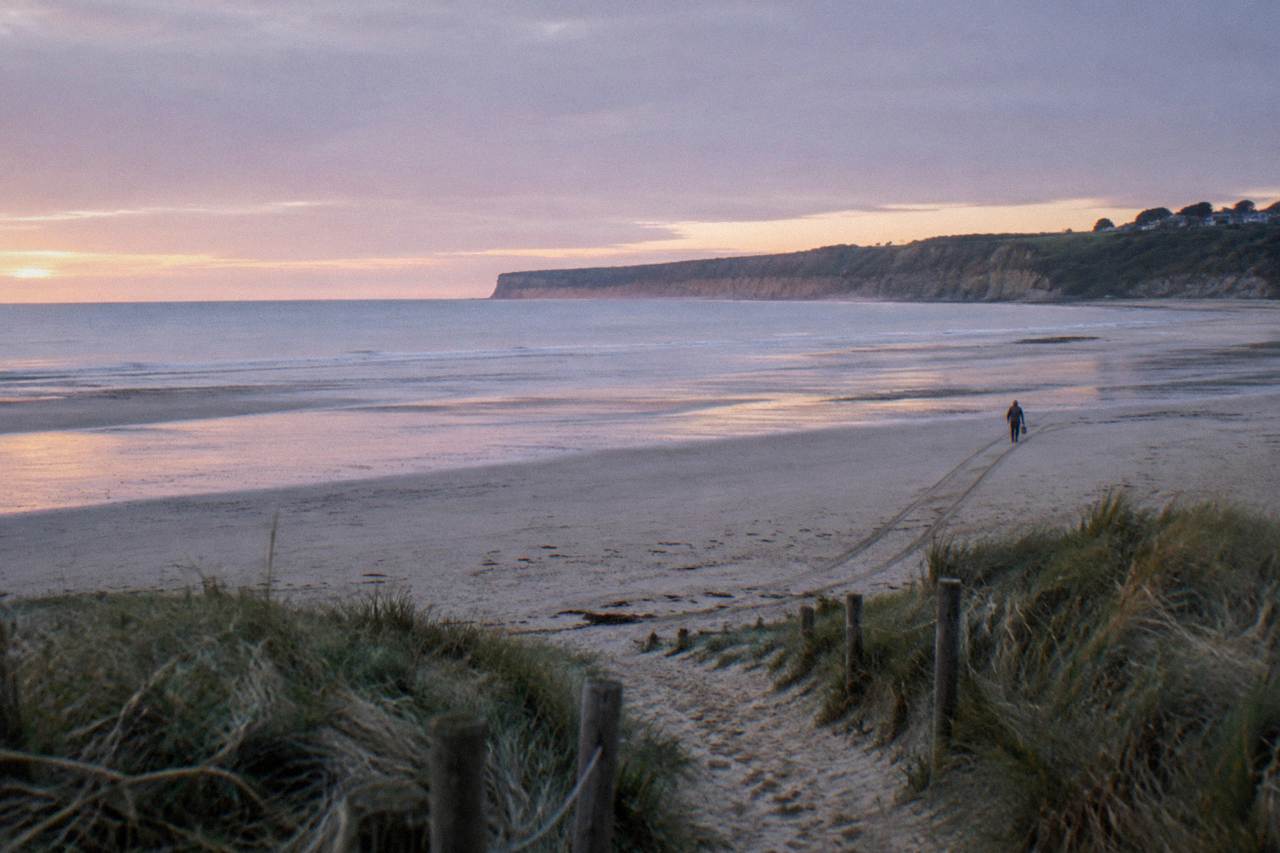
The five landing beaches of 6 June 1944, Utah, Omaha, Gold, Juno and Sword, are public coastline today. There is no gate, no ticket booth on the sand, and no requirement to arrive with a guide. The Normandy American Cemetery is free to enter, Pointe du Hoc is free to enter, and most memorials along the coast can be seen from public roads. So the short answer is yes, and thousands of people do it every year.
The longer answer is about distance and context. The sites that matter are scattered along a stretch of coast with thin public transport, and the train from Paris stops at Bayeux and Caen, not at the beaches. What follows is a practical breakdown of what an independent visitor can realistically reach, what is open, what costs nothing, and where a guided day such as the Paris day trip with lunch quietly becomes the simpler choice.
What Can An Independent Visitor Actually Reach?
Yes, all five beaches and the major memorials are publicly accessible, and the two most visited sites, the Normandy American Cemetery and Pointe du Hoc, are free. The barrier is not admission but geography: the key American sites alone stretch from Sainte-Mere-Eglise to Pointe du Hoc, and no bus route connects them in a day.
A visitor with a car can reach everything. Utah Beach, Omaha Beach, Sainte-Mere-Eglise, Pointe du Hoc, the American Cemetery, Arromanches and its museum, the Juno Beach Centre at Courseulles-sur-Mer and the British Normandy Memorial above Gold Beach all have public parking or roadside access. The beaches themselves are ordinary Norman coastline, open year-round outside anniversary-week access controls.
A visitor without a car has a much harder task. Regional buses exist but are sparse and oriented toward locals, not toward a circuit of memorials. Cyclists can manage the British and Canadian sector, which sits in a compact arc between Courseulles-sur-Mer and Arromanches, and there is even a guided bike tour of Juno and Gold that meets at Courseulles-sur-Mer and covers the British Normandy Memorial by bike in four hours. The American sector is different: Sainte-Mere-Eglise, Utah Beach, Pointe du Hoc, Omaha and the cemetery are spread across distances that punish a day on foot or pedals.
That geography is why the guided-day market exists at the scale it does. The full-day American-sector tour from Bayeux, rated 4.9 from 620 reviews and priced from $213 per person, links Sainte-Mere-Eglise, Utah Beach, Pointe du Hoc, Omaha and the cemetery in one eight-hour loop, which would take an independent driver a full and hurried day to replicate. Travelers comparing the two paths tend to land on the tour once the map is on the table.
How Do Trains And Roads Shape The Trip?
Trains from Paris reach Bayeux in about 2 hours 19 minutes and Caen in about 2 hours, with fares from about 17 euros, but neither station is on the coast. From the station to the beaches you need a rental car, a taxi, a bicycle or a seat in a shared minivan, and that last leg is where most independent plans are decided.
The rail facts are straightforward. SNCF runs roughly 13 services a day from Paris Saint-Lazare to Bayeux, and around 19 to Caen, with advance fares from about 17 euros and the Paris to Bayeux range commonly cited up to about 90 euros. Bayeux is the better base for the American sector; Caen sits closer to the British and Canadian beaches and hosts the Caen Memorial, whose adult ticket is 20.80 euros.
What the train does not do is deliver you to a beach. Bayeux to Omaha Beach is a drive, and to Utah Beach considerably more; there is no rail spur and no frequent coastal bus. Independent visitors therefore rent a car at Caen or Bayeux, which works well for confident drivers, or they compress the day by joining a departure that already solves the last leg. The Caen Memorial combination tour, for example, rated 4.8 from 570 reviews and from $169 per person, bundles a five-hour guided van circuit of Pointe du Hoc, Omaha and the cemetery with a museum ticket, departing from the Memorial esplanade itself.
| Starting point | Getting there independently | Guided alternative |
|---|---|---|
| Paris, no car | Train to Bayeux or Caen, then rental car | Coach day trips from $124 per person, 14 hours |
| Bayeux, no car | Very limited buses; taxi for single sites | Half-day tours from $106 and full-day tours from $160 per person |
| Caen, no car | Train, then van or bike for Gold and Juno | Memorial combination tour from $169 per person |
| Rental car, any base | Full access to all five beaches | Private tours from $394 per person if you want a guide in your own vehicle |
| Cruise port, Le Havre or Cherbourg | Long self-drive; Cherbourg is 1 to 1.5 hours from Utah | Shore excursions from $102 per person with port pickup |
For anyone weighing this choice, the deeper comparison in private versus small group D-Day tours breaks down the vehicle and group-size trade-offs, and the planning piece on how many days you need in Normandy helps match the transport decision to the length of stay.
Which D-Day Sites Cost Nothing To Enter?
The beaches themselves, the Normandy American Cemetery and Pointe du Hoc are all free. So are the roadside memorials, the church square at Sainte-Mere-Eglise and the remains of the Mulberry harbour visible from the shore at Arromanches. Museums are the only places that charge, with adult tickets running from 8.50 to 20.80 euros.
The free layer of Normandy is genuinely substantial. You can stand on Omaha Beach at dawn, walk the cratered clifftop at Pointe du Hoc, read every grave marker at Colleville-sur-Mer and watch the tide move over the Gold Beach remains without paying anyone anything. The full breakdown lives in this guide's piece on free things to do at the D-Day beaches, but the headline is that the emotional core of a visit is open to every budget.
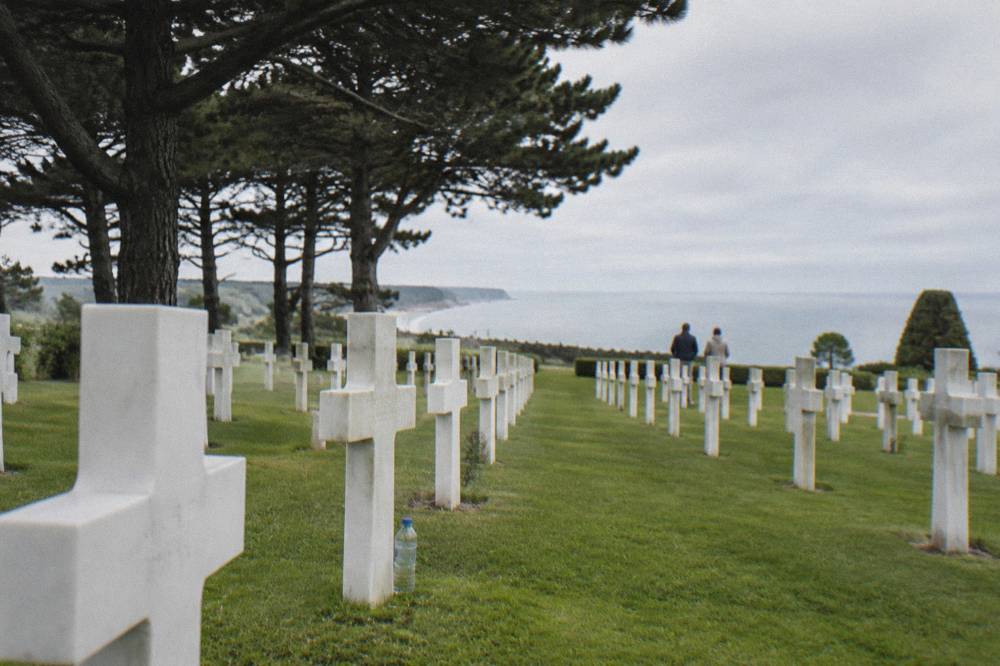
The American Cemetery deserves specific planning attention. The American Battle Monuments Commission states it is open daily from 9 a.m. to 5 p.m. with last admission at 4:30 p.m., closed only 25 December and 1 January, and admission is free, though a capacity pre-registration system may apply and the ABMC page should be checked before you go. The rules are strict and enforced: respectful dress and conduct, no sitting or lying on the grass or monuments, no running, bicycles, shouting or games, no real or replica weapons, and service and guide dogs only. The walking path from the cemetery down to Omaha Beach has been closed since 2016, so beach access means a short drive to the public entrance at Saint-Laurent-sur-Mer.
Museum tickets are the paid layer, and they add up quickly for a family doing four or five in a day.
| Site | Adult entry | Notes for independent visitors |
|---|---|---|
| Normandy American Cemetery | Free | Daily 9 a.m. to 5 p.m., last admission 4:30 p.m.; check ABMC page for pre-registration |
| Pointe du Hoc | Free | Restoration works into 2027; some areas closed at times |
| Utah Beach Museum | 10 euros | Closed 16 November to 14 December; entries on some tours included |
| Overlord Museum | 9.90 euros | Entry included on three tours listed here |
| Airborne Museum, Sainte-Mere-Eglise | 11.50 euros | Entry included on the Airborne day tour |
| Caen Memorial | 20.80 euros | Included with the Caen guided tour ticket |
| Juno Beach Centre | 9 euros | Closed all of January |
| Bayeux Museum of the Battle of Normandy | 8.50 euros | Combined pass with other Bayeux museums available |
Some tours build those tickets into the price, such as the Airborne day tour with Airborne Museum entry, so weigh that when comparing a self-drive museum day against a guided one. The Le Havre shore trip with a packed lunch, from $102 per person, includes a homemade packed lunch, and the minibus full-day tour from Paris at from $298 per person includes Overlord Museum entry, though lunch is extra. An independent visitor pays each museum individually at the door.
What Is Closed Or Restricted Right Now?
Pointe du Hoc is free but partly closed: a restoration project runs into 2027, the visitor center has been closed since early 2026, and the east-side paths, some bunkers and the crater bridge close at times. The Longues-sur-Mer observation post is closed for now because of cliff-collapse risk, and the cemetery-to-beach path remains shut.
These are present facts, not predictions. The ABMC restoration project page describes phased closures at Pointe du Hoc through mid-2027, with the west pathway the only open route in some periods and temporary facilities replacing the closed visitor center. Independent visitors are hit harder by this than tour groups, because a guide arrives knowing which sections are open that week, while a self-driver discovers it in the car park. The tours listed here and the ABMC page together set what is accessible on a given day, and no operator can promise a specific bunker or path.
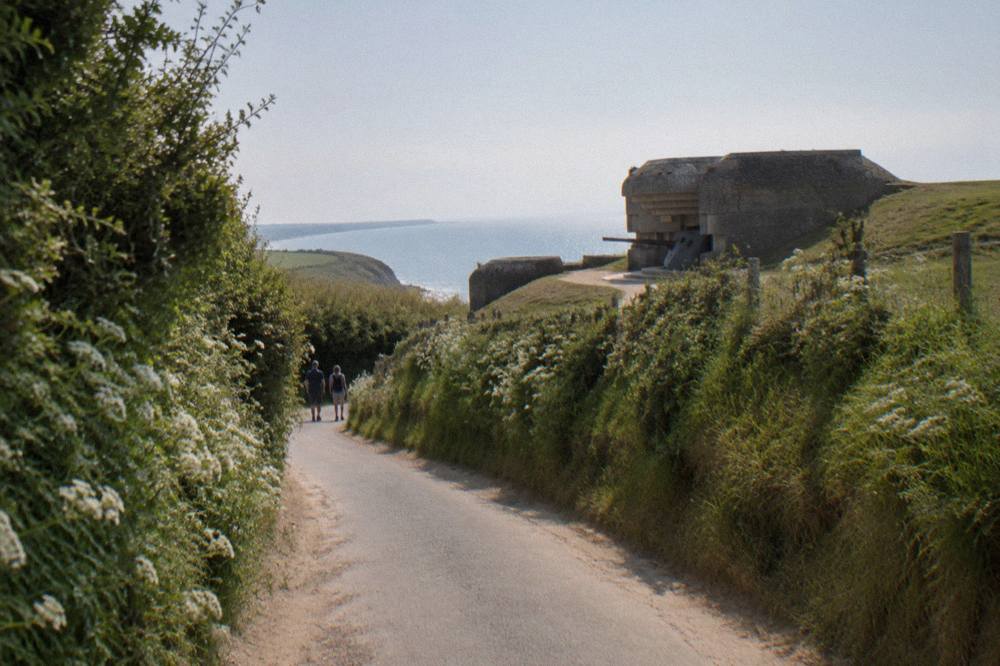
The Longues-sur-Mer battery is a quieter loss for self-drivers. The observation post has been closed to the public since 2025 because of cliff-collapse risk; the battery itself remains viewable from the outside. The full-day Paris minibus tour lists Longues-sur-Mer among its stops, so guided groups still see the site from the exterior.
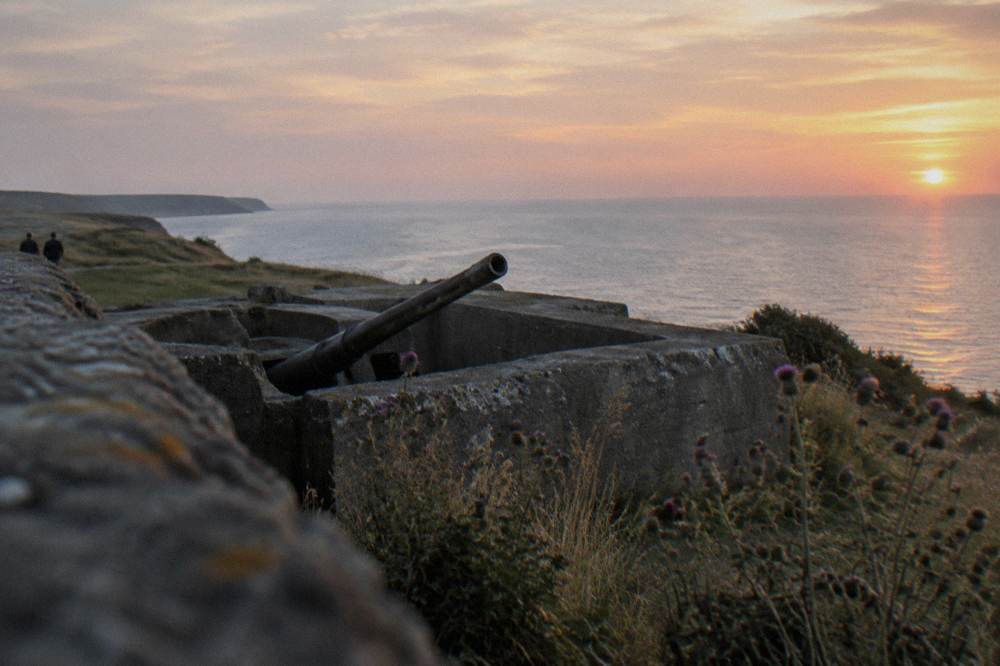
Anniversary week brings its own restrictions. The 6 June 2026 commemorations saw road closures and parking bans across the N13 corridor, Bayeux, Arromanches and Sainte-Mere-Eglise, with 29 Second World War veterans attending the main ceremony at the American Cemetery. Independent drivers in early June should expect congestion and controlled zones, and accommodation in Bayeux and Caen books out months ahead. The shoulder months of May, September and October are the practical answer, and the best time to visit the D-Day beaches guide covers the timing trade-offs in full.
What Does A Guide Add Beyond The Transport?
A guide adds the stories, and at sites where the visible remains are subtle, that context changes what you are looking at. Omaha Beach is a wide, quiet strand without interpretation; Pointe du Hoc is a moonscape of craters that a guide can read like a page; Sainte-Mere-Eglise's church square means little without the airborne story attached to it.
This is the difference that no amount of preparation fully closes. An independent visitor who does the reading arrives with a good book and a printed itinerary, and that genuinely works at the cemeteries and the museums, where official exhibits carry the interpretation. But the open ground between them, the exit roads off Utah, the shingle bank at Omaha, the hedgerow country behind the beaches, is where a licensed guide earns the fare. The Band of Brothers full-day tour from Bayeux, rated 4.9 from 143 reviews at from $160 per person, visits Brecourt Manor, Ravenoville and Carentan, sites that are publicly reachable but nearly invisible to a passing car.
For visitors based in Paris without a car, the comparison collapses entirely. A self-drive day means a very early train, a rental pickup, a self-guided dash and a late return, all on unfamiliar roads. The 14-hour coach day trip from Paris, the most reviewed tour here at 4.8 from 10,452 reviews and from $124 per person, covers the Utah Beach Museum, Pointe du Hoc, free time at Omaha and a guided cemetery visit with a two-course lunch and cider included. Against two train fares, a rental car, fuel, parking and four museum tickets, the arithmetic is closer than most people expect, and the guided version removes the risk of arriving at Pointe du Hoc to find the day's path closed.
Which Base Suits An Independent Trip Best?
Bayeux is the natural base for the American sector, with the D-Day sites nearby and most small-group tours departing from Place du Quebec; Caen suits the British and Canadian beaches and the Memorial; a single day from Paris without a car is best done by coach, not by rail plus improvisation.
Bayeux works because everything converges there. The Bayeux half-day afternoon tour, rated 4.7 from 1,257 reviews at from $106 per person, is the cheapest guided tour from Bayeux and even includes pickup from selected Bayeux hotels, which is rare on this coast. A separate morning tour from Place du Quebec, rated 5 from 260 reviews at from $112 per person, covers Omaha, the cemetery and Pointe du Hoc before lunch. An independent visitor staying in Bayeux can pair one of these half-days with a self-driven museum day and see more than either approach delivers alone. The full debate between the two towns is settled in is it better to stay in Caen or Bayeux.
Caen rewards a different itinerary. The British sector sits closest to it, the four-hour Gold Beach to Caen van tour at from $169 per person covers Arromanches, the British Normandy Memorial and the Beny-sur-Mer Canadian cemetery from the Memorial esplanade, and the Caen Memorial itself justifies half a day with a 20.80 euro adult ticket. A new bike tour from Courseulles-sur-Mer, from $247 per person with no reviews yet, shows how compact the Juno and Gold sector is: five stops including the Juno Beach Centre and the circular cinema in four hours by bicycle.
Cruise passengers have the least room for independence, since port days are short and the sites are far. From Cherbourg the drive to Utah Beach and Sainte-Mere-Eglise runs 1 to 1.5 hours each way, which is why the Cherbourg shore excursion at from $168 per person and the two Le Havre departures from $102 and $179 per person dominate that market, all with port pickup listed. That story is told in full in the Normandy cruise shore excursion guide.
The reasonable summary is this: yes, you can visit the D-Day beaches without a tour, and with a car the free layer alone fills a moving day. Without a car, or on a single day out of Paris, or in anniversary week, the tours stop being a luxury and start being the working plan.
Common Questions About Visiting The D-Day Beaches Independently
Is there parking at the D-Day beaches?
The main sites, including Omaha Beach, Utah Beach, Pointe du Hoc and the American Cemetery, have public parking nearby, and the Utah Beach Museum lists free parking. Expect disruptions at Pointe du Hoc while the restoration project runs into 2027, and closures and parking bans in early June around the anniversary ceremonies.
Do you need to book the American Cemetery in advance?
Admission is free and the site is open daily 9 a.m. to 5 p.m. with last admission at 4:30 p.m., closed 25 December and 1 January. A capacity pre-registration system may apply, so check the ABMC page before you go. Groups and wreath layings need advance contact with the ABMC.
Can you get from Bayeux to Omaha Beach without a car?
Not easily. There is no frequent bus along the coast, so the realistic options are a taxi for a single site, a rental car, or one of the half-day guided tours departing from Place du Quebec in Bayeux, which run from $106 per person and include the cemetery and Pointe du Hoc in their stops.
Are the D-Day museums worth it without a guide?
Yes, the major museums carry their own interpretation. The Utah Beach Museum, Overlord Museum, Airborne Museum, Juno Beach Centre and Caen Memorial all stand alone well, with adult tickets from 8.50 to 20.80 euros. The gap a guide fills is on the open ground between museums, where the visible remains need a story attached.
Is one day enough for the D-Day beaches on your own?
One full day with a car covers the American sector at a push: Sainte-Mere-Eglise, Utah Beach, Pointe du Hoc, Omaha and the cemetery. Two days let you add the museums properly and reach Gold, Juno and the British Normandy Memorial without rushing. From Paris without a car, a 12- to 14-hour guided day trip is the realistic single-day format.