Is There Still Wreckage At Normandy Beach?
Yes, though not as ship hulls on the sand. The visible D-Day remains are the Mulberry harbour blocks at Arromanches, German bunkers at Pointe du Hoc and Longues-sur-Mer, and museum-held artifacts.
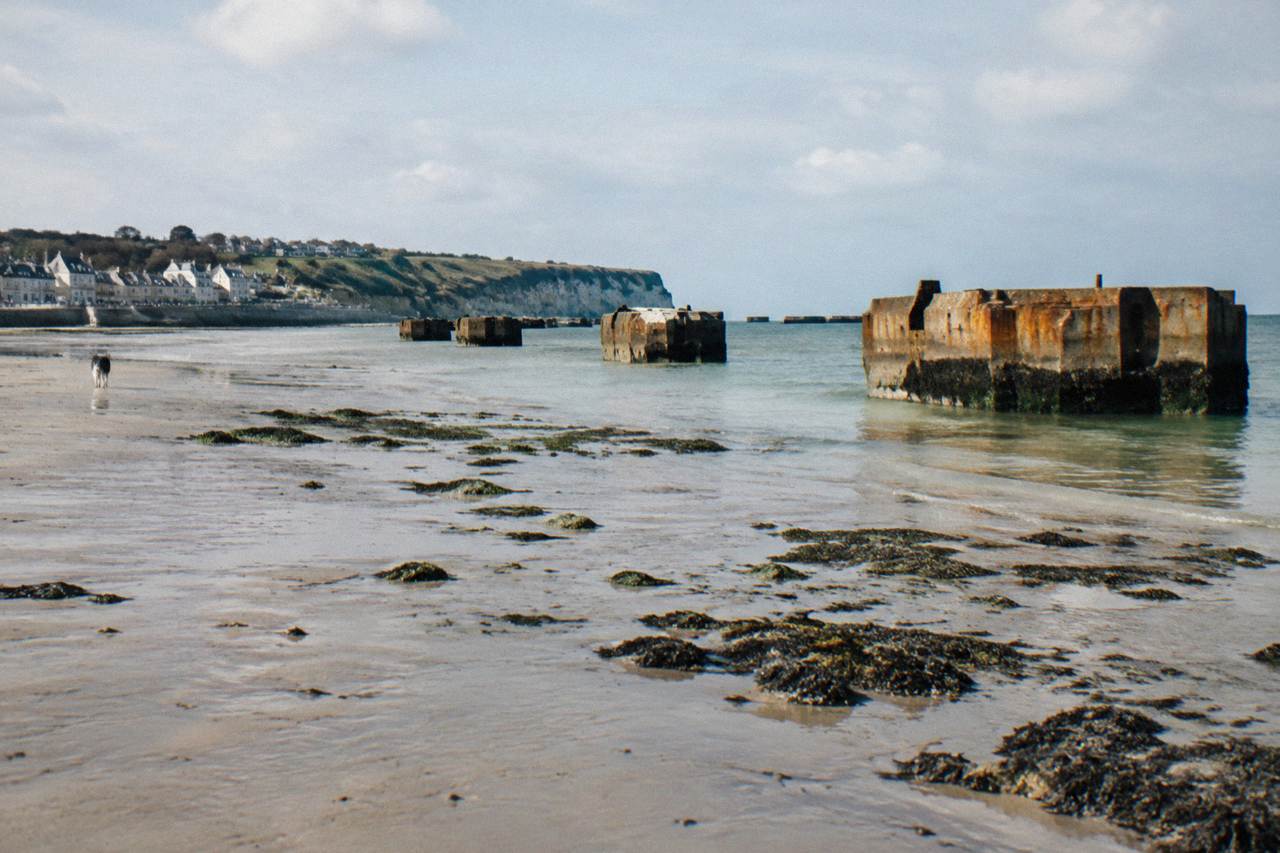
The question sounds like it should have a simple answer, and in one sense it does: the landing beaches themselves are clean, open sand. What survives instead is bigger and stranger than rusting hulls. Concrete harbour pieces the size of apartment blocks still sit in the water at Arromanches. German bunkers, scarred and shell-cratered, still line the clifftops at Pointe du Hoc and Longues-sur-Mer. The distinction matters for planning a visit, because the remains are scattered across several sectors, and the practical way to see them in a day is a guided circuit such as the Pointe du Hoc, Omaha Beach, American Cemetery day trip from Paris, which lists Pointe du Hoc, the Overlord Museum and the Mulberry harbour vestiges among its stops. Standing among those scarred bunkers and broken harbour walls, many visitors start wondering about the human cost behind the concrete, and which country lost the most men on D-Day gives a clear account of the losses each nation suffered.
What Can You Still See In The Water At Arromanches?
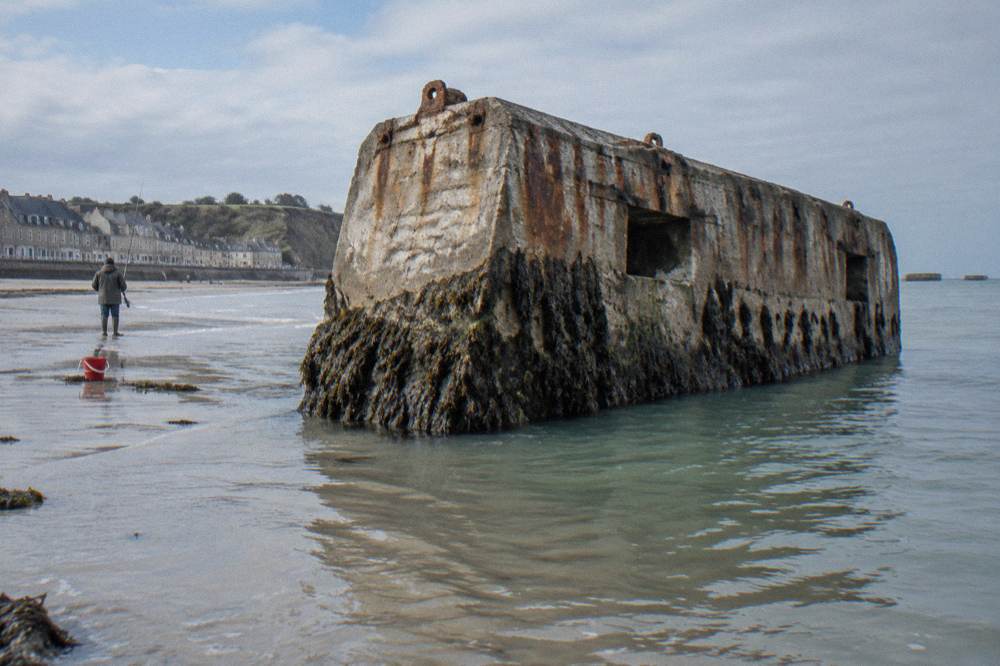
The clearest surviving D-Day wreckage is the Mulberry harbour at Arromanches-les-Bains, where dozens of concrete and steel caissons, known as Phoenix blocks, remain visible in the bay at every tide, along with pier heads on the seabed and sections held in the town's landing museum, which charges adult admission of 12.90 euros.
Arromanches was chosen as the site of the artificial "Mulberry" harbour towed across the Channel in June 1944, and unlike the sections sunk off the American beaches in a storm, parts of the British installation were simply left where they stood. The result is the single most photogenic body of D-Day wreckage anywhere on the coast: a semi-circle of huge concrete blocks sitting a few hundred meters off the seafront, close enough to walk toward at low water and unmistakable from the cliff path above town. The full-day coach trip from Paris includes an Arromanches-les-Bains lunch stop, and the Caen Memorial's Gold and Juno combination tour includes Arromanches as a guided stop, so both Paris and Caen based visitors can build a day around it.
The town also interprets what sits offshore. The Musée du Débarquement faces the water and holds original pieces of the port alongside models and film; adult entry is 12.90 euros, with an audioguide included, and shorter winter hours than summer. Up the hill, the Arromanches 360 circular cinema screens a film on the surrounding screens, at about 7 euros for an adult, though it runs reduced hours and closes some Mondays in November and December. Between the two you can read the bay almost piece by piece. The Gold Beach and Arromanches guide covers the town and the museum in more depth.
| Site at Arromanches | What you actually see | Access |
|---|---|---|
| Phoenix caissons in the bay | Large concrete harbour blocks standing offshore | Free, visible from the seafront at any tide |
| Musée du Débarquement | Harbour components, models, film, audioguide | Adult 12.90 euros, seasonal hours |
| Arromanches 360 | Circular cinema on the landings | Adult about 7 euros, reduced off-season hours |
A good pairing with Arromanches, if you have a second day or a longer tour window, is the Canadian side of the coast: the bike tour from Courseulles-sur-Mer rides from the Juno Beach Centre past Arromanches to the British Normandy Memorial, with a bicycle, helmet, a snack and a drink included, from $247 per person. It is a new tour with no reviews yet, but it is one of the few products that puts you moving along the water for hours with the harbour blocks in view.
Are The German Bunkers Still Standing?
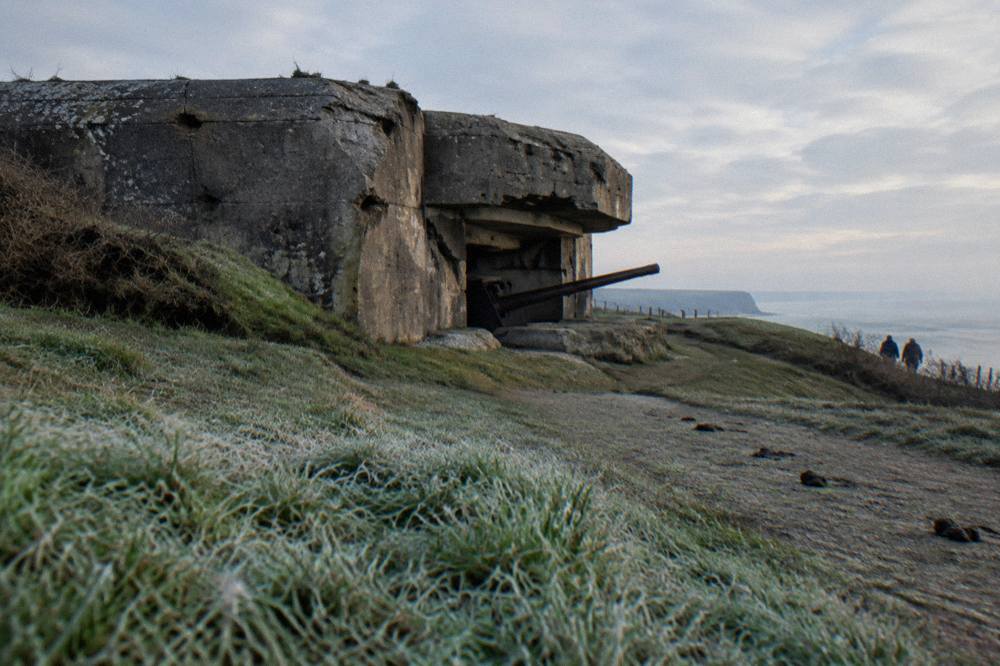
Yes, and in numbers. Pointe du Hoc preserves its gun battery bunkers and shell craters on a clifftop you can walk through free of charge, while the Longues-sur-Mer battery keeps its casemates and gun pits inland of the cliff, though its observation post has been closed to visitors since 2025 because of cliff-collapse risk.
Pointe du Hoc is the most intense of the surviving sites. The battery's bunkers, torn open in 1944, sit inside a landscape of craters that has been deliberately left much as the battle left it, and it costs nothing to enter. The site is also in the middle of a major restoration project running into 2027: the visitor center has been closed since early 2026, and the east-side paths, some bunkers and the crater bridge close at times, with access at certain periods limited to the west pathway. None of that stops a visit, but it does mean checking the ABMC page for the site before you plan a stop, and not expecting every feature to be open on a given day. The American Battle Monuments Commission, which manages the site, documents the project on its restoration project page.
Longues-sur-Mer, between Arromanches and Omaha, is a different experience: a battery of four casemates set on fields above the cliff, with the command observation post out on the cliff edge itself. That post is the closed piece. The cliff beneath it is unstable, and the site has been shut to visitors since 2025 for safety, so a visit means the casemates and the view, not the post. There is no ticket desk; it is an open-air site you walk around, so check locally for access details. One tour lists it as a stop: the 12-hour small-group landing beaches tour from Paris, from $298 per person; lunch and tips are extra.
Is There Wreckage On The Sand At Omaha Or Utah?
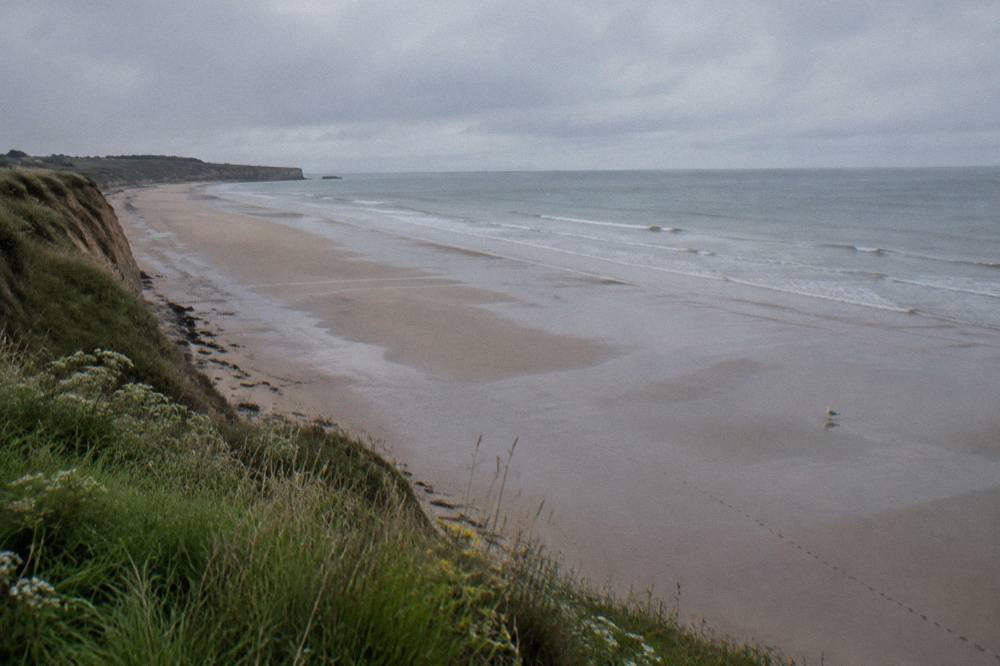
Not in the form of ships or vehicles on the tide line. The beaches at Omaha and Utah are clean sand, and no source documents hulls or landing craft still lying on them; what remains at both beaches sits behind the sand, in memorials, museums, buried and excavated artifacts, and the bunkers on the bluffs above.
This is the part of the question where expectation needs correcting. Photographs from June 1944 show wreckage choked across the tide line, but the decades since brought salvage, storms and the simple clearing of working beaches. What a visitor finds now is a wide, quiet shoreline, with the German defensive positions still visible on the high ground behind Omaha and the story of what was pulled from the sand moved indoors. The Overlord Museum at Colleville-sur-Mer, adult 9.90 euros, holds vehicles and equipment recovered from the battlefield, and the Utah Beach Museum, adult 10 euros, stands on the dune line at the spot where the American landings came ashore on 6 June 1944, the date and the five beach code names being the fixed historical anchors of any visit.
Anyone hoping to "see wreckage" should aim the day at Arromanches and the batteries rather than at the sand. The full-day American sites tour from Bayeux makes that logic easy: from $213 per person, about 8 hours in a Mercedes minivan of up to 19, it lists Pointe du Hoc, Omaha Beach, Utah Beach, Sainte-Mère-Église and the American Cemetery, with a guide-driver who can explain what each stretch of ground was in 1944.
The American Cemetery next to Omaha belongs in this picture too, because its setting is part of the same preserved landscape. It is open daily 09:00 to 17:00 with last admission at 16:30, closed only 25 December and 1 January, and admission is free; the walking path from the cemetery down to the beach has been closed since 2016, so the connection between the two has to be made by road. The ABMC's Normandy cemetery page sets the rules: respectful dress, no sitting or lying on the grass or monuments, no running or games, service and guide dogs only.
Which Tours Stop At The Surviving Wreckage?
The tours that put the remains in front of you are the ones naming Pointe du Hoc, Longues-sur-Mer or Arromanches as stops: the Paris day trips, the Bayeux circuits from $160 to $213, and the Caen and Le Havre combinations, and a stop only counts if the tour itself names it.
Because the coast is long and the remains are scattered, a tour's stop list is the only reliable guide to what a day actually touches. The table below lists each tour's named stops, so you can match the wreckage you want to the tour that reaches it. Note the differences between similar-sounding products: the coach day trip from Paris at from $124 includes Utah Beach Museum entry, while the minibus version at from $298 adds the Longues battery and the Overlord Museum. Deeper comparisons of the Bayeux options are in the D-Day tours from Bayeux roundup.
| Tour | From | Duration | Wreckage-related stops |
|---|---|---|---|
| Pointe du Hoc, Omaha, Cemetery day trip from Paris | $309 per person | 13 to 14 hours | Pointe du Hoc, Overlord Museum, Mulberry harbour vestiges |
| Landing Beaches full-day tour from Paris | $298 per person | 12 hours | Longues-sur-Mer battery, Pointe du Hoc, Overlord Museum |
| American sites full-day tour from Bayeux | $213 per person | 8 hours | Pointe du Hoc, Utah Beach, Sainte-Mère-Église |
| Normandy D-Day Beaches day trip from Paris | $190 per person | 14 hours | Pointe du Hoc, Arromanches lunch stop, Juno Beach |
| Le Havre Shore Trip, Packed Lunch | $102 per person | 10 hours | La Cambe, Pointe du Hoc, Omaha Beach, American Cemetery |
Cruise passengers get a shorter list but a workable one. From Le Havre, the packed-lunch shore trip at from $179 per person includes Pointe du Hoc, Omaha and the La Cambe German cemetery; from Cherbourg, the 8-hour shore excursion at from $168 reaches Pointe du Hoc as well. Cherbourg is 1 to 1.5 hours by road from Utah Beach, so Pointe du Hoc sits further still. The Normandy cruise shore excursions guide works through port logistics in full.
Why Does Less Survive Each Decade?
The coast itself is the reason. Cliff erosion closed the Longues observation post in 2025 and forced the multi-year restoration now underway at Pointe du Hoc, the cemetery beach path has been shut since 2016, and the sea continues to work on the Arromanches caissons, so access to the surviving wreckage shrinks in pieces rather than all at once.
This is worth understanding before a visit, because it explains why a site you read about a few years ago may look different now. The Pointe du Hoc project addresses erosion, visitor safety and infrastructure at once, with phased closures through to a completion target in 2027; the ABMC keeps temporary facilities, a welcome point and restrooms available while it runs. At Arromanches, the harbour blocks are static but the sea and weather keep working on them, and at Longues the cliff under the observation post reached the point where public access had to end. Which features open or close shifts with the season, so the standing advice is simple: check the official pages for each site near your travel date, and treat every tour description of a stop as subject to what is open that day. If Pointe du Hoc is on your list, the guide to visiting during the restoration work covers what remains open and which tour stops still run.
The pattern also argues for seeing the remains sooner rather than later, and for using a guide who visits them weekly. Independent visits are entirely possible, as the piece on visiting without a tour explains, but a guided circuit from Bayeux or Paris folds the walking, the driving between sectors and the site-by-site context into one day, with a driver-guide who knows which path is open this month. The Pointe du Hoc, Omaha and cemetery day trip from Paris, the featured tour for this question, covers the circuit in 13 to 14 hours with Overlord Museum admission included, from $309 per person and free cancellation.
Independent travelers who want to go deeper on the anchor sites can compare the two bases in Caen versus Bayeux, since the wreckage sits between the two towns and the train from Paris Saint-Lazare reaches either in roughly 2 to 2.5 hours. For everything the tours cost and include, the full price breakdown lives at Normandy D-Day Tour.
Common Questions About D-Day Wreckage
Can you walk up to the Mulberry harbour remains?
You can view the caissons from the seafront and the cliff path at any tide, free of charge, and walk toward them on the sand at low water. The museum facing the bay, adult 12.90 euros, holds original harbour pieces indoors with an audioguide included.
Is Pointe du Hoc still worth visiting during the restoration?
The site remains free and open, with its bunkers and cratered ground walkable where the current phase allows. The visitor center has been closed since early 2026, and east paths, some bunkers and the crater bridge close at times until the project completes in 2027, so check the ABMC page before a visit.
Why is the Longues-sur-Mer observation post closed?
The post stands on a cliff edge that has been judged unstable, and it has been closed to visitors since 2025 because of the collapse risk. The battery's casemates and gun pits behind the cliff remain accessible, with no published hours or entry fee.
Do any tours include both Arromanches and Pointe du Hoc?
Yes. The Normandy D-Day Beaches day trip from Paris, from $190 per person, lists a Pointe du Hoc visit and an Arromanches lunch stop, and the Gold, Juno and Omaha small-group tour from Caen, from $275 per person, lists Arromanches and Pointe du Hoc with a Memorial bistro lunch included.
Is there wreckage inside the museums?
The museums hold the wreckage that was recovered from the battlefields and the sea. The Overlord Museum at Colleville-sur-Mer, adult 9.90 euros, displays vehicles and equipment from the fighting, and the Utah Beach Museum, adult 10 euros, stands on the dune at the landing site itself.