Pointe Du Hoc Visit: Restoration Closures And Access
Pointe du Hoc remains free and open, but a restoration project running into 2027 has closed the visitor centre and restricts parts of the site. Here is what that means for a visit and for choosing a tour that stops there.
Short answer
Pointe du Hoc is free to enter and still open daily, but a restoration project running into 2027 means the visitor centre has been closed since early 2026, and the east paths, some bunkers and the crater bridge close at times, with the west path open only in some periods. Most Bayeux and Paris day tours still list Pointe du Hoc as a stop.
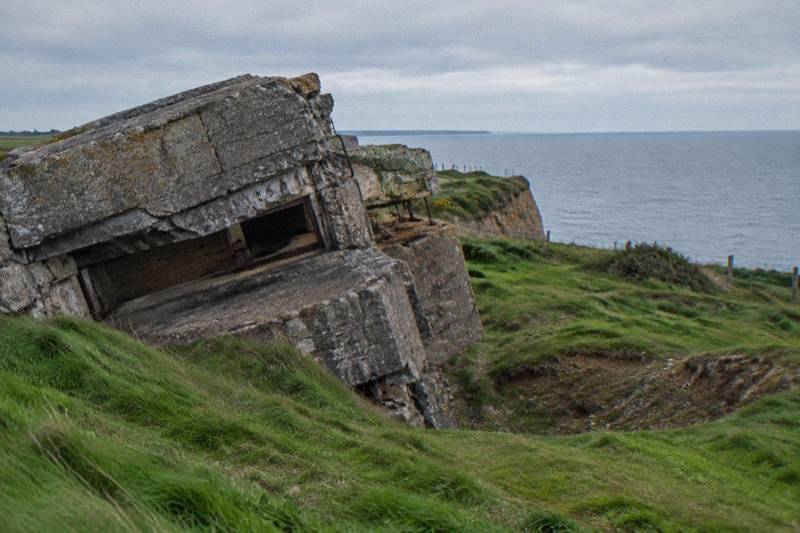
Pointe du Hoc is a narrow clifftop promontory between Utah Beach and Omaha Beach, and it is one of the few D-Day sites where the battlefield itself, craters, shattered bunkers and all, is the exhibit. It is free to enter. It is also, right now, a construction site in places: a restoration project by the American Battle Monuments Commission runs into 2027, the visitor centre has been closed since early 2026, and several paths and structures close at times while the work moves through its phases.
That leaves visitors with a fair question: is the stop still worth it, and what exactly can you see? This page lays out the present situation, what a guided tour can still show you there, and how the listings that stop at Pointe du Hoc differ, in route, duration and price. For a wider view of how this stop fits a full day, see the Normandy D-Day Tour homepage comparison.
Why Is Pointe Du Hoc Partly Closed?
The site is free and remains open, but a major ABMC restoration project running into 2027 has closed the visitor centre since early 2026, and the east-side paths, some bunkers, the ceremonial plaza and the crater bridge close at times while work proceeds. In some periods access is limited to the west pathway only. The site's own pages set what is open on a given day, and no stop is ever promised.
The project addresses erosion, visitor safety and infrastructure across the whole promontory. That is not cosmetic work: the cliff edge is unstable in stretches, and the wartime features that draw visitors, the cratered ground and the bunkers, are exactly the parts needing stabilization. Temporary facilities, a welcome point and restrooms, have been put in place, and parking has been disrupted and rerouted at times during the works.
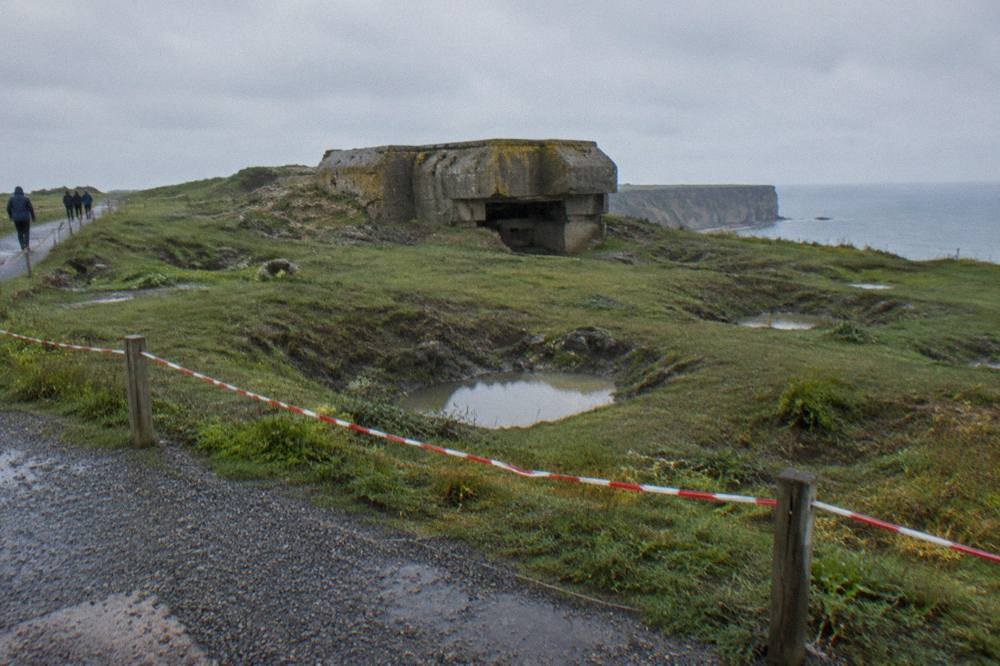
What this means in practice is variability. A visitor one month may walk the clifftop path freely; a visitor the next may find the route limited to the west pathway. The ABMC's restoration project page and its plan-your-visit page for the Pointe du Hoc Ranger Monument are the two sources that track the phases, and tour operators working the site daily generally know which sections are reachable. The one certainty is the horizon: the restoration is scheduled to run until mid-2027.
The broader context helps explain why the work is happening now. The D-Day corridor draws roughly 1.8 million visitors a year, and heavy foot traffic on fragile ground accelerates erosion. The project is about keeping the site walkable for decades, not about shutting it down.
What Can You Still See At Pointe Du Hoc?
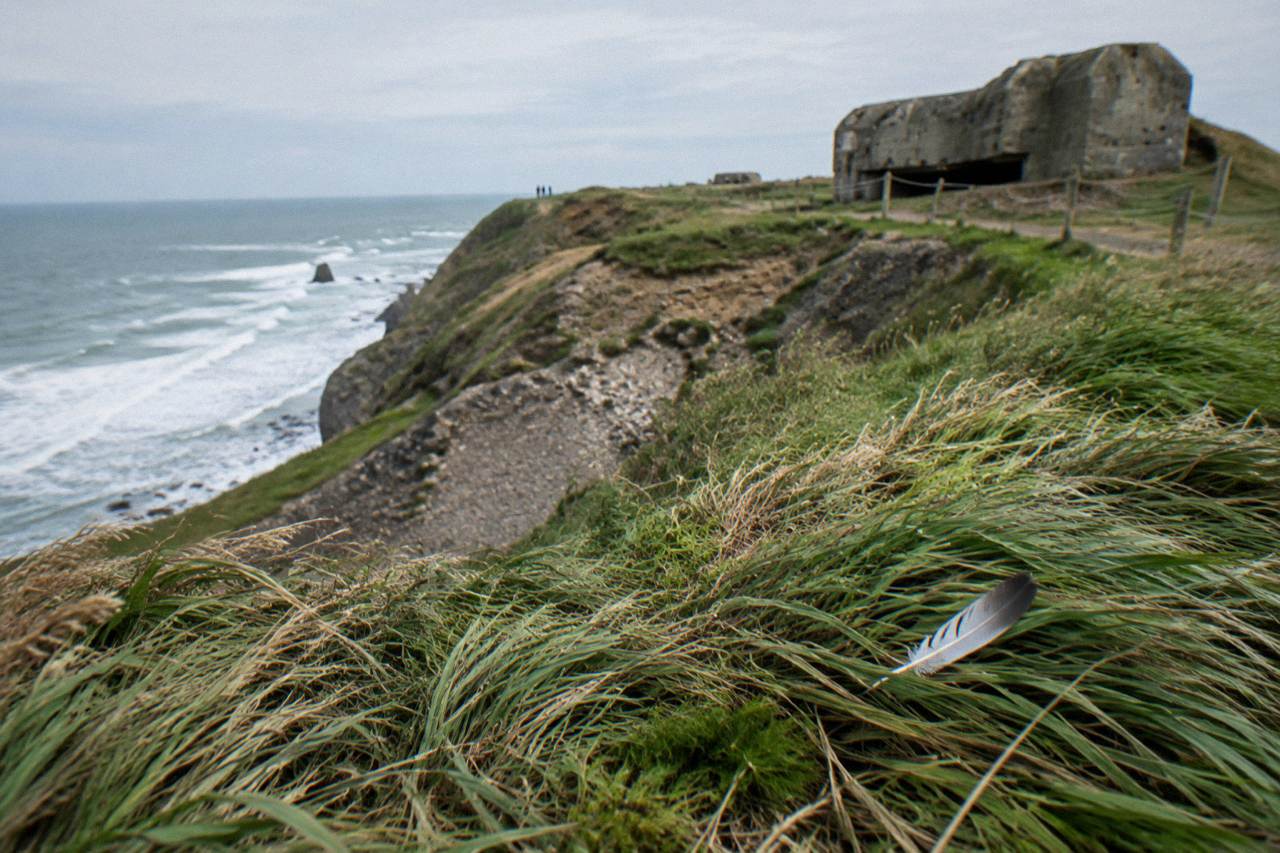
The cliff face, the sea views across the sector, the cratered ground on the paths that remain open, the Ranger Monument, and whatever bunkers sit outside the active work zones are still visible. What you cannot currently count on is the visitor centre, the east pathway, the crater bridge and every individual bunker, since access shifts with the construction phases.
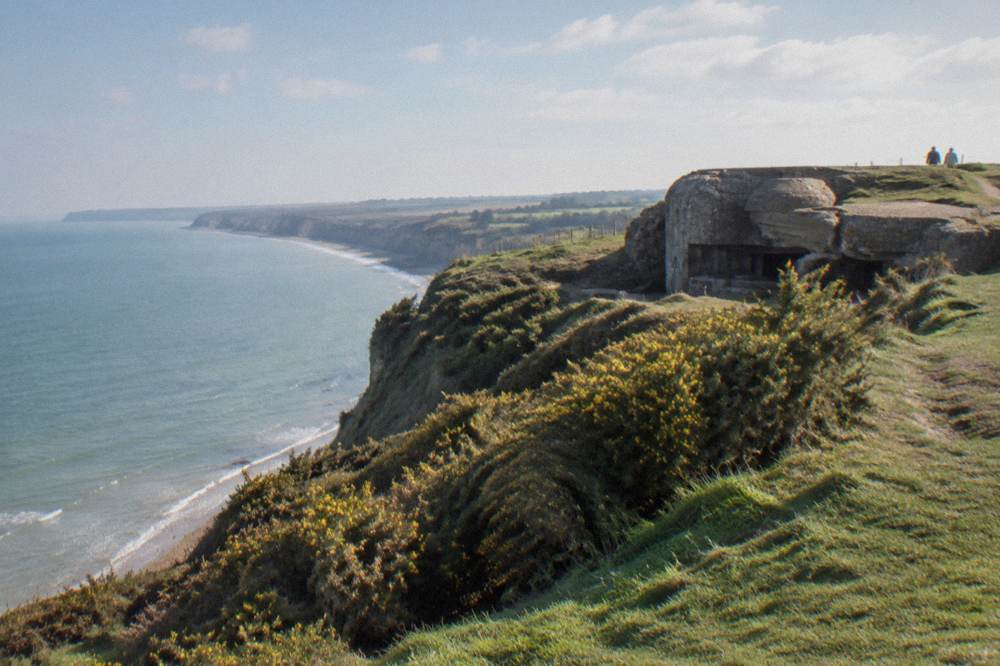
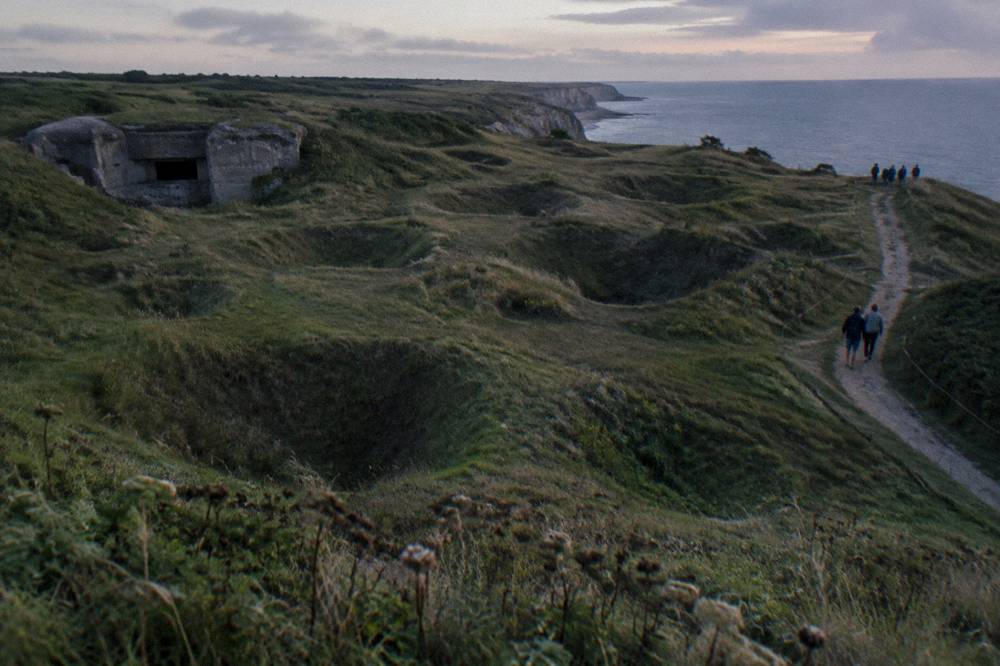
The core impression of the place survives the works. The promontory drops sharply to the sea on three sides, and the scale of the cliffs explains why the site mattered on 6 June 1944, when American forces climbed them under fire. The lunar ground, pocked with shell craters that were never filled, is intact across much of the open area. The Ranger Monument itself stands at the heart of the site.
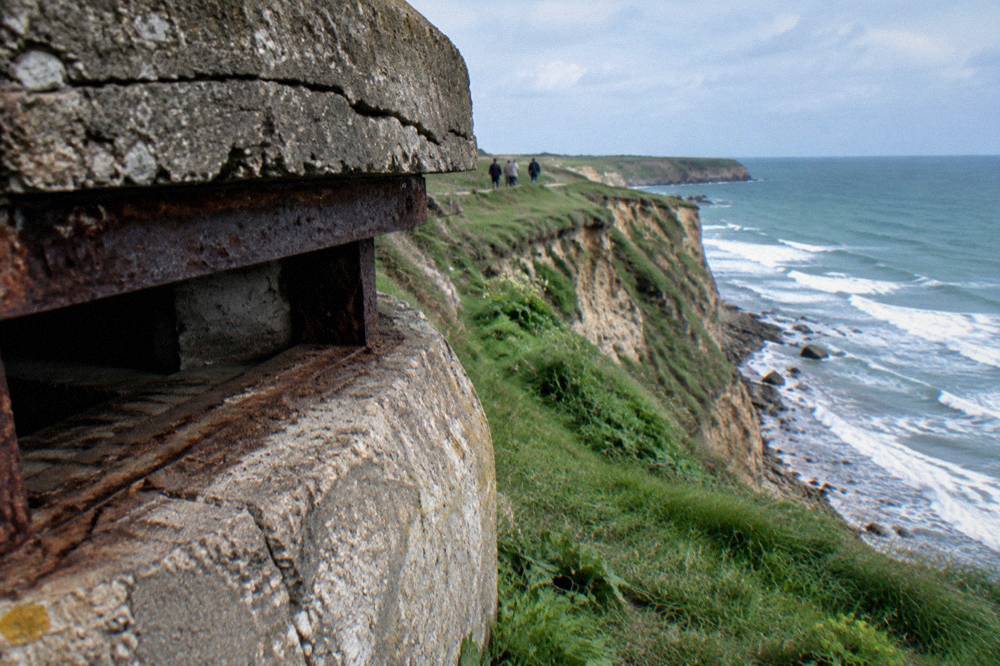
A guided visit adds the layer the site cannot: with the visitor centre shut, a guide's narration carries more of the story than it would at a fully serviced site. Guides on the Bayeux tours that list Pointe du Hoc typically adjust their walk to the open sections and narrate the rest from the viewpoints, though every listing frames its stops in its own words and none promises access to a specific bunker.
The one thing not to do is treat the closures as a reason to skip the stop. The 4.9-rated half-day from Place de Québec runs from $135 per person for four hours and lists Pointe du Hoc, Omaha Beach and the Normandy American Cemetery as its stops; the meeting point is Place de Québec in Bayeux, with no hotel collection listed.
For readers planning the whole day around this stop, the tours below each list Pointe du Hoc as a stop, though one operator notes that access there depends on the works.
Which Normandy Tours Stop At Pointe Du Hoc?
Pointe du Hoc appears as a listed stop on a large share of the tours sold from Bayeux, Caen and Paris, from the $106 Bayeux half-day minivan trips to the $309 full-day minivan trips from Paris. Only tours whose own itinerary names the stop can be counted on to visit; a tour of the same sector without Pointe du Hoc on its line may skip it entirely.
The table below covers the main listings that name Pointe du Hoc in their stops, inclusions or title, with the details each listing actually states.
| Tour | From | Price basis | Duration | Group size | Pointe du Hoc listed? |
|---|---|---|---|---|---|
| Bayeux: American D-Day Sites Half-Day Tour | Bayeux, Place de Québec | from $135 per person | 4 hours | up to 19 | Yes, listed stop |
| Normandy American Beaches Full Day Tour from Bayeux | Bayeux, Place du Quebec | from $160 per person | 9 hours | up to 8 | Yes, in itinerary summary |
| From Bayeux: American D-Day Sites Full-Day Tour | Bayeux, Place de Québec | from $213 per person | 8 hours | up to 19 | Yes, listed stop |
| Bayeux: D-Day Landing Beaches Full-Day Guided Tour | Bayeux, Place de Québec | from $169 per person | 8.5 to 9.5 hours | up to 10 | Yes, listed stop |
| Pointe du Hoc, Omaha Beach, Cemetery Day Trip from Paris | Paris, Théâtre du Lido | from $309 per person | 13 to 14 hours | shared vehicle | Yes, in title and stops |
| From Paris: D-Day Landing Beaches Full-Day Tour | Paris, Avenue de Wagram | from $298 per person | 12 hours | up to 8 | Yes, listed stop |
| Normandy D-Day Sites Day Trip from Paris with Lunch | Paris, Place du Général Kœnig | from $124 per person | 14 hours | coach, up to 50 | Yes, listed stop |
The pattern is straightforward: Pointe du Hoc sits on the standard American-sector circuit between Omaha Beach and Utah Beach, so nearly every American-sector tour includes it. Tours that focus elsewhere, the Canadian Juno Beach trip from Paris, the British-sector tours from Caen, the Gold Beach to Caen half-day, do not list it and should not be expected to add it.
The Paris day trips are the ones to think hardest about. Fourteen hours in a day, with Pointe du Hoc as one of six stops, means less time at the promontory than a Bayeux departure allows. The full comparison lives on the Normandy day trip from Paris guide; the short version is that Bayeux-based visits trade the Paris coach ride for more time on the ground.
One Paris listing deserves its own note. The day trip whose title leads with Pointe du Hoc, from $309 per person for 13 to 14 hours with a driver-guide, rates 4.9 from 95 reviews and lists Pointe du Hoc, the National Guard Monument, Omaha Beach, the Overlord Museum and the American Cemetery among its stops, departing from the Théâtre du Lido on the Champs-Élysées. It is the closest thing to a Pointe-du-Hoc-first itinerary sold from Paris.
If the question is which single booking pairs Pointe du Hoc with a guide at moderate cost, the Bayeux half-day format is the usual answer: four-hour tours from Bayeux start at $112 per person, and free cancellation is listed on them.
How Much Time Should You Spend At Pointe Du Hoc?
A self-guided walk of the open sections takes most visitors 45 minutes to an hour, which is roughly what guided tours budget there; the Bayeux half-day tours fit Pointe du Hoc, Omaha Beach and the American Cemetery into four hours total, while full-day Bayeux tours give the same stops eight to nine hours.
Tour timing is the cleanest guide to what the stop needs. Every Bayeux half-day listing that includes Pointe du Hoc runs four to five hours for three stops, which implies short, focused visits: a clifftop walk, the viewpoints, the monument, then back in the vehicle. Full-day Bayeux tours stretch to eight or nine hours by adding Utah Beach and Sainte-Mère-Église, not by lingering longer at the promontory.
Self-guided visitors should add context time. With the visitor centre closed, there is no on-site exhibition to orient you, so reading ahead or carrying a guidebook substitutes for it. The Pointe du Hoc restoration project page explains what the work covers and is worth five minutes before you go; the ABMC plan-your-visit page carries the access details.
The differences between the main formats shake out like this:
| Format | Typical price basis | Time on site at Pointe du Hoc | What else fits the day |
|---|---|---|---|
| Bayeux half-day, up to 19 | from $135 per person, 4 hours | Guided visit of about an hour | Omaha Beach and the American Cemetery |
| Bayeux half-day minivan, up to 8 | from $106 per person, 5 hours | Short guided walk | Omaha Beach, Pointe du Hoc, the American Cemetery |
| Bayeux full-day minivan | from $213 per person, 8 hours | Longer stop with narration | Utah Beach and Sainte-Mère-Église added |
| Coach day tour from Paris | from $124 per person, 14 hours | Photo stop and brief walk | Utah Beach Museum, Omaha Beach, the cemetery, lunch listed |
| Paris small-group minivan | from $298 per person, 12 hours | Guided stop with more flexibility | Longues-sur-Mer battery, Overlord Museum, food listed |
If you are combining self-guided stops, budget half a day for Pointe du Hoc plus the Normandy American Cemetery at Colleville-sur-Mer, which is about a ten-minute drive east and open daily 09:00 to 17:00 with last admission at 16:30, free, closed 25 December and 1 January. Its walking path down to Omaha Beach has been closed since 2016, so plan the beach itself separately. Details are on the Normandy American Cemetery visit guide.
Is Pointe Du Hoc Still Worth Visiting During The Restoration?
Yes, for most visitors: the clifftop setting, the cratered ground and the monument remain the experience, and reviews of tours running during the works do not treat the closures as a deal-breaker. Visitors who want the visitor centre, every bunker or a guaranteed full circuit should either wait for the 2027 completion or lower expectations and let a guide structure the visit.
The plain trade-off: you are seeing a great site in a partial state. Anyone who visited before the works and returns will notice the difference most, particularly the shut visitor centre and the fenced sections. First-time visitors, which is most of the audience, still get the essentials: the cliffs, the craters, the monument, the sea.
Guided visits absorb the disruption better than self-guided ones. A licensed guide adapts the walk to the open paths and narrates the closed features from viewpoints. Among the strongest-rated options, the Omaha and Utah Beaches full-day tour from Bayeux rates 5.0 from 1,448 reviews at from $174 per person, and the Bayeux Band of Brothers full-day tour rates 4.9 from 143 reviews at from $160 per person; both operators' tours in this sector include Pointe du Hoc on the itineraries where it is listed.
There is also a scheduling argument for going now rather than waiting for 2027. The D-Day corridor is busy and getting busier, and the restoration's completion will likely raise interest further. Shoulder-season visits, outside the June anniversary week, are the quietest, a point covered in detail on the best time to visit the D-Day beaches guide. Early June brings ceremonies, road closures around the N13 corridor, Bayeux, Arromanches and Sainte-Mère-Église, and hotels that book out months ahead.
How Do You Get To Pointe Du Hoc Without A Tour?
Pointe du Hoc sits on the coastal road between Grandcamp-Maisy and the Omaha Beach sector, reachable only by car or by tour vehicle; there is no rail link and no practical public transport. Self-drive visitors coming from Bayeux should plan roughly 40 minutes each way, and from Caen a little longer, and parking at the site has been disrupted at times by the works.
The site's rural position is the whole point of its history, and it is also the logistics problem. The practical bases are Bayeux and Caen, both on the Paris Saint-Lazare line, about 2h19 to Bayeux and about two hours to Caen, with fares from about 17 to 90 euros depending on how far ahead you book. That comparison is worked through on the Paris to Normandy by train guide.
Without a car, a tour is not a luxury but the mechanism for reaching the site at all. That is the quiet advantage of the Bayeux half-day format: it solves transport, guide and access knowledge in one booking from Place de Québec. Self-guided drivers, by contrast, carry the burden of checking access themselves before setting out, since sections of the site shift.
Pairing nearby stops efficiently matters more than usual while the works compress the walkable area. The table below pairs Pointe du Hoc with its realistic neighbors.
| Nearby stop | Direction from Pointe du Hoc | Admission | Notes |
|---|---|---|---|
| Normandy American Cemetery | A short drive east | Free | Open daily 09:00 to 17:00, last admission 16:30; closed 25 Dec and 1 Jan |
| Omaha Beach | 10 to 15 minutes east | Free public beach | Beach path from the cemetery closed since 2016; use beach access at Saint-Laurent-sur-Mer |
| Overlord Museum | Beside the cemetery road | adult 9.90 euros | Closed 4 Jan to 12 Feb, 24 to 25 Dec and 1 Jan; ticket office closes 1 hour before |
| Utah Beach Museum | 40 to 50 minutes west | adult 10 euros | Closed 16 Nov to 14 Dec; Oct-Apr 10:00-18:00, May-Sep 09:30-19:00 |
| Airborne Museum, Sainte-Mère-Église | 40 to 50 minutes west | adult 11.50 euros | Closed December and January except Christmas holidays |
What Should You Know Before Walking The Site?
The ground is uneven, exposed and often windy: wear sturdy shoes and layers, expect no visitor-centre shelter or exhibits, keep to the marked open paths, and treat the site with the respect due a battlefield where men died. The welcome point and restrooms are temporary facilities during the works.
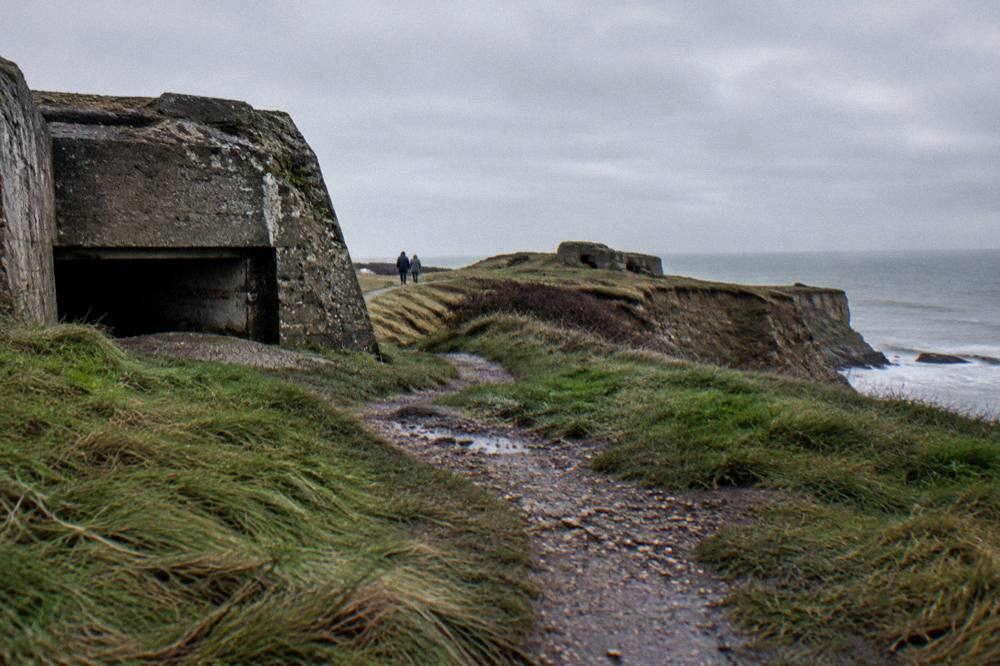
Practical preparation is short. The promontory has no shade and no cover from the wind off the Channel; rain arrives horizontally at times. The cratered ground is grassed but rutted, and closed sections are closed for safety reasons tied to erosion, not bureaucracy. Children can manage the open paths, but the cliff edges demand supervision.
Respect matters here as at every site of loss. The promontory is managed by the American Battle Monuments Commission, the same body that runs the cemetery, and the same expectations of decorum apply even though this is not a burial ground: stay off the bunkers and monuments, and leave anything you find on the ground where it lies. A fuller rundown of site etiquette is on the what to expect on a D-Day tour guide, and dressing for a day of coastal walking is covered on the blog post about what to wear on a Normandy tour.
For visitors who want the deepest version of the American sector rather than a single stop, the full-day Bayeux format adds Utah Beach, Sainte-Mère-Église and lunch time that half-days cannot fit.
And for those sold on the private format, where the guide sets the pace and the Pointe du Hoc walk can run long if access allows, the private options from Bayeux start at from $394 per person for an eight-hour minivan tour with hotel pickup listed, rating 5.0 from 638 reviews. The trade-offs between private and small-group formats are compared on the private versus small-group D-Day tours guide.
Whatever the format, the booking logic on this stop is the same: choose a listing whose own itinerary names Pointe du Hoc, book one that departs from where you are actually staying, and let the guide's daily knowledge of the works handle the rest.
Common Questions About Pointe Du Hoc
Is Pointe du Hoc still open during the restoration?
Yes. The site is free to enter and remains open daily while the restoration project runs into 2027. The visitor centre has been closed since early 2026, and paths, bunkers, the ceremonial plaza and the crater bridge close at times, with access limited to the west pathway in some periods.
Do you need tickets for Pointe du Hoc?
No. Admission is free. The site is managed by the American Battle Monuments Commission, the same body that runs the Normandy American Cemetery, which is also free.
Which tours from Bayeux stop at Pointe du Hoc?
Most American-sector tours from Bayeux list it, including the half-day tour from Place de Québec from $135 per person, the full-day version from $213 per person, both run by Ophorus with free cancellation. Pointe du Hoc stays open daily through the 2026 and 2027 works, though access may be limited at times, so time on site may be shorter or kept to open paths.
Can you visit Pointe du Hoc from Paris in one day?
Yes, on a long day trip. Several Paris listings include Pointe du Hoc, from the coach trip from $124 per person over 14 hours to the small-group minivan tours from $298 and $309 per person over 12 to 14 hours.
How long does a visit to Pointe du Hoc take?
Plan 45 minutes to an hour for the open sections on a self-guided walk. Guided tours budget broadly the same, fitting Pointe du Hoc, Omaha Beach and the American Cemetery into a four-hour half-day from Bayeux.
Is Pointe du Hoc worth visiting with the visitor centre closed?
For most visitors, yes. The cliffs, the cratered ground and the Ranger Monument are the experience, and guides adapt the walk to whatever sections are open. Visitors wanting the visitor centre or a guaranteed full circuit may prefer to wait until the restoration completes in 2027.