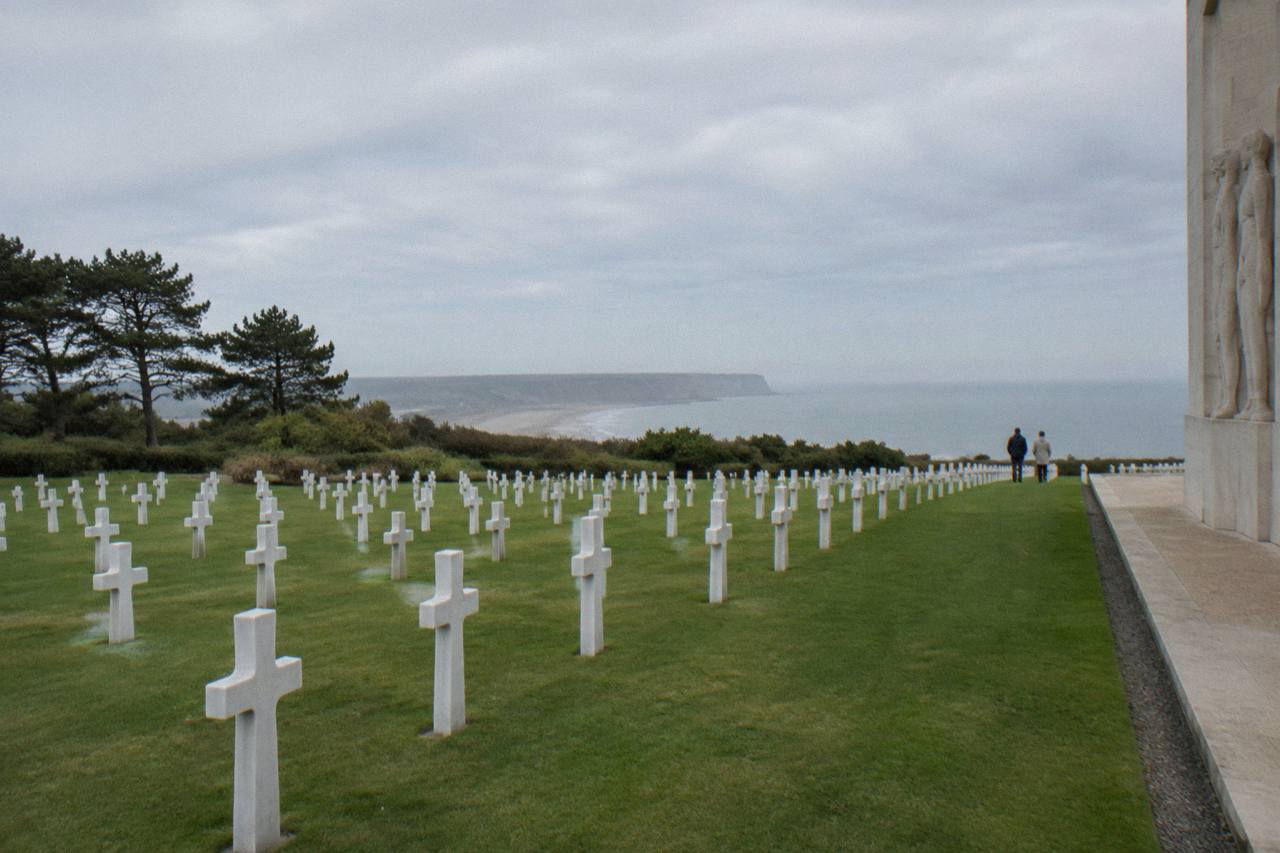
What To Wear On A Normandy Tour?
Practical clothing and footwear advice for visiting the D-Day beaches, bunkers and the American Cemetery, with the cemetery dress rules and what changes by season.
What Is The Basic Outfit For A Normandy Day?
Dress for walking on mixed surfaces and changeable weather, not for style: broken-in walking shoes or boots with grip, long trousers, and two or three light layers you can add or strip off across the day. Normandy's coast is windy and showers arrive without much warning, so a light rain jacket belongs in your bag every month of the year. Nothing on the beaches demands smart clothing, but the American Cemetery does ask for respectful dress.
That single paragraph answers most of it, but the details matter because a Normandy day is unusually varied underfoot. A typical full-day itinerary moves you from a town sidewalk, to a sandy or pebbled beach, to a cratered clifftop at Pointe du Hoc, to a manicured lawn where rows of white marble headstones stand in perfect alignment. Each of those surfaces punishes a different wrong shoe. Each also has its own unwritten dress expectation, and one of them, the cemetery, has written rules.
The practical starting point is the tour itself. Most visitors book either a day trip from Paris, a small-group minivan day from Bayeux such as the full-day American beaches tour, or a half-day like the Omaha morning tour, and all three involve the same mixture of short walks, long stands and possibly damp grass. The full-day Bayeux tour runs nine hours, meets at Place du Quebec in central Bayeux, and covers the American Cemetery, Omaha Beach and Pointe du Hoc, rated 4.9 from 2,637 reviews and priced from $160 per person. Nine hours outdoors is the packing problem you are really solving. Once your packing list is sorted, the guide to which D-Day sites cost nothing to visit shows which beaches, bunkers and memorials you can add around the tour without spending extra.
Which Shoes Work On The Beaches, Bunkers And Cemetery Paths?
Wear broken-in walking shoes, trail sneakers or lightweight hiking boots with real tread, and skip smooth-soled dress shoes, flip-flops and new anything. The three surfaces that matter are loose sand at Utah and Omaha, wet grass and gravel at the cemetery, and irregular, sometimes muddy ground around the bunkers and bomb craters at Pointe du Hoc, where a restoration project has parts of the site rerouted onto temporary paths.
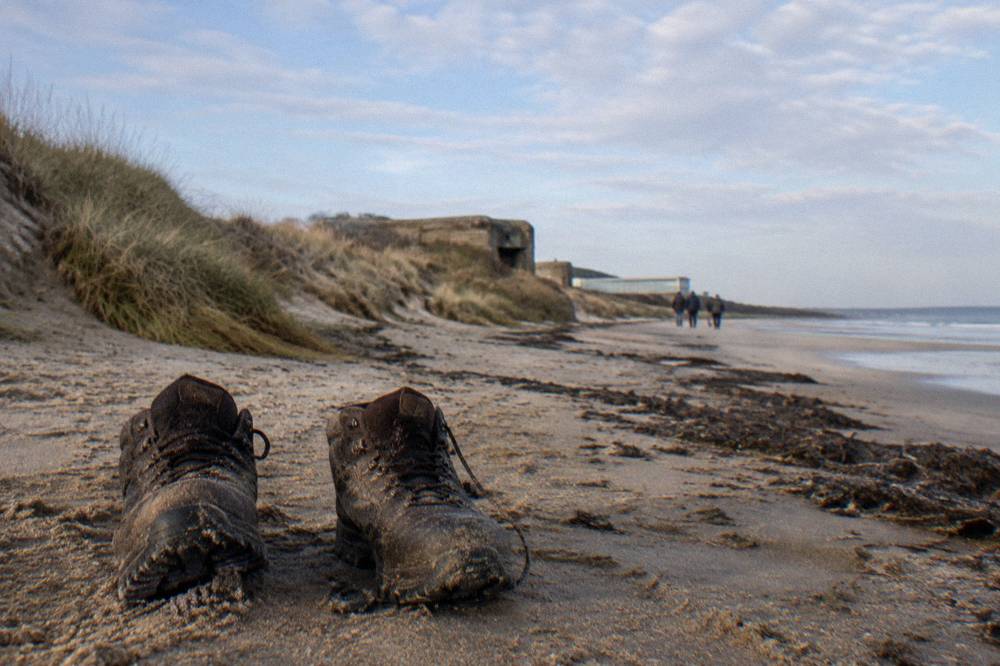
Beach sand sounds harmless, but Omaha and Utah are working beaches with loose, shifting sand that also holds moisture after rain, and the walk from a parking area to the waterline can be longer than it looks from the road. Sneakers are fine. Sandals dry faster but fill with sand within minutes and offer nothing on gravel.
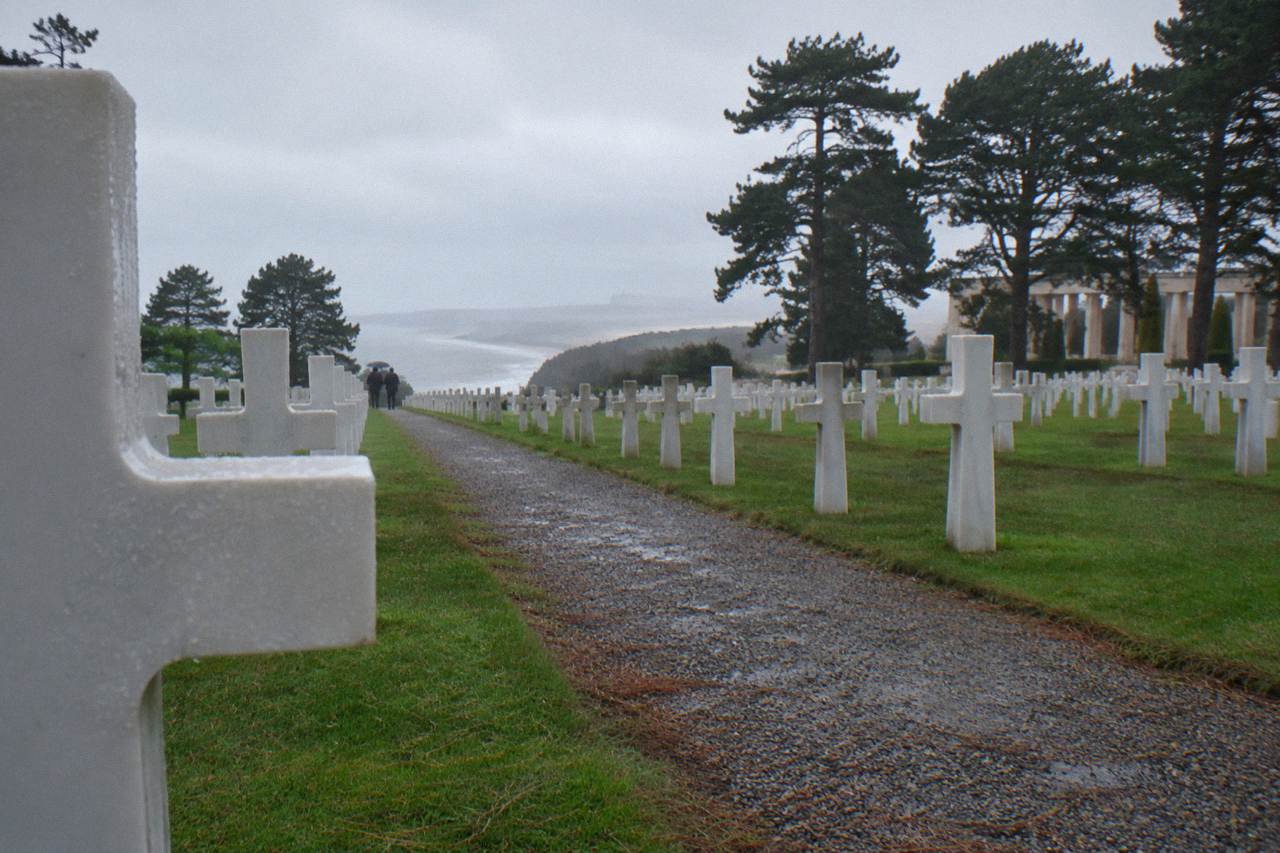
The cemetery is the surface people forget. Colleville-sur-Mer's paths are a mix of gravel walkway and grass, and the grass is often damp even on a dry-looking afternoon because the site sits above the sea and collects wind-driven moisture. The American Battle Monuments Commission, which manages the cemetery, asks visitors not to run and to keep to respectful conduct, which in practice means steady walking on uneven ground for an hour or more. Thin-soled shoes feel every piece of gravel. More on the cemetery's actual written rules comes later in this article, because dress there is a matter of etiquette rather than safety.
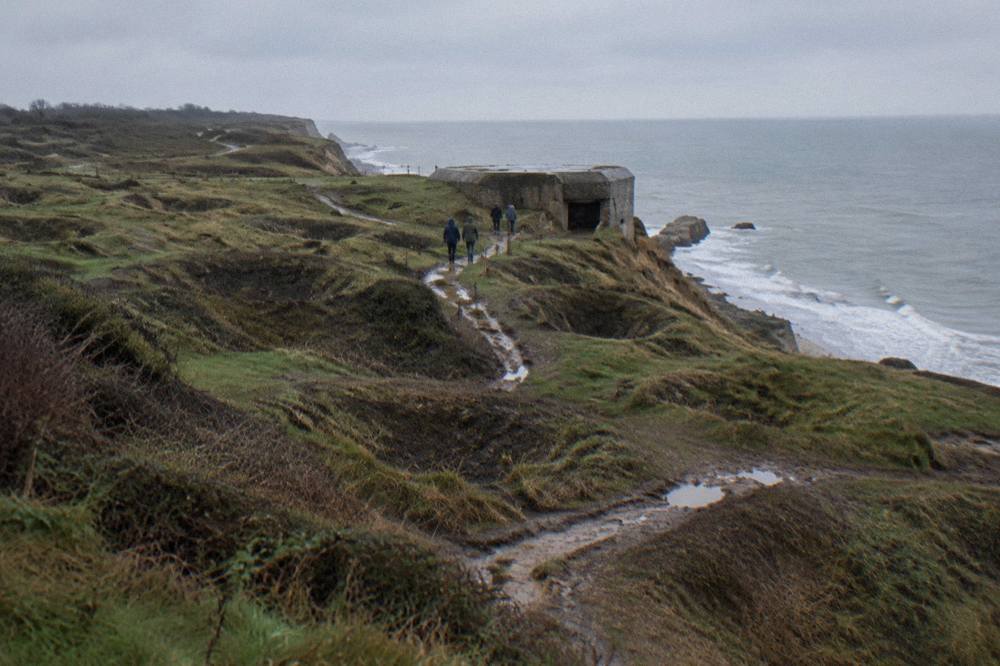
Pointe du Hoc is the toughest test. The clifftop is a preserved battlefield, pocked with craters, edged with bunkers, and threaded with paths that the ongoing restoration project, scheduled to run until mid-2027, has shifted at times onto the west pathway. The site is free to enter and the visitor center has been closed since early 2026, with temporary welcome facilities in place. After rain the ground is soft, and the temporary routings are not always the smooth original paths. A shoe with grip and some ankle support earns its place here. The visitor information for the site is on the ABMC Pointe du Hoc planning page, which also covers what is open during the works.
How Should You Layer For Normandy Weather?
Plan on three light layers rather than one heavy layer: a breathable base, a warm mid-layer such as a fleece or light sweater, and a wind-and-water-resistant outer shell. The Normandy coast is windy in every season, and the wind off the Channel can drop the felt temperature sharply between a sheltered village stop and an exposed beach or clifftop, sometimes within the same hour.
This is not a place for optimistic packing. The pattern that catches visitors out is a mild morning in Bayeux or Caen followed by a cold, gusty hour standing at Omaha Beach or on the Pointe du Hoc clifftop, where there is no shelter at all. Tours spend real time standing still: at the cemetery during the guide's explanation, at memorials, at viewpoints. Standing still in wind is when inadequate layers announce themselves.
A shell jacket with a hood does double duty. Rain in Normandy is frequently brief rather than all-day, so a full rain outfit is overkill, but a shower passing through during an outdoor stop is common enough that the hood saves the day. Long trousers beat shorts for three separate reasons: windchill on exposed sites, damp grass if you sit or kneel for a photo, and the simple fact that several stops are places of burial and remembrance where most visitors feel more comfortable covered.
| Layer | What it is | What it handles |
|---|---|---|
| Base | T-shirt or long-sleeve shirt, breathable | Warm sheltered stops, coach time |
| Mid | Fleece, light sweater or packable insulated top | Windchill at beaches and clifftops, standing stops |
| Outer | Hooded wind-and-shower shell | Sea wind, passing rain, drizzle at Pointe du Hoc |
| In the bag | Light gloves and a warm hat outside summer | Exposed commemorative stops and early departures |
Seasonally, the differences are of degree. From late spring through early September the base layer alone often suffices midday, but the shell still earns its space for wind and the odd shower. From late autumn through winter, and on any early-morning departure such as the half-day Omaha tour that meets at Place du Quebec in Bayeux, the hat and gloves stop being optional. If your trip falls in the anniversary week in early June, be aware that ceremonies and road closures add long periods of standing outdoors; the scheduling angle is covered in this guide to the best time to visit.
What Are The Dress Rules At The Normandy American Cemetery?
The cemetery asks for respectful dress and conduct: clothing appropriate to a place of burial, no sitting or lying on the grass or monuments, no running, no bicycles, no shouting or games, and no real or replica weapons. Only service and guide dogs are allowed. Personal photography is generally permitted but should respect the setting. These are the official rules of the site, set by the American Battle Monuments Commission.
There is no published dress code naming specific garments, so the practical translation is simple: think of it as you would any cemetery or place of worship. Shorts and a t-shirt will not get you turned away, but many visitors find they dress a notch more formally here than on the beach an hour earlier, and long trousers and a shirt with a sleeve are a reliable middle path. Beachwear, swimwear and very abbreviated clothing feel wrong to most people among headstones, and the site's own guidance frames the visit as one requiring decorum.
The conduct rules matter as much as the clothing. The pathway from the cemetery down to Omaha Beach has been closed to the public since 2016, so the cemetery is a contained walk rather than part of a beach loop. The site is open daily from 9 a.m. to 5 p.m. with last admission at 4:30 p.m., closed only on December 25 and January 1, and admission is free. Group visits and wreath layings require advance contact with the ABMC, and pre-registration may apply at busy times, so check the ABMC visit planning page before you go.
A note on the dogs rule: it is strict. Only service and guide animals are permitted, so a planned day with a pet in the car does not extend to the cemetery paths. And because the site's rules prohibit running, this is not the stop for a jog or a brisk exercise walk, which some visitors combining a fitness routine with sightseeing discover on arrival.
The cemetery features on nearly every American-sector itinerary, including the full-day Bayeux tour mentioned above and the long day trip from Paris with lunch, which is the most reviewed tour here at 10,452 reviews, rated 4.8, from $124 per person. Whichever you take, the shoe and layer advice above applies fully, because the cemetery stop involves the most standing of the day. More on that specific site is in the Normandy American Cemetery visitor guide.
Is A Small Group Or Private Tour Format Any Different For Clothing?
No tour in this guide imposes a dress requirement beyond the sites themselves, but format changes how long you are outdoors: a half-day morning tour compresses the coldest hours, a full-day tour spans temperature swings from morning to late afternoon, and a private tour may add grassy or off-pavement stops at places like Angoville-au-Plain that reward proper footwear.
The half-day Omaha morning tour, rated 5 from 260 reviews and from $112 per person, meets early at Place du Quebec in Bayeux and spends about four hours at Omaha Beach, the cemetery and Pointe du Hoc. Early starts in Normandy mean the day's coolest air, dew on grass and the highest chance of damp underfoot, so the shell and the grippy shoe matter more here than on an afternoon departure.
Private formats push the same logic further. A private day tour from Bayeux, rated 5 from 196 reviews and from $399 per person, includes stops at Utah Beach, Sainte-Mere-Eglise and the German cemetery at La Cambe, and those smaller village and countryside stops involve farm tracks, churchyards and grass verges rather than paved visitor infrastructure. The 5.0-rated private D-Day experience from Bayeux, from $394 per person with hotel pickup in central Bayeux, lists the same kind of mixed sites. The common thread: the further the itinerary moves from coach-park to monument, the more your footwear is doing.
For readers weighing the format question more broadly, the trade-offs between private and small-group days are compared in the private versus small group tour guide. Clothing-wise, the advice does not change, only how long you will be glad you followed it.
What Extras Are Worth Packing For A Day On The Beaches?
Pack a small day bag with a water bottle, a compact rain shell even when the sky looks clear, sunscreen for exposed clifftop stops, sunglasses, and a spare pair of socks. The extras that most improve a Normandy day are unglamorous: dry socks after a beach stop, a bag that leaves your hands free at the cemetery, and something warm for the return leg when the day cools.
Free hands matter more than people expect. Stops involve listening to a guide, reading memorial panels and taking photographs, and a crossbody or backpack beats a handbag on sand and gravel. On tours where headsets are listed, such as the Bayeux Band of Brothers full-day tour, which supplies headsets and is rated 5 from 106 reviews, you will also be wearing an audio receiver, so a bag with a shoulder strap keeps that manageable.
Sun protection surprises visitors. Normandy is not associated with strong sun, but Pointe du Hoc and the cemetery are wide open with no shade, and a bright spring or summer afternoon reflecting off pale stone and sand is enough to burn fair skin over two unhurried hours. Sunglasses help against the sea glare that is near constant on the coast.
Beach sand gets into every shoe, grass stops are damp more often than not, and a dry pair back in the vehicle converts the last two hours of a nine-hour day from a squelch into a stroll. It costs nothing and weighs nothing. If your day includes the Utah Beach Museum, which is open daily with an adult ticket at 10 euros and free parking, the museum's visit information confirms the practical mix of indoor galleries and outdoor beach frontage that makes the socks-and-shell packing list sensible.
What Should Children And Older Visitors Wear?
Children need grippy closed shoes they cannot shake off on sand, one more layer than the adults are wearing because children stand still at stops rather than walk, and a hood that stays on in wind. Older visitors should prioritize cushioned, supportive footwear, because cemetery gravel and the crater paths at Pointe du Hoc are the two least even surfaces of the day.
The standing-still point deserves emphasis for every age. Tours pause for explanations of ten minutes or more at each site, and a child who was warm while walking cools quickly the moment the group stops in sea wind. The same applies to anyone sensitive to cold; the mid-layer you were too warm in during the walk becomes exactly right at the memorial. For less steady walkers, a stick with a tip that grips helps on the gravel and the crater ground, though the pace of a small-group day leaves room to take those surfaces slowly.
Tours that cap at 8 or 7 passengers, which covers most minivan tours from Bayeux, tend to move at the group's pace and make standing stops feel less rushed, but the surfaces are identical. Nobody needs specialist equipment. What the day rewards is ordinary, sensible outdoor clothing, chosen as if for a long walk on a windy day anywhere, plus the specific respect shown by dress and behavior at the cemetery. Packing is the one variable fully in your control.
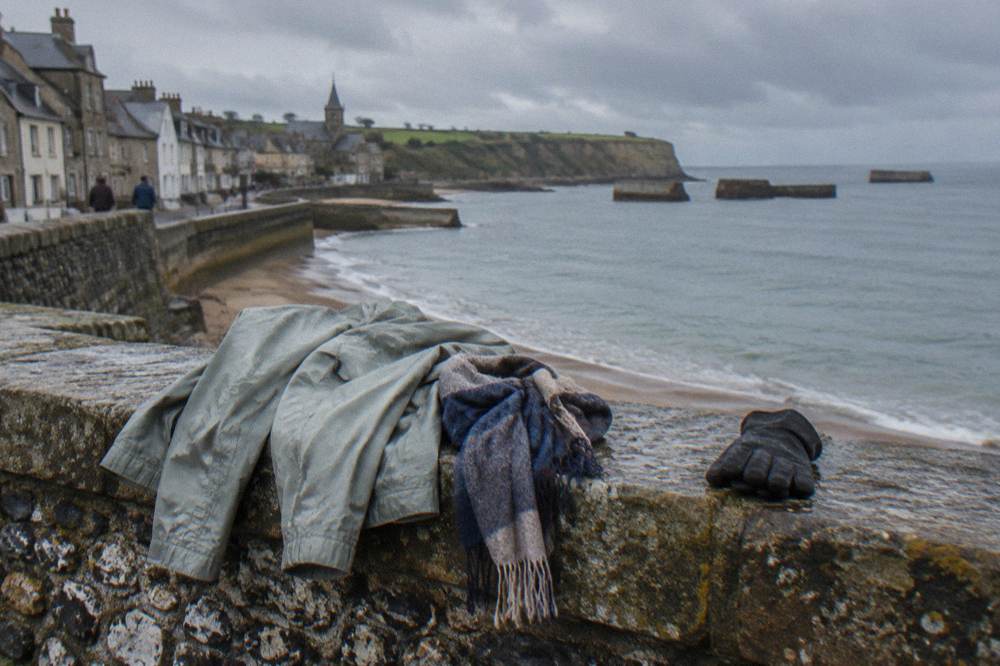
If the clothing question is settled and the bigger one is which day to book, the three tours below cover the three most common situations: a full American-sector day based in Bayeux, a small-group day from Paris, and a shorter morning focused on Omaha.
Common Questions About What To Wear On A Normandy Tour
Can you wear shorts to the Normandy American Cemetery?
There is no published garment list, so shorts will not get you refused, but the site asks for respectful dress and conduct appropriate to a place of burial. Most visitors wear long trousers and a shirt with a sleeve. Beachwear and swimwear feel out of place among the headstones.
Are sneakers good enough for the D-Day beaches?
Yes, provided they have real tread and are broken in. Trail-style sneakers handle Omaha and Utah sand, cemetery gravel and Pointe du Hoc's crater paths. Smooth leather soles, new shoes and flip-flops are the choices that cause problems.
Do you need a rain jacket in summer?
Bring one. Rain in Normandy is often brief rather than persistent, but showers pass through in every month, and the shell also blocks sea wind at exposed stops like Pointe du Hoc and the cemetery, where there is no shelter at all.
Is Pointe du Hoc difficult to walk?
The site is a preserved battlefield with craters, bunkers and uneven ground, and a restoration project running into 2027 has some pathways rerouted or closed at times, with the visitor center closed since early 2026. Footwear with grip is the single thing that makes it comfortable.