What Country Lost The Most Men On D-Day?
The United States suffered the highest documented D-Day losses with about 8,230 casualties, though German figures are uncertain and British and Canadian losses were also heavy.
On 6 June 1944, about 160,000 Allied troops came ashore in Normandy, including about 73,000 Americans. By the end of that single day the United States had suffered the heaviest documented losses of any Allied nation: the National WWII Museum's fact sheet records 8,230 American casualties, a figure that includes killed, wounded, missing and captured together. The question of which country lost the most men, though, has two answers depending on how you count, because the German figure is a disputed range and the American total mixes the dead with the wounded. This page sets out the numbers nation by nation, names where each figure comes from, and shows where those losses happened along the five landing beaches you can still walk today, from the American sector at Omaha and Utah to the British and Canadian beaches further east. Travelers who want to stand at these places often book a guided day trip, and the most reviewed option is the Paris day trip with lunch, rated 4.8 from 10,452 reviews.
America Paid The Highest Price Among The Allies
The United States lost the most men of the Allied nations on D-Day. The National WWII Museum's fact sheet puts American casualties at 8,230, a total of killed, wounded, missing and captured. The same museum lists total Allied casualties at over 10,300, which means American losses were roughly four in five of the Allied total that day.
The count deserves a careful reading. "Casualties" is not the same as "killed". The National D-Day Memorial's Necrology Project, which counts only the dead, lists 2,519 Americans killed on 6 June 1944. The National D-Day Memorial's dead count across all Allied nations is 4,436, of which 1,917 were from other Allied nations.
Why the gap between 2,519 dead and 8,230 total American casualties? Wounded men who survived, soldiers listed as missing who later returned, and men taken prisoner all sit inside the larger number. Historians at both institutions note that precise official tallies simply do not exist for every category, which is why every serious source prints ranges and caveats rather than a single settled count.
The comparison with Germany complicates the picture. The National WWII Museum gives German casualties as 4,000 to 9,000, a span so wide it may or may not exceed the American figure. Because German records from the day are incomplete and contradictory, no reliable ranking of first and second place exists between the two. The confident statement, the one every source supports, is that among the Western Allies the United States lost the most men on D-Day.
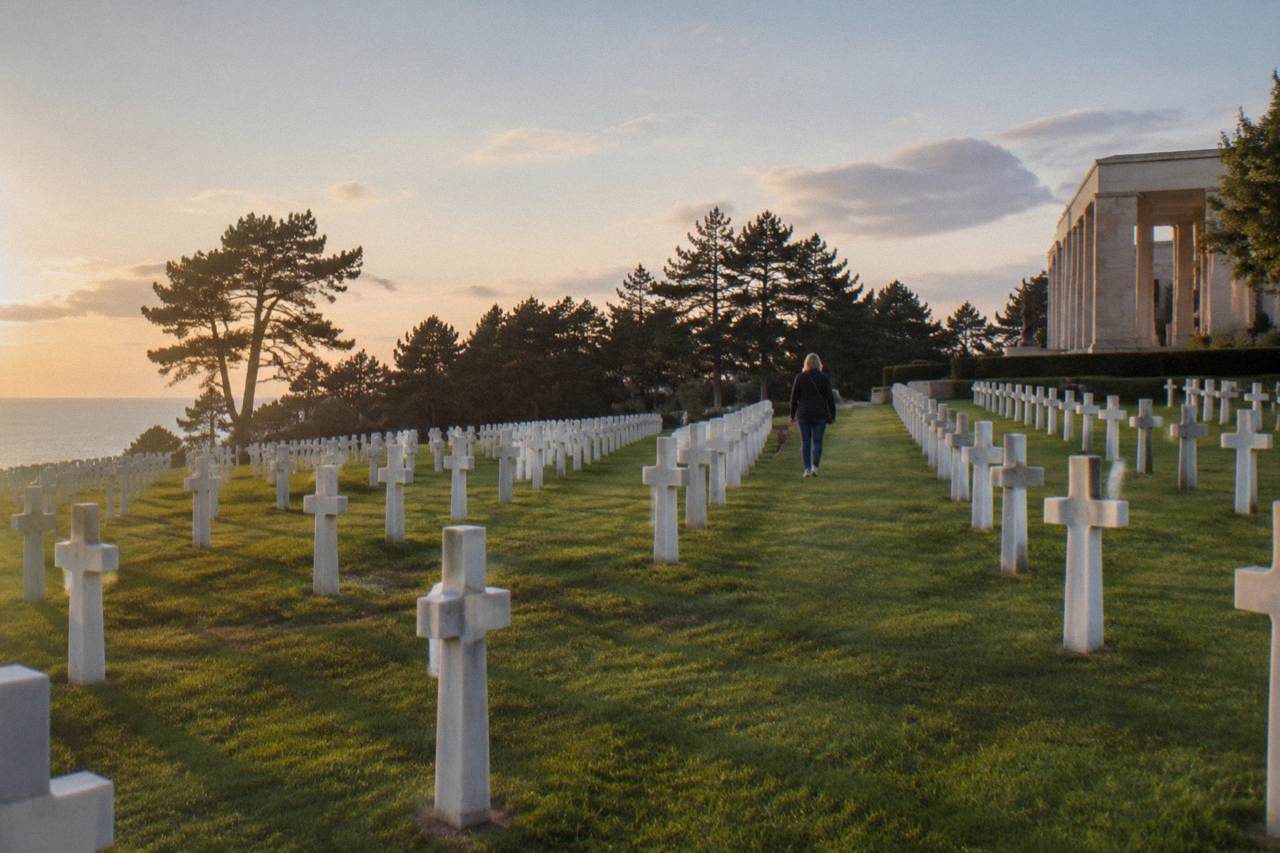
For visitors, these numbers stop being abstractions at specific places. The 2,519 American dead are commemorated most visibly at the Normandy American Cemetery at Colleville-sur-Mer, which the American Battle Monuments Commission maintains above Omaha Beach. It is open daily from 9 a.m. to 5 p.m. with last admission at 4:30 p.m., closed only on 25 December and 1 January, and admission is free, per the ABMC's official cemetery pages. A guided visit there, with time at the beaches themselves, is the reason many travelers book a tour rather than drive the sites alone.
How Many Americans Were Killed Or Wounded On D-Day?
American losses on 6 June 1944 were 8,230 total casualties per the National WWII Museum, of which 2,519 were killed per the National D-Day Memorial's Necrology Project. The dead were concentrated at Omaha Beach and among the airborne drops inland from Utah Beach.
The National WWII Museum's fact sheet is the standard citation for the 8,230 figure, and the museum itself flags it as an estimate, noting that no precise official tally exists. The 2,519 killed comes from a different kind of work: the National D-Day Memorial built its Necrology Project by naming individual dead, an effort that produces a lower and more defensible count than aggregate estimates. Both numbers describe the same day, seen from different angles.
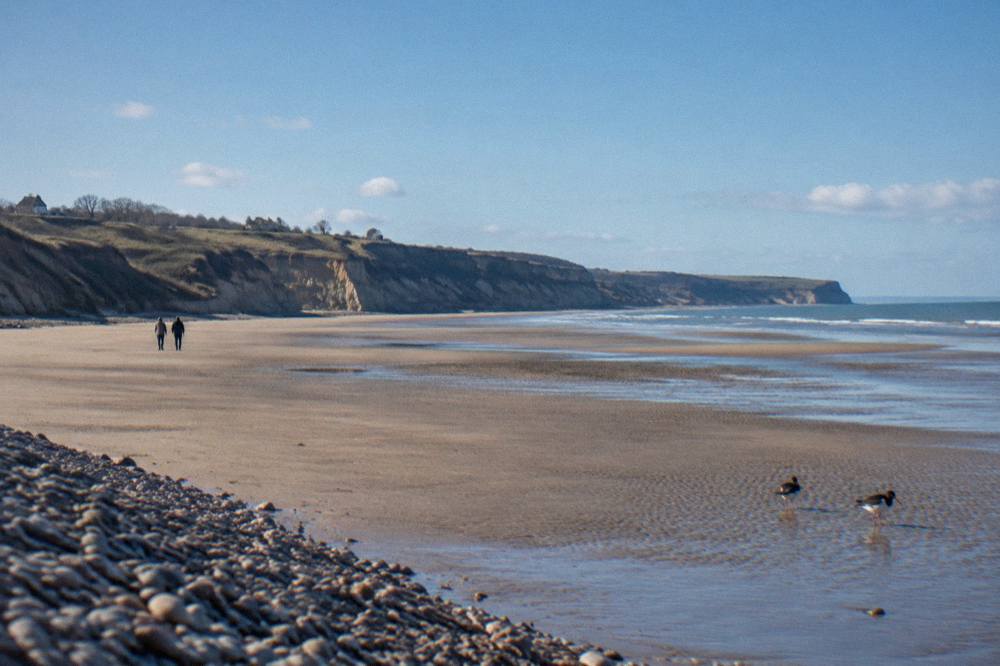
Omaha Beach explains most of the American toll. The beach the troops codenamed Omaha was an American objective on 6 June, alongside Utah, and the terrain, a wide sand flat ending in bluffs held by defenders, made it the costliest ground of the day. The airborne landings west of Utah, scattered across flooded fields and hedgerows around Sainte-Mere-Eglise, account for much of the rest. Visitors tracing the American story usually pair both: the beach and the airborne country, either in one long day or across two.
That geography shapes which tour fits. The Paris day trip with lunch, from $124 per person, lists stops at Utah Beach, its landing museum, Pointe du Hoc, Omaha Beach and the American Cemetery, with a two-course lunch and a guide throughout the fourteen hours. From Bayeux, the full-day American sites tour covers Sainte-Mere-Eglise, Utah Beach, Pointe du Hoc, Omaha Beach and the cemetery in about eight hours, from $213 per person, and groups travel in Mercedes minivans of up to 19. History-minded readers deciding between bases can compare the options in the guide to tours from Bayeux.
What Were The British And Canadian Losses On D-Day?
British casualties on D-Day were about 2,700 per the National WWII Museum fact sheet. Canadian losses in the Juno sector were 961 army casualties by the Juno Beach Centre's count, 340 killed, 574 wounded and 47 captured, with about 381 Canadians killed in total once paratroopers are included.
The British figure of 2,700, like the American total, is a combined count of killed, wounded, missing and captured, and it comes from the same National WWII Museum fact sheet.
The Canadian count is the most detailed of any nation because the Juno Beach Centre publishes a number-by-number breakdown drawn from official histories and Commonwealth war graves records. Their army figures for the Juno sector are exact: 340 killed, 574 wounded, 47 captured. Adding paratroopers and air force losses lifts the Canadian dead to about 381. It is a smaller toll than the American one, but against a far smaller force, and the Juno Beach Centre's own numbers page makes the point that proportionally it was a heavy day for Canada.
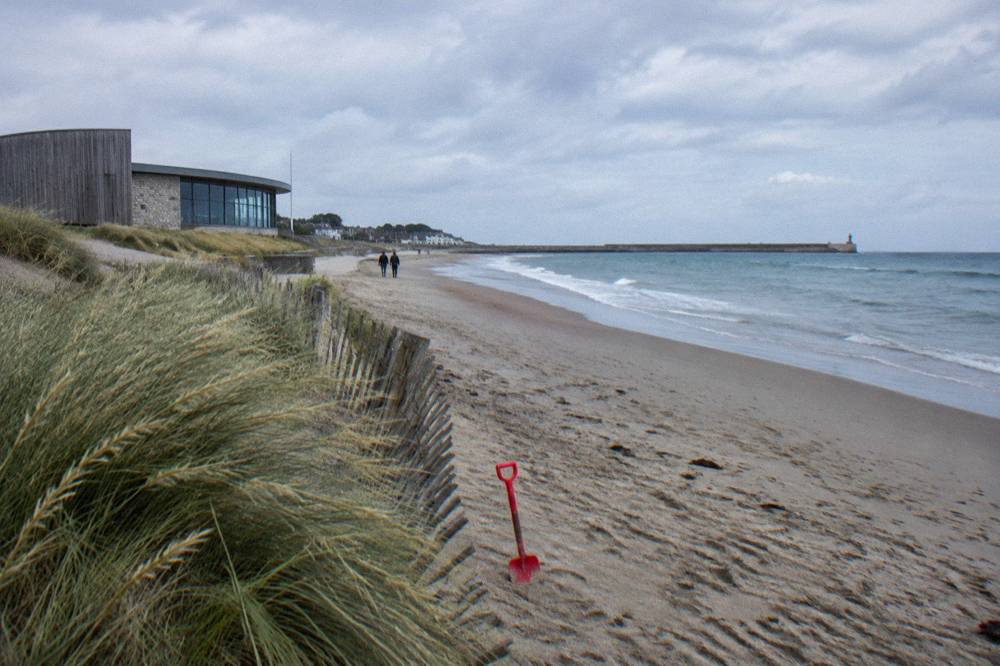
The Canadian story is easiest to reach from Paris on a dedicated trip. The small-group Juno Beach tour from Paris, rated 4.9 from 197 reviews, runs about thirteen hours in a minibus of up to eight, includes entrance fees, and centers the Canadian sector rather than treating it as a detour from the American sites. From Normandy itself, the Canadian War Cemetery at Beny-sur-Mer and the Juno Beach Centre at Courseulles-sur-Mer, open most of the year though closed through January, carry the story. The Centre's museum ticket is 9 euros for adults.
A comparison table makes the national split easier to read:
| Nation | Total casualties (killed, wounded, missing, captured) | Killed only | Source |
|---|---|---|---|
| United States | 8,230 | 2,519 | National WWII Museum; National D-Day Memorial |
| United Kingdom | 2,700 | no precise breakdown published | National WWII Museum |
| Canada | 961 in the Juno sector (army) | about 381 in total | Juno Beach Centre |
| Germany | 4,000 to 9,000, disputed | no available breakdown | National WWII Museum |
| All Allies combined | over 10,300 | 4,436 | National WWII Museum; National D-Day Memorial |
How Many German Soldiers Died On D-Day?
German casualties on D-Day sit in a disputed range of 4,000 to 9,000, per the National WWII Museum's fact sheet. No breakdown of German killed, wounded and captured exists for 6 June alone, and historians describe the range as highly uncertain because the surviving records are incomplete.
That span is unusually wide for a single day of fighting, and it exists for a reason: the German side kept fragmented records during a battle it was losing, units were destroyed or scattered faster than they could report, and the distinction between killed, captured and missing often dissolved in the confusion of the beach defenses and the drops inland. The National WWII Museum prints the range precisely because anything narrower would be false precision.
What the range means for the original question is worth stating plainly. If German losses were near the top of the range, Germany may have lost more men on D-Day than the United States did. If they were near the bottom, the American toll was the higher of the two. No source can settle it, so any article that names Germany as the certain answer is overstating what the records support. Among the Allies, by contrast, the American figure is documented and clearly the heaviest.
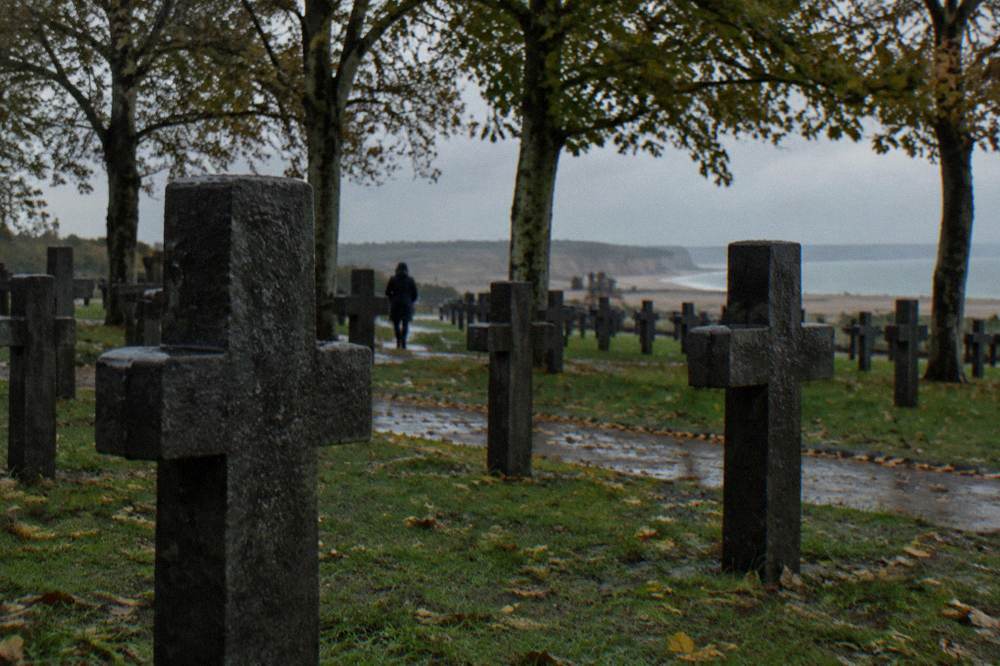
Visitors can see the German side of the loss at La Cambe, the German war cemetery inland from Omaha Beach, where flat dark stone markers replace the white marble crosses of the American cemetery. Several tours in the region list La Cambe among their stops, including the private day tour from Bayeux and the Le Havre shore trip, both of which name it on their itineraries. It is a somber counterpoint, and the contrast between the two cemeteries says more about how nations mourn than any number can.
Where Did The Heaviest Losses Happen On The Beaches?
The heaviest Allied losses of 6 June occurred at Omaha Beach, the American sector, where first-wave infantry met largely intact defenses. Pointe du Hoc, the cliff between Utah and Omaha, also cost the American force dearly, while Utah, Gold, Juno and Sword saw comparatively lighter casualties.
The five beaches had codenames that still organize every tour in Normandy: Utah and Omaha were American, Gold and Sword were British, Juno was Canadian. Roughly 160,000 Allied troops landed that day. The geography of the loss followed the geography of the defense: at Utah the landings drifted south into a lightly held stretch, at Gold, Juno and Sword the initial waves got off the sand quickly, and at Omaha the bluffs and obstacles held up the assault for hours.
Pointe du Hoc sits between the two American beaches, a sheer cliff where American army rangers scaled the heights to silence positions believed to threaten both landing zones. The site is free to enter and remains scarred with craters and shattered bunkers, though a major restoration project running into 2027 has closed the visitor center and limits parts of the cliff paths at times, so check the ABMC page before planning a stop there.
For travelers deciding how to see this ground, the format matters more than the destination. A shared minibus tour with up to eight people, like the twelve-hour full-day landing beaches tour from Paris rated 4.9 from 791 reviews, gives more time at each site than a fifty-seat coach can. The trade-offs between formats are laid out in the comparison of private and small-group tours, and the practical question of how many days you need in Normandy matters just as much, since one day forces a choice between the American and Commonwealth sectors.
The scale of the day, and what it accomplished, is worth one closing number: of the 4,436 Allied dead counted by the National D-Day Memorial, 1,917 were not American, which means every Allied nation represented on those beaches lost men within hours of each other on the same tide.
Can You Visit The Sites Where These Losses Occurred?
Yes, all the main D-Day loss sites are visitable on guided tours or independently: Omaha Beach and the American Cemetery, Utah Beach and its museum, Pointe du Hoc, Juno Beach, and the German cemetery at La Cambe. Guided tours from Paris start from $124 per person and from Bayeux from $160 per person.
The cemetery is the natural anchor. The American Battle Monuments Commission keeps it open daily from 9 a.m. to 5 p.m., admission free, with rules that reflect that it is an active burial ground: respectful dress and conduct, no sitting or lying on the grass or monuments, no running or games, and only service dogs. The walking path from the cemetery down to Omaha Beach itself has been closed since 2016, so beach access is by road from the village below. Groups and wreath layings should contact the ABMC in advance.
Museums put the casualty figures in context. The Utah Beach Museum's adult ticket is 10 euros, the Airborne Museum at Sainte-Mere-Eglise is 11.50 euros, and the Overlord Museum near the American Cemetery is 9.90 euros. Tours differ in which entries they include: the Paris day trip with lunch includes Utah Beach Museum entry, the full-day minibus from Paris includes the Overlord Museum, and the Canadian sector's Commonwealth-focused trips from Caen include the Caen Memorial, whose adult ticket is 20.80 euros.
For a first visit built around the American story, two formats stand out. From Paris, the fourteen-hour coach day trip with lunch, from $124 per person, covers Utah Beach, Pointe du Hoc, Omaha Beach and the cemetery in a single excursion, which suits travelers who cannot add nights in Normandy. From Bayeux, the full-day American sites tour in a Mercedes minivan of up to nineteen, rated 4.9 from 620 reviews, walks the same ground with a longer stop list including Sainte-Mere-Eglise. Reading the National WWII Museum's fact sheet before arrival, then standing where the numbers happened, is the sequence most guides recommend.
Every figure on this page carries a name behind it, and the sites keep those names. Whether you arrive on a coach from Paris, a minivan from Bayeux, or a train you can read about in the rail guide from Paris to Normandy, the ground itself is the record.
Common Questions About D-Day Losses
How many Americans died on D-Day?
The National D-Day Memorial's Necrology Project counts 2,519 American dead on 6 June 1944. The National WWII Museum's broader figure of 8,230 American casualties includes killed, wounded, missing and captured together.
How many British and Canadian soldiers died on D-Day?
British casualties were about 2,700 in total per the National WWII Museum, with no precise killed-only breakdown published. The Juno Beach Centre counts 340 Canadian army dead at Juno, with about 381 Canadians killed in total once paratroopers and airmen are included.
Why do D-Day casualty numbers differ between sources?
Because records from the day are incomplete, especially on the German side. Some figures count only the dead, others mix killed, wounded, missing and captured, and historians at the National WWII Museum and the National D-Day Memorial both print estimates and note the variation between counts.
Can you visit the Normandy American Cemetery where the US dead are buried?
Yes. The cemetery at Colleville-sur-Mer is open daily from 9 a.m. to 5 p.m., last admission 4:30 p.m., closed 25 December and 1 January, and admission is free. Check the ABMC page before you go, since capacity pre-registration may apply.