Are Any D-Day Veterans Still Alive?
Yes, a small number of D-Day veterans are still alive, and 29 Second World War veterans, among them a 107-year-old Navy veteran of Omaha Beach, attended the anniversary ceremony at the Normandy American Cemetery, where they were welcomed as guests of honor.
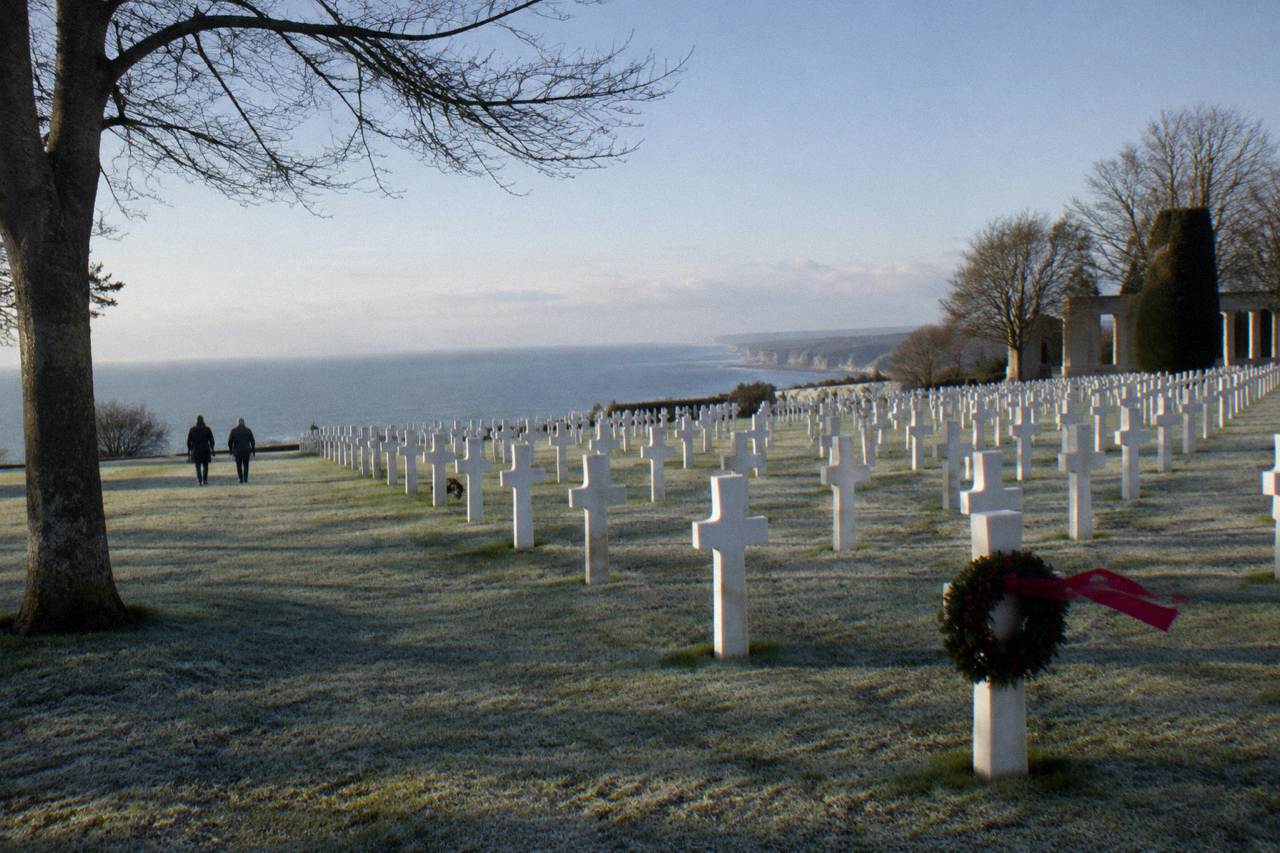
The youngest men who came ashore on 6 June 1944 were teenagers. Anyone who landed that day and is still alive is now past a hundred years old, or very close to it, and the group shrinks every year. Yet the answer to the question is yes: veterans of the landings are still alive, and some of them still make the journey back to Normandy each June. The featured day trip from Paris, rated 4.8 from 10,452 reviews, carries visitors to the same stretches of sand those men crossed, and its stops at Omaha Beach and the American Cemetery sit at the center of the anniversary story. For anyone wondering what physical traces of the landings survive, the guide to D-Day wreckage still visible at Normandy Beach shows where old bunkers and harbour blocks can still be seen today.
How Many D-Day Veterans Are Still Alive?
No official count of living D-Day veterans exists, and no reliable total number is published anywhere, so any figure beyond documented attendance is a guess. What can be said with certainty is that at least dozens are still alive: 29 WWII veterans attended the anniversary ceremony at the Normandy American Cemetery as guests of honor, and the Best Defense Foundation brought back around 25, many of them likely among the 29.
The reason no total exists is simple arithmetic combined with record-keeping reality. Around 160,000 Allied troops landed on D-Day, including about 73,000 Americans, and they were spread across five beaches and the airborne drops. Those men were mustered by unit, not by landing day, and the surviving records do not separate "landed on 6 June" from "served in Normandy in June 1944" in a way any national body totals up. France, the United Kingdom and the United States each honor veterans through different programs, and none publishes a live census.
What replaces the missing census is documented presence. The American Battle Monuments Commission, which manages the Normandy American Cemetery, confirmed 29 WWII veterans as guests of honor at the anniversary ceremony, held at 11 a.m. on 6 June at the cemetery above Omaha Beach. Among them was a 107-year-old Navy veteran who served at Omaha Beach itself. Separately, the Best Defense Foundation reported facilitating returns to Normandy for around 25 veterans. Some overlap between those counts is likely; some veterans attend ceremonies without any organization's help.
For visitors, this reality shapes the June experience in a concrete way. Hotels in Bayeux and Caen book out months ahead for anniversary week, roads close for ceremonies, and the beaches themselves become stages for remembrance rather than quiet walking ground. Outside that one week, the same sites run at a calmer pace, and a guided day becomes a very different experience.
For readers planning a first visit around the veterans' story, a small selection of guided options stands out: a full day and a half-day from Bayeux.
Who Attended The Anniversary Ceremony At The American Cemetery?
The ceremony at the Normandy American Cemetery brought together 29 WWII veterans as honored guests, with wreath layings and official remarks, and drew senior American defense officials to Colleville-sur-Mer. The event is the anchor of the anniversary week and the moment when the remaining veterans are most visible to the public.
The American Battle Monuments Commission organizes the ceremony in partnership with American and local French officials. The program follows the pattern of past years: remarks, wreath-laying at the memorial, and seating of the veterans where the audience can see them. Speakers have included the Chairman of the Joint Chiefs and the U.S. Secretary of Defense, which signals how much weight the event carries in official American remembrance.
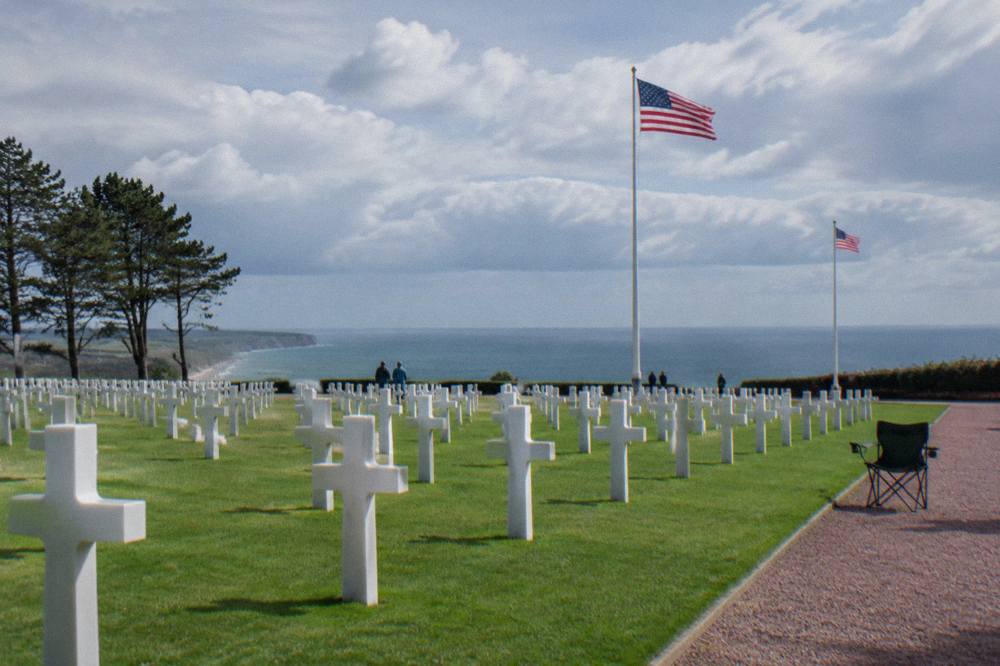
The ceremony is not the only one. The same week saw remembrance at the British Normandy Memorial, an airborne ceremony at the Airborne Monument in Sainte-Mère-Église, and a dawn homage on Omaha Beach. In total more than 120 American and Allied events ran across the region over six days. Anyone hoping to see a veteran in person during anniversary week has several realistic chances, though none is guaranteed: attendance is announced close to the date, and the veterans' travel depends on health.
The cemetery itself is open daily from 9 a.m. to 5 p.m., with last admission at 4:30 p.m., and admission is free. It closes only on 25 December and 1 January. Visitors should check the ABMC page before going, since pre-registration may apply at busy times, and group visits or wreath layings require advance contact. The rules reflect the site's nature: respectful dress and conduct, no sitting or lying on the grass or monuments, no running, bicycles or games, and service and guide dogs only.
Want to stand on the ground the ceremony honors, with a guide who can name what happened on each stretch of sand?
What Do The Landings' Numbers Tell Us About The Men?
On 6 June 1944, about 160,000 Allied troops came ashore or dropped inland, including about 73,000 Americans, across five beaches code-named Utah, Omaha, Gold, Juno and Sword. The American sector carried Utah and Omaha, the British carried Gold and Sword, and the Canadian force carried Juno.
Those five names still organize how the coast is visited today. Tour itineraries follow the sectors: American-sector tours run Pointe du Hoc, Omaha Beach, the American Cemetery and Utah Beach, while British and Canadian tours center on Arromanches, the British Normandy Memorial, the Juno Beach Centre and the war cemeteries of the Commonwealth dead. The full-day Bayeux tour from the American D-Day Sites line, rated 4.9 from 620 reviews and from $213 per person, covers Sainte-Mère-Église, Utah Beach, Pointe du Hoc, Omaha Beach and the cemetery in about eight hours by Mercedes minivan.
| Fact | Figure |
|---|---|
| Allied troops landed on D-Day | About 160,000 |
| American troops among them | About 73,000 |
| Beaches | Utah, Omaha, Gold, Juno, Sword |
| Veterans at the cemetery ceremony | 29 |
| Events during anniversary week | More than 120 |
| Ceremony time and place | 11 a.m., 6 June, Normandy American Cemetery |
What the numbers cannot do is name individuals, and that gap is where a guided visit earns its place. A driver-guide who has walked these sites for years points out the cratered ground at Pointe du Hoc, the width of Omaha Beach at low tide, and the distance from the water line to the shingle bank, and those physical facts explain the day more directly than any statistic. The most reviewed Paris day trip, rated 4.8 from 10,452 reviews and from $124 per person, pairs that guiding with a two-course lunch and entry to the Utah Beach Museum.
The Pointe du Hoc site deserves one planning note. It is free to enter, but a major restoration project runs into 2027: the visitor center has been closed since early 2026, and east-side paths, bunkers and the crater bridge close at times, with access sometimes limited to the west pathway only. The ABMC page for the site sets what is open on a given day.
How Do Veterans Return To Normandy Today?
Organizations charter flights and cover full logistics to bring aging veterans back, with the Best Defense Foundation reporting around 25 veterans facilitated on its anniversary program, while families and local French associations arrange smaller private returns. The veterans travel with medical support, and the French communities receive them with ceremonies of their own.
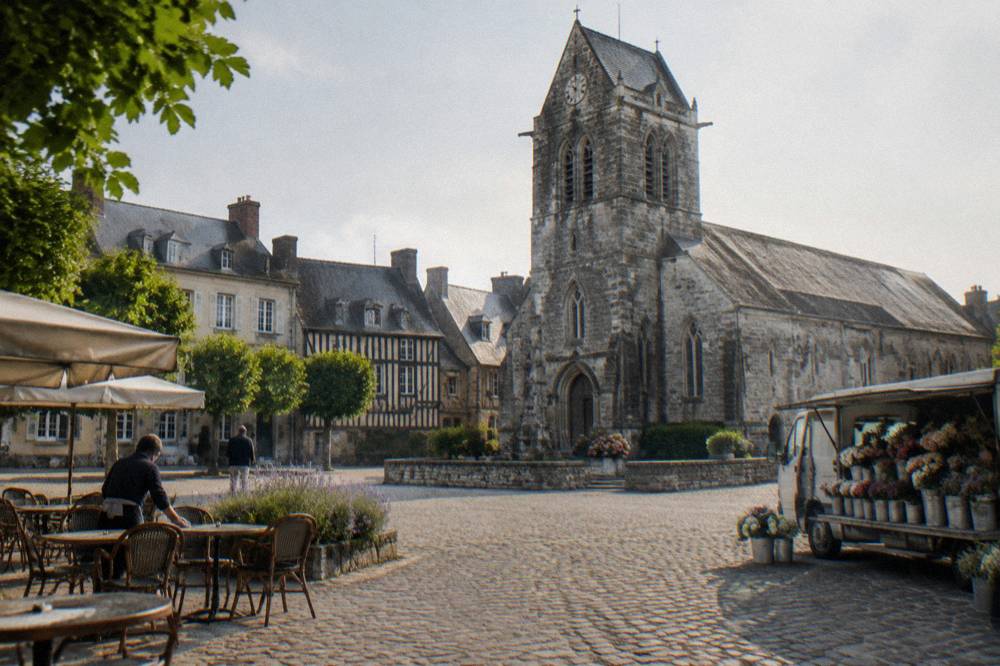
The pattern is well established. A charity handles the flights, wheelchairs, medical staff and hotels; the veterans are flown into Paris or Caen; and then they move through a week of ceremonies, school meetings and site visits. In Sainte-Mère-Église, the airborne town whose church square still carries a paratrooper effigy from the famous landing on the steeple, the anniversary program included a ceremony at the Airborne Monument with paratroopers of the 82nd Airborne taking part. The town's broader program ran marches, vehicle exhibitions, parachute demonstrations and camps across late May and early June.
The Band of Brothers day tour from Bayeux, rated 5.0 from 106 reviews and from $157 per person, spends a full day in exactly this airborne country: Omaha Beach, the American Cemetery, Pointe du Hoc, Sainte-Mère-Église and the Brecourt Manor area, with a licensed guide and headsets. For visitors whose connection to the story runs through the paratroopers rather than the beach landings, it is the natural fit, and the Band of Brothers tour guide page breaks down what each stop adds.
A quieter but growing part of the picture is family returns. Grandchildren now organize trips around a grandfather's unit history, and that demand has pushed private guides to offer itineraries built around that same history. The private D-Day experience from Bayeux, rated 5.0 from 638 reviews and from $394 per person, includes hotel pickup in central Bayeux and a dedicated minivan and guide for up to seven people for eight hours, a format that suits a family following one soldier's path. The private tour guide compares the private options side by side.
The American Sites half-day from Bayeux, rated 4.9 from 815 reviews and from $135 per person, runs about four hours from Place de Québec in Bayeux to Omaha Beach, the American Cemetery and Pointe du Hoc in a minivan of up to nineteen, a good fit for a day built around an afternoon ceremony.
What Will Future Anniversaries Look Like?
The anniversary program for coming years is still being drawn up, with details typically confirmed only in the months before each June, so no schedule can be promised here. What is settled is the direction: ceremonies continue, the regional D-Day Festival runs its usual early-June program, and Normandy's wider 2027 calendar adds a year-long celebration of the 1,000th anniversary of William the Conqueror's birth.
The answer is to treat the first week of June as a moving target. The regional tourism bodies publish the ceremony and festival schedule each spring, and last-minute changes are normal. The traffic reality is predictable even when the program is not: the N13 corridor, the coastal roads and the town centers of Bayeux, Arromanches, Ouistreham and Sainte-Mère-Église see closures and heavy congestion through the week, and accommodation in Bayeux and Caen sells out months ahead. Anyone set on attending should book both lodging and tours early, and anyone seeking quiet should pick another week entirely.
The number of veterans at future ceremonies will keep falling, and the ceremonies are being reshaped around that fact. Recordings, school programs and the sites themselves increasingly carry the story that the men told in person. That shift is one reason the museums matter so much now: the Airborne Museum in Sainte-Mère-Église, adult ticket 11.50 euros, and the Utah Beach Museum, adult ticket 10 euros, both hold the airborne and beach narratives that living memory can no longer deliver first-hand. More on those collections is in the Normandy D-Day museums guide.
How Can A Visitor Honor The Veterans' Story On The Ground?
Visit the cemetery at a respectful pace, walk the beaches with a guide who can place the landings on the sand in front of you, and time the trip to what you want from it: ceremony week for remembrance in full voice, or the shoulder seasons for quiet reflection at the same sites. The tours that serve this purpose best are the guided days from Paris or Bayeux and the private itineraries that follow one unit's path.
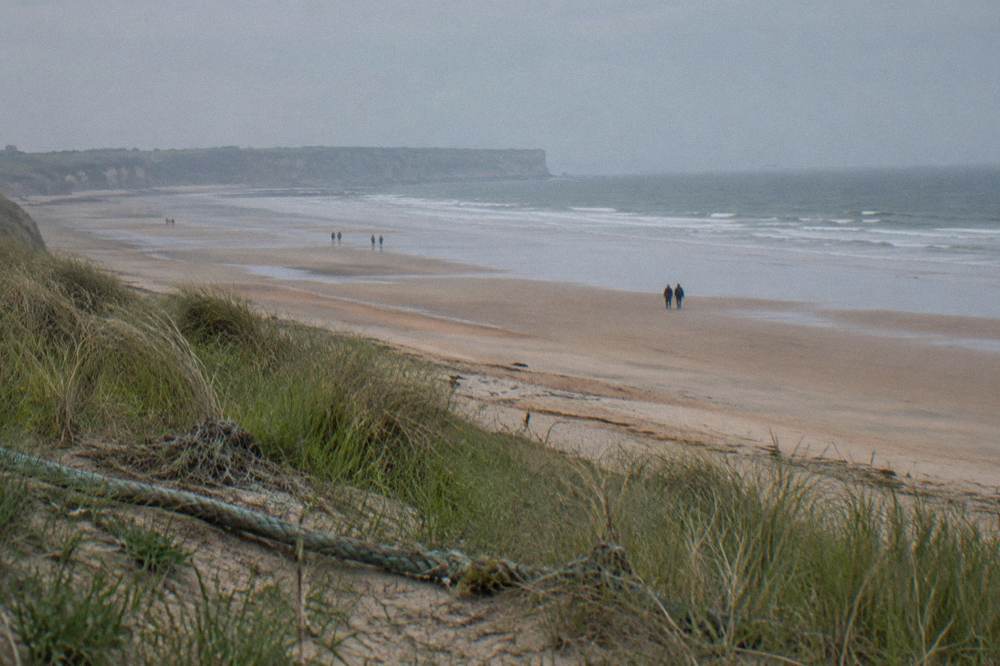
The featured day trip from Paris distills the American sector into one long day: about fourteen hours by coach, from $124 per person, with a two-course lunch and a glass of cider, entry to the Utah Beach Museum, a guided visit to Pointe du Hoc and free time on Omaha Beach before the American Cemetery. It is one of the most reviewed Normandy day trips, 4.8 from 10,452 reviews, and it meets at a stated point near Place du Général Kœnig in Paris rather than at hotels, so plan the morning accordingly.
Cruise passengers have their own version. The shore excursion from Le Havre with a homemade packed lunch, rated 4.9 from 512 reviews and from $102 per person, picks up and drops off at the cruise port and covers the American sector across ten hours. From Caen, the guided D-Day sites tour paired with a Caen Memorial museum ticket, rated 4.8 from 570 reviews and from $169 per person, combines the museum's full context with a five-hour guided circuit of Pointe du Hoc, Omaha Beach and the cemetery, with the museum ticket usable on another day.
| Tour | Price from | Duration | Rating and reviews | Starting point |
|---|---|---|---|---|
| Paris day trip with lunch | $124 per person | 14 hours | 4.8, 10,452 reviews | Paris meeting point |
| Bayeux half-day | $135 per person | 4 hours | 4.9, 815 reviews | Place de Québec, Bayeux |
| Private experience from Bayeux | $394 per person | 8 hours | 5.0, 638 reviews | Bayeux hotel pickup |
| Band of Brothers day, licensed guide | $157 per person | 8.5 hours | 5.0, 106 reviews | Place de Québec, Bayeux |
| Le Havre shore excursion | $102 per person | 10 hours | 4.9, 512 reviews | Le Havre cruise port |
| Caen Memorial combo | $169 per person | 5 hours | 4.8, 570 reviews | Caen Memorial |
Each tour includes free cancellation on its booking page, which matters when June weather turns. The veterans who return each year come as guests; the rest come as witnesses, and a guided day, taken at the pace a guide sets, is the most reliable way to understand what they came back to. For the full picture of how these options differ, the homepage compares every departure city.
A private format lets a family set its own pace at the cemetery and linger where their own history lies, which is the closest a visitor gets to what the veterans' own returns look like.
Whether you go by coach from Paris or minivan from Bayeux, the same advice holds: book early for June, check the cemetery page before you travel, and give the beaches more time than you think they need.
Common Questions About D-Day Veterans Today
How old are the surviving D-Day veterans?
Anyone who landed on 6 June 1944 as an adult is past a hundred today. The youngest soldiers were eighteen or nineteen, and the ceremony guests included a 107-year-old Navy veteran who served at Omaha Beach.
Where is the main D-Day anniversary ceremony held?
At the Normandy American Cemetery at Colleville-sur-Mer, overlooking Omaha Beach, starting at 11 a.m. on 6 June. The American Battle Monuments Commission organizes it, and the attending veterans are seated as guests of honor.
Can the public attend the anniversary events?
Yes, most ceremonies and the wider D-Day Festival events are public, but expect road closures, heavy congestion and long-booked hotels in Bayeux, Caen and along the coast. Veteran attendance is confirmed close to the date and is never guaranteed.
Do veterans still travel back to Normandy on their own?
Some do, with family. Charities organize group returns with medical support, and local French associations and schools host veterans separately. Family returns following one soldier's unit history have also become common, and private guides build itineraries around them.
What is the best way to visit the sites connected to the veterans' story?
A guided day keeps the story grounded in the landscape. The Paris day trip with lunch covers the American sector in fourteen hours, the Bayeux half-day covers its core in four, and a private tour from Bayeux lets a family set its own pace at the cemetery and beaches.