Bayeux Tapestry In London: Bayeux Stays The D-Day Base
Bayeux pulls two very different crowds: one for the D-Day beaches a few miles from the town's market square, and one that followed the Bayeux Tapestry to London, where it is on loan until 11 July 2027. The first crowd still has the run of the town. Tours load at Place du Quebec, the cathedral stands open, and the Battle of Normandy museum holds the wartime story while the embroidery waits out its museum rebuild.
Short answer
The Bayeux Tapestry is an 11th-century embroidery, a long wool-on-linen narrative strip depicting the events that ended with William, Duke of Normandy, taking the English throne after the Battle of Hastings. It is on loan at the British Museum in London until 11 July 2027, and it returns to Bayeux afterwards for the new museum, planned to open in autumn 2027. D-Day tours still leave from Place du Quebec in Bayeux, from about $106 per person for a half day, so the town holds its role as the landing-beaches base.
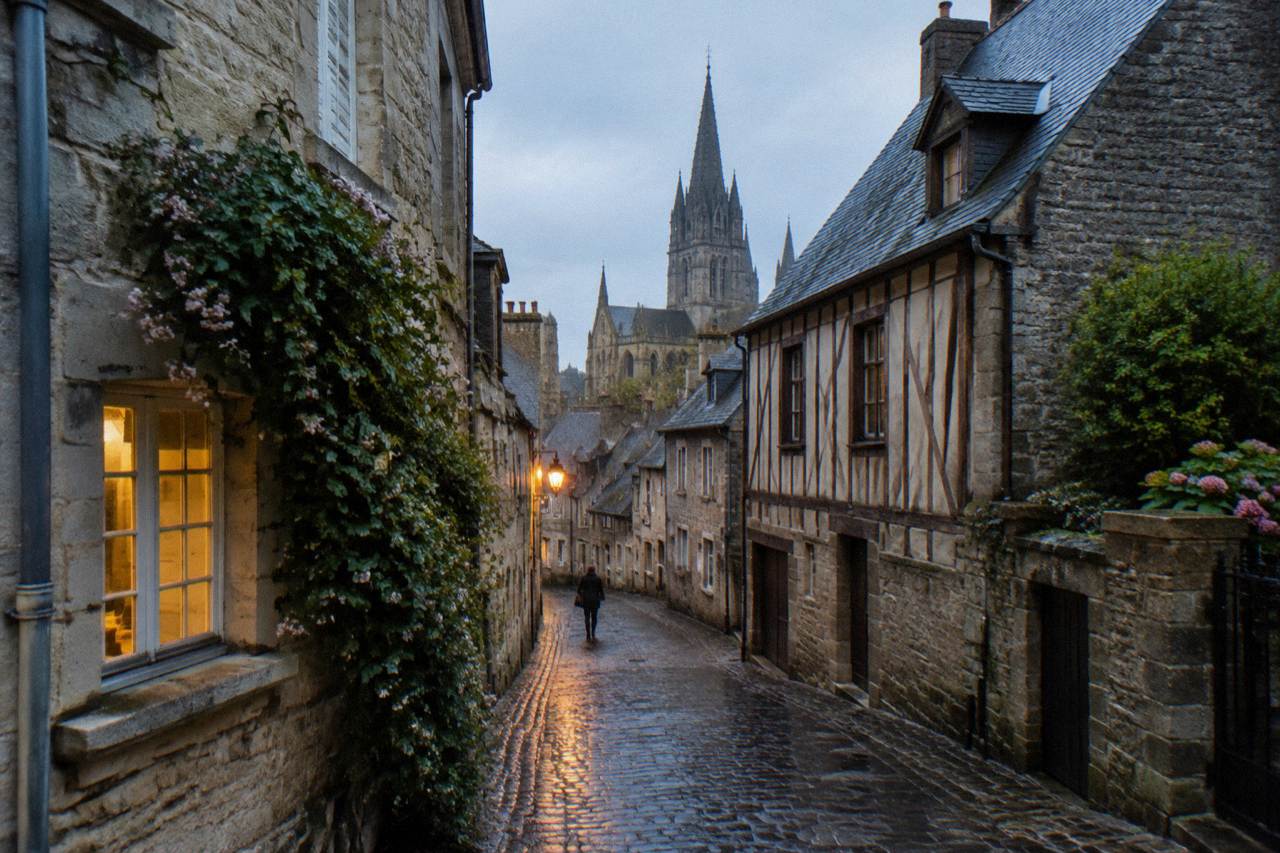
The Bayeux Tapestry is not a D-Day site, and that is exactly why it keeps finding its way into Normandy trip plans. One thing needs saying plainly: the Bayeux Tapestry is not in Bayeux right now. The museum that housed it closed on 1 September 2025 for a full rebuild, and the great embroidered chronicle of the Norman conquest, stitched within a generation of the battle it celebrates, is on loan to the British Museum in London until 11 July 2027. Bayeux is the practical capital of the landing-beaches visit: most small-group tours in the region leave from Place du Quebec, a square five minutes' walk from the cathedral, and the town survived the summer of 1944 largely intact while Caen to the east was reduced to rubble. A visitor sleeping in Bayeux can fill a morning with the cathedral, the Baron Gerard Museum of Art and History, or the Bayeux Museum of the Battle of Normandy, and still spend an afternoon standing on Omaha Beach. Very few towns in Europe put that pairing of centuries so close together. For help choosing a base with charm as well as history, the comparison of Normandy's prettiest towns weighs Bayeux against Honfleur and Rouen.
This guide covers what the Bayeux Tapestry actually is, how it fits into a D-Day-focused trip, and the practical reality of basing yourself in Bayeux, including the tour options that leave from the town. If your travel dates fall inside the loan window, the guide to D-Day tours from London covers that route. The full-day American-sector tour from Bayeux, rated 4.9 from 2,637 reviews and priced from $160 per person, is the anchor option for the beach half of the trip, and there are shorter and cheaper alternatives if your time is tight.
What Exactly Is The Bayeux Tapestry?
The Bayeux Tapestry is a very long embroidered cloth, probably made in England in the second half of the eleventh century, that tells the story of the events leading up to and including William, Duke of Normandy, defeating Harold at the Battle of Hastings and taking the English throne. It is embroidery on linen, not a woven textile, and it was displayed in Bayeux for well over a century. It is medieval propaganda, chronicle and artwork in one object.
The common first mistake is trusting the name. The object is crewel embroidery, stitched in wool thread on a linen ground, and it is thought to have been made in England shortly after the conquest, quite possibly for display in the cathedral at Bayeux, where William's half-brother Odo was bishop. The central frieze runs through dozens of scenes: Harold's oath to William, the fleet crossing the Channel, the battle itself. Above and below it, border bands carry animals, fables, dead soldiers being stripped of armor, and the occasional joke at the expense of the figures in the main register.
The second mistake is expecting a French-national object. The Bayeux Tapestry celebrates a Norman victory, and Normandy's dukes were of Viking descent, but the embroidery was almost certainly stitched by English hands, and the story it tells is one where the claimants were cousins-by-politics rather than nations in the modern sense. The museum presented it in a long, dim corridor where visitors walked its length, usually with an audio guide, before passing through exhibition rooms that explained the conquest and the object's own survival. That museum closed to the public on 1 September 2025 for a complete rebuild, with reopening planned for autumn 2027. It is on view in the Sainsbury Exhibitions Gallery from 10 September 2026 to 11 July 2027, and it returns to Bayeux afterward, for the new museum. Until then, Bayeux keeps its cathedral, the Baron Gerard museum of art and history, the Battle of Normandy museum and the old town, and it remains the departure base for D-Day beach tours.
How Does The Bayeux Tapestry Fit Into A D-Day Trip To Normandy?
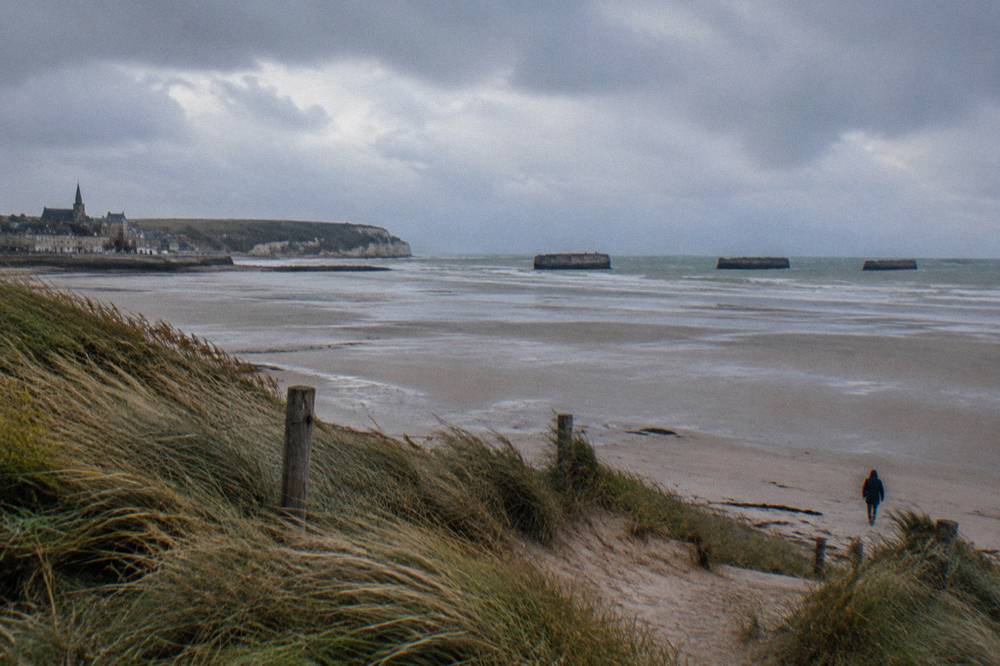
Bayeux is the standard base for visiting the American landing beaches, with the cathedral and the town's other museums filling the hours between tours, since the Bayeux Tapestry museum is closed for rebuilding until autumn 2027. The beaches are a short drive west and north; the tours that reach them depart from Place du Quebec, on the edge of Bayeux's medieval center. A two-night stay normally allows one museum day and one beach day without changing hotels.
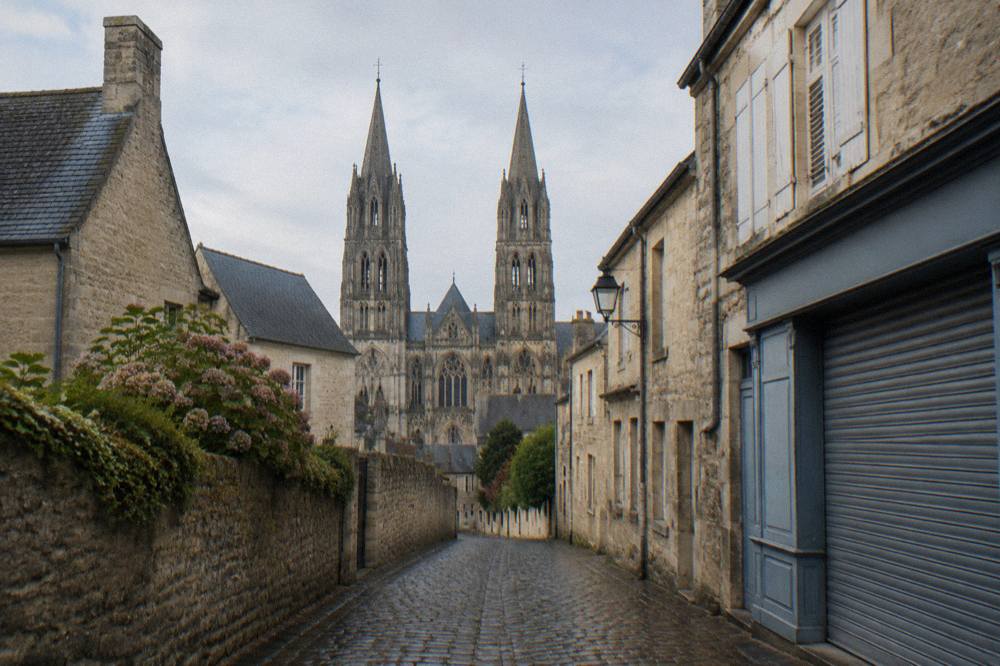
The town's role in June 1944 is the reason the pairing works. Bayeux was liberated in the days immediately after the landings and escaped the destruction that hit Caen, so its cathedral, half-timbered houses and old streets all predate the war and stand much as they did. Visitors who want the fullest picture of the 1944 battle in the same town can also go to the Bayeux Museum of the Battle of Normandy, a separate museum a short walk from the center; it covers the campaign that followed the landings and charges adult admission of 8.50 euros. It is a different museum from the Bayeux Tapestry's, and people regularly confuse the two when planning.
There is one catch, and it is a big one for now. The Bayeux Tapestry Museum closed to the public on 1 September 2025 for a full rebuild, with a planned reopening in autumn 2027, and the Bayeux Tapestry itself is on loan at the British Museum in London from 10 September 2026 to 11 July 2027. What Bayeux offers in the meantime is the cathedral, which is free to enter, the Baron Gerard Museum of Art and History, the Battle of Normandy museum, and an old town and market that carry a full day on their own. If you are weighing how long the whole region needs, the article on how many days you need in Normandy breaks the trade-offs down by itinerary length.
Three Bayeux departures frame the choice: the American Sites half day, the full day, and the afternoon trip. The full-day American-sector tour from Bayeux, from $160 per person for about nine hours in a minivan of up to 8, is the most reviewed option in the town, rated 4.9 from 2,637 reviews, with a Place du Quebec start and finish in Bayeux. If your morning in town runs long, the half-day afternoon trip from Bayeux, rated 4.7 from 1,257 reviews and from $106 per person, leaves after lunch and covers Omaha Beach, Pointe du Hoc and the American Cemetery in about five hours. A third option, the half-day American D-Day sites tour from Bayeux, from $135 per person in a minivan of up to 19, rated 4.9 from 815 reviews, runs the same trio of stops in a morning.
Whichever shape you choose, book the beach day before you lock anything else in town. The tours have fixed departure times, so the tour is the scarce item. All three of the departures above list free cancellation, which matters in a region where weather shapes how much you get from an open beach and clifftop site.
Where Is Bayeux And How Do You Get There From Paris?
Bayeux sits in Calvados, about 10 kilometers from the Channel coast and a little over two hours west of Paris by rail. Direct and one-change trains from Paris Saint-Lazare cover the distance in about 2 hours 19 minutes on average, with around 13 services a day, and advance fares start from about 17 euros. Caen, a few minutes closer by rail, is the alternative rail gateway.
The train is the reason Bayeux works for travelers without a car. Roughly a dozen services a day connect Paris Saint-Lazare to Bayeux, a mix of direct trains and connections through Caen, and the fastest runs take about 2 hours 12 minutes. Fares commonly range up to around 90 euros depending on how far ahead you book, so buying early on the operator's site is the reliable way to keep the fare near the bottom of that range. The full comparison, including what to do about luggage and connections, is in the guide to Paris to Normandy by train.

One caveat about the town itself: it is small. The center is walkable end to end in twenty minutes, which is a strength for a short stay, and the question of whether Bayeux rewards a longer look is treated in is Bayeux worth visiting. Travelers torn between the two rail gateways can compare them directly in Caen or Bayeux as a base; the short version is that Bayeux wins for the beaches plus the old town, Caen for the Commonwealth sector and its Memorial museum.
| Route | Typical time | Frequency | Fare range |
|---|---|---|---|
| Paris Saint-Lazare to Bayeux | about 2h19 average | around 13 trains/day | about 17 to 90 euros |
| Paris Saint-Lazare to Caen | about 2h | around 19 trains/day | from about 17 euros |
| Bayeux to the beaches | tour departure from Place du Quebec | daily, morning and afternoon | from $106 per person |
Can You See The Bayeux Tapestry And The D-Day Beaches In One Day?
**Not in Normandy, not right now: the Bayeux Tapestry Museum closed on 1 September 2025 for a full rebuild, and the Bayeux Tapestry itself is on loan to the British Museum in London until 11 July 2027, returning to Bayeux for the new museum planned for autumn 2027. What one day in Bayeux can pair is the D-Day beaches with the town itself. The half-day afternoon trip from Bayeux departs after lunch, rated 4.7 from 1,257 reviews and from $106 per person, leaving the morning free for the cathedral and the old town. It covers Omaha Beach, Pointe du Hoc and the Normandy American Cemetery in about five hours with hotel pickup from selected Bayeux hotels. **
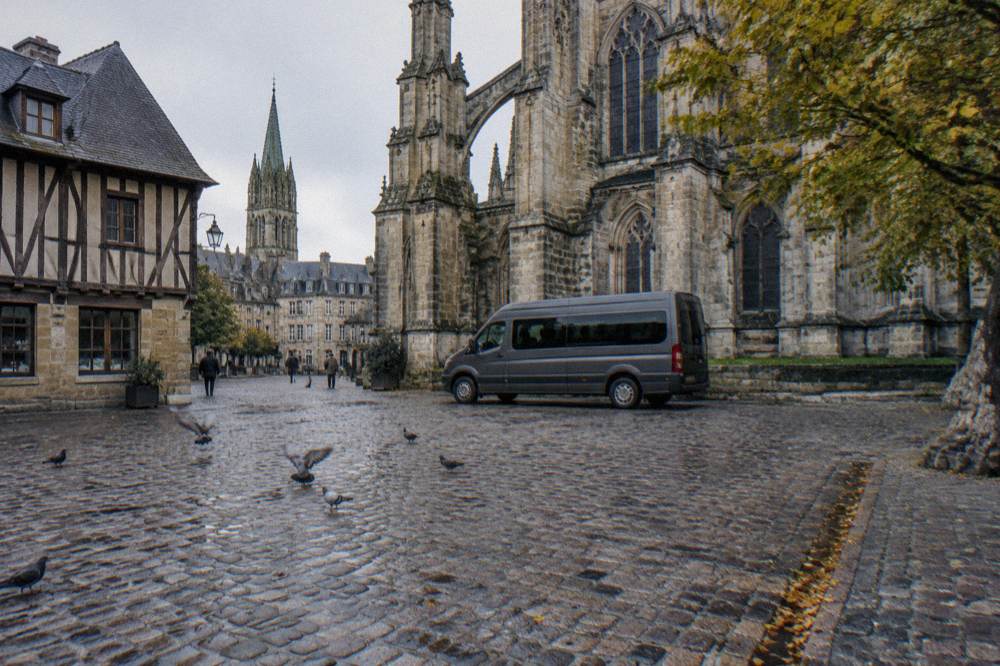
The morning is yours in a way it was not while the Bayeux Tapestry Museum was open. The cathedral is free to enter, the old town and its market repay a slow wander, and the Musee d'Art et d'Histoire Baron Gerard and the Bayeux Museum of the Battle of Normandy both stay open through the rebuild. Do the town first, then lunch, then the pickup. The afternoon tour returns in the early evening, which leaves dinner in Bayeux as the day's finale.
A morning beach tour plus an afternoon in Bayeux works, though tour return times vary with traffic in summer, so keep the late afternoon loose. The morning in town, afternoon on the beaches order is the one most Bayeux visitors settle on, and Bayeux remains the base for D-Day tours throughout the closure. If one day is genuinely all you have, the trade-offs are laid out in the guide to a Normandy day trip from Paris.
Which D-Day Tours Leave From Bayeux Itself?
Bayeux is the densest departure point for D-Day tours on the coast: a full-day American-sector minivan tour from $160 per person, two half-day American-sector options from $106 and $135, a combined Omaha and Utah full day from $174, a Band of Brothers day from $160, and private tours from $399 per person or $790 per group. Most leave from Place du Quebec in the town center; some private tours add hotel pickup, others meet at a set point.
The choice among them comes down to how much of the American sector you want and how small a group you want to stand in. The full-day American-sector tour from Bayeux, nine hours in an air-conditioned minivan of up to 8, meeting at Place du Quebec in Bayeux, rated 4.9 from 2,637 reviews, is the most complete shared option from the town. The Omaha and Utah full day, rated a perfect 5.0 from 1,448 reviews and from $174 per person in a vehicle of up to 16, takes its name from its two beaches. The two half-day options split the sector between morning and afternoon departure times.
For visitors whose interest is the airborne story rather than the beaches, the Band of Brothers full-day tour from Bayeux, rated 4.9 from 143 reviews and from $160 per person in a minivan of up to 7, runs to Omaha Beach, the American Cemetery, Pointe du Hoc, Sainte-Mere-Eglise, Ravenoville and the Manoir de Brecourt. The private options run higher and add flexibility: a private day tour from Bayeux including the landing beaches and battlefields, rated 5.0 from 196 reviews and from $399 per person, includes hotel pickup and covers Sainte-Mere-Eglise, Utah Beach, La Cambe, Pointe du Hoc, Omaha Beach and the American Cemetery in eight hours. The private-versus-small-group question is compared properly in private vs small group D-Day tours. If you're still deciding which stretch of coastline deserves your attention, the guide to picking among the five D-Day landing beaches compares them on scenery, museums, crowds and tour routes.
| Bayeux departure | Duration | Group size | Price from | Rating |
|---|---|---|---|---|
| Full-day American-sector minivan tour | 9 hours | up to 8 | $160 per person | 4.9 from 2,637 reviews |
| Half-day afternoon trip | 5 hours | up to 8 | $106 per person | 4.7 from 1,257 reviews |
| Half-day American sites minivan | 4 hours | up to 19 | $135 per person | 4.9 from 815 reviews |
| Omaha and Utah full day | 9 hours | up to 16 | $174 per person | 5.0 from 1,448 reviews |
| Band of Brothers full day | 8.5 hours | up to 7 | $160 per person | 4.9 from 143 reviews |
| Private day tour, landing beaches | 8 hours | private, up to 8 | $399 per person | 5.0 from 196 reviews |
Two practical notes on departure points. The private day tour includes Bayeux hotel pickup; the full-day minivan tour meets at Place du Quebec; the half-day afternoon trip covers selected Bayeux hotels; most other departures meet at Place du Quebec, the cobbled square by the river, a short walk from anywhere in the center. And if your stay runs longer than the town's tour calendar needs, the wider set of options is collected in the guide to D-Day tours from Bayeux.
What Should You Know Before Combining The Two Visits?
Three things shape the combined plan: the American Cemetery keeps fixed hours of 9 a.m. to 5 p.m. with last admission at 4:30 p.m., Pointe du Hoc is free but in restoration with parts closed at times, and the Bayeux Tapestry is on loan in London rather than in Bayeux, with a planned return for the opening of the rebuilt museum in autumn 2027. Book the tour first, the train second, and give any spare Bayeux time to the cathedral, the old town and the museums that stay open.
The cemetery details matter because several tours end there, and its rules are strict: respectful dress and conduct, no sitting or lying on the grass or monuments, no running, bicycles, shouting or games, no real or replica weapons, and only service and guide dogs. Admission is free and no advance booking is currently needed, though capacity pre-registration has been anticipated by the commission that runs it, so check the ABMC cemetery page before you go. The official hours are 9 a.m. to 5 p.m. year-round, and the page is the authority even where other sites print longer summer hours.
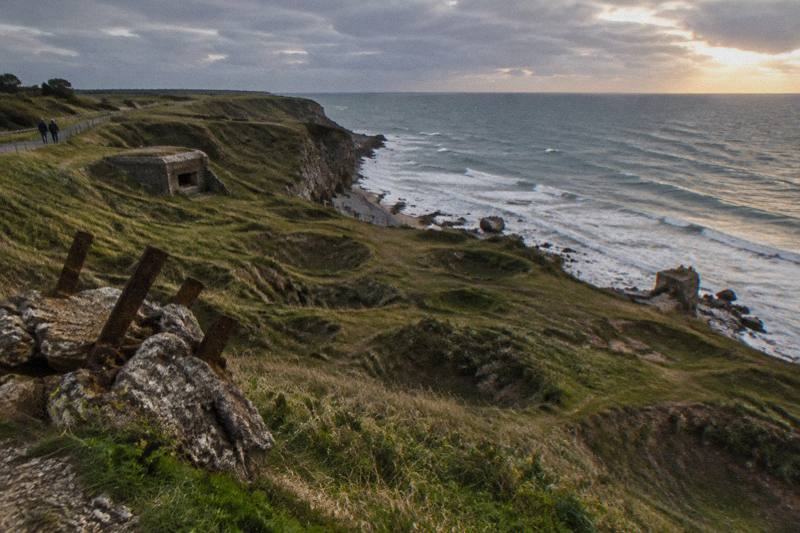
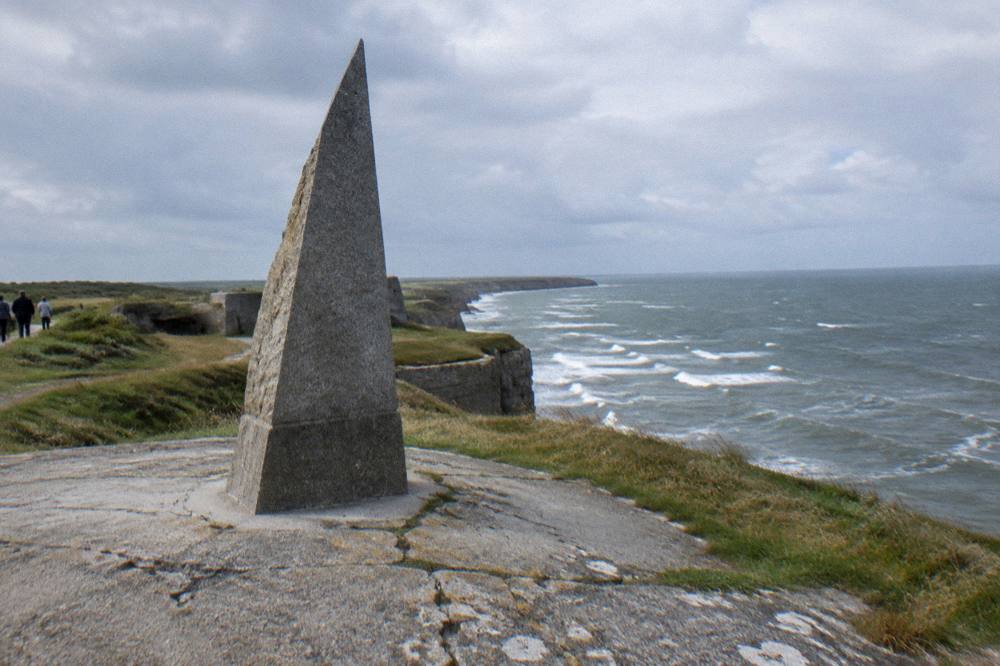
Pointe du Hoc, the clifftop site between the two American beaches, is free to enter and remains open during a major restoration project that runs into 2027. The visitor center there has been closed since early 2026, east-side paths, bunkers and the crater bridge close at times, and the west path is open only in some periods; the practical effect is that tour timings at the site shift, and the tour listing and the ABMC restoration page set what is accessible on a given day. None of this changes the view from the cliff, which no tour can promise in weather but which the terrain itself delivers.
No replica or substitute display is confirmed in Bayeux. The town still earns the spare half-day: the cathedral is free, the Baron Gerard Museum of Art and History stays open, the old town and the market fill a morning, and the town remains the working base for D-Day tours, with departures from Place du Quebec. The Battle of Normandy museum in the same town publishes its October to April hours of 10 a.m. to 12:30 p.m. and 2 p.m. to 6 p.m. with an 8.50-euro adult ticket, and the museum's practical-information page carries the current detail. Follow the Bayeux Tapestry museum's own site for reopening news before you plan around a date.
Is The Bayeux Tapestry Worth The Trip On Its Own?
For most visitors drawn to Normandy by 1944, the Bayeux Tapestry is a strong half-day addition rather than a destination in itself, but for anyone with an interest in medieval history it justifies the trip. One catch applies right now: it cannot be seen in Bayeux. The Bayeux Tapestry Museum closed on 1 September 2025 for a full rebuild, with a planned reopening in autumn 2027, and the Bayeux Tapestry itself is on loan at the British Museum in London until 11 July 2027, returning to the new museum after that. As a pairing with the beaches, it gives the visit a second historical register that no other base offers, once it is back.
The argument for the detour is simple: there is nothing else like it. Embroidered near-contemporary narrative on this scale survives nowhere else in Europe, and the object has had a precarious thousand years, surviving French Revolution turmoil, the 1944 battle that bypassed Bayeux, and repeated conservation campaigns. Standing in front of it after standing on Omaha Beach would give a sense of how often this small corner of France has been the hinge of larger histories, at the conquest, in 1944, and in the century of commemoration since.
The argument against is crowd tolerance. The old corridor was narrow and the audio guide set everyone the same pace, so expect the new museum to draw summer queues; the commemoration economy around the D-Day corridor draws on the order of 1.8 million visitors a year even before the anniversary weeks spike it. Visitors who want quiet should aim for the shoulder seasons, a point made at length in the guide to the best time to visit the Normandy D-Day beaches. When the museum reopens in its new building, expect peak-season demand to be sharper than ever.
Whether the beaches alone justify the journey is its own question, treated in is it worth visiting the D-Day beaches, and some travelers do skip Bayeux's medieval holdings entirely. The planning pattern that holds up best is the two-night stay in Bayeux: one day for the conquest, one for a Normandy D-Day Tour of the landings, one hotel. With the Bayeux Tapestry away, the conquest day leans on what the town still holds: the cathedral, free to enter, the Baron Gerard Museum of Art and History, the Bayeux Museum of the Battle of Normandy, and the old town and market streets that the 1944 fighting largely spared. Bayeux also remains the working base for the landing-beach tours themselves, so the day without the Bayeux Tapestry is not a lost day.
How Do You Plan The Whole Bayeux Stay, Day By Day?
A comfortable pattern is three days: day one, arrive by train from Paris, about 2 hours 19 minutes, and do the cathedral and the old town; day two, the full-day American-sector tour from Bayeux, nine hours, from $160 per person; day three, a morning half-day tour or the Battle of Normandy museum, then the train back. Two nights, one hotel, town and beaches both covered.
Day one needs no booking beyond the train. Arrive early afternoon, walk the center, and take the cathedral, which is free; the indoor hours can go to the Baron Gerard museum of art and history. One absence reshapes the day: the Bayeux Tapestry museum on rue de Nesmond, a few minutes' walk from the cathedral, has been closed since 1 September 2025 for a full rebuild, with reopening planned for autumn 2027, and the Bayeux Tapestry itself is on loan at the British Museum in London until 11 July 2027. It returns to Bayeux afterward, into the new museum. Day two is the committed day: the full-day minivan tour meets at Place du Quebec in Bayeux, so the logistics reduce to a short walk. Day three is the flexible one, and the practical advice is to choose between the second museum and a second beach trip rather than attempting both.
Travelers with a family historian's thread to follow, a relative's unit or grave, are better served by the private options, where the guide can weight the day; the private American landing beaches tour from Bayeux, rated 5.0 from 57 reviews and from $790 per group, is the lower-cost private route. Travelers arriving from a cruise port instead of Paris have a different decision tree entirely, covered in the guide to Normandy cruise shore excursions, since Le Havre and Cherbourg calls cannot reach Bayeux comfortably. London-based travelers face yet another route to puzzle out, and the guide to D-Day tours from London explains the train and ferry connections and why an overnight stay is needed.
| Day | Morning | Afternoon | Commitment |
|---|---|---|---|
| 1 | Train from Paris, about 2h19 | Cathedral, old town and the Baron Gerard museum | Train tickets |
| 2 | Full-day American-sector tour, meet at Place du Quebec | Same tour, Omaha, Pointe du Hoc, cemetery | Book ahead |
| 3 | Morning half-day tour or Battle of Normandy museum | Train back to Paris | Optional booking |
The last practical point is footwear and weather, the two things first-time visitors underestimate. The beaches are sand and the clifftops are exposed; the question of kit is treated in what to wear on a Normandy tour, and the short version is layers and shoes that can take grass, sand and wet stone in one day. The town half of the trip asks little of your shoes, which is another quiet argument for the pairing.
Common Questions About The Bayeux Tapestry And Normandy Trip
Is the Bayeux Tapestry a D-Day site?
No. The Bayeux Tapestry is an 11th-century embroidery about the Norman conquest of England. It belongs to Bayeux because Bayeux was a Norman bishopric, and the town's survival in 1944 is what kept it safe.
Can you see the Bayeux Tapestry in Bayeux?
Not at the moment. The museum in Bayeux closed on 1 September 2025 for a full rebuild, with reopening planned for autumn 2027, and the embroidery is on loan to the British Museum in London from 10 September 2026 to 11 July 2027. Bayeux itself keeps its role as the base for D-Day tours. The cathedral, the Baron Gerard Museum of Art and History and the Battle of Normandy museum stay open, so a morning in town still has plenty to fill it.
Can you visit Bayeux and Omaha Beach on the same day?
Yes. The half-day afternoon tour from Bayeux, from $106 per person, rated 4.7 from 1,257 reviews, leaves after lunch and covers Omaha Beach, Pointe du Hoc and the American Cemetery, leaving the morning for the cathedral, the old town, the market or the Baron Gerard Museum of Art and History.
Is the Bayeux Museum of the Battle of Normandy the same as the Bayeux Tapestry museum?
No. They are separate museums a short walk apart. The Battle of Normandy museum covers the 1944 campaign and charges adult admission of 8.50 euros.
How do you get from Paris to Bayeux?
Trains from Paris Saint-Lazare take about 2 hours 19 minutes on average, with around 13 services a day, and fares commonly run from about 17 to 90 euros depending on how early you book.
Do Bayeux D-Day tours include hotel pickup?
Some do. the private day tours from Bayeux include hotel pickup, while the full-day American-sector tour meets at Place du Quebec; the half-day afternoon trip covers selected hotels; most other departures meet at Place du Quebec in the town center.