Which Is The Best D-Day Landing Beach To Visit?
Omaha, Utah, Gold, Juno or Sword: how the five D-Day landing beaches compare for scenery, museums, crowds and tour routes, with a verdict for every kind of visitor.
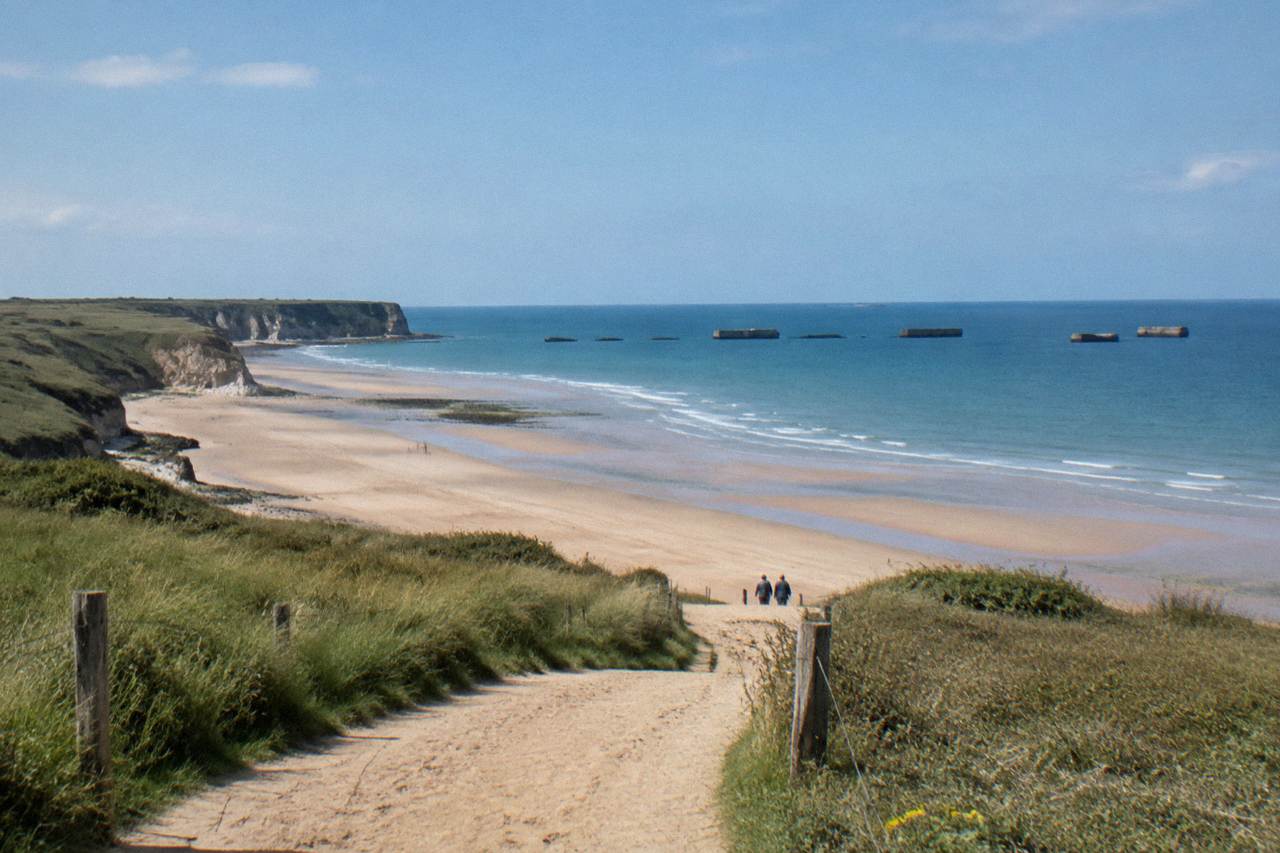
On 6 June 1944 about 160,000 Allied troops came ashore in Normandy, roughly 73,000 of them American, across five beaches code-named Utah, Omaha, Gold, Juno and Sword. Today all five are ordinary Norman beaches, public, free to walk and open year-round, each with its own memorials, museums and character. The question of which one to visit has no single answer, because the beaches sit apart and reward completely different interests. This comparison walks through each sector and maps every answer onto the guided routes that actually serve it, from the full-day American beaches tour from Bayeux to the Canadian-focused small-group trip from Paris.
Why Omaha Beach Wins For Most Visitors
For most first-time visitors, the best D-Day landing beach to visit is Omaha Beach. It carries the American Cemetery, the Overlord Museum and the largest concentration of guided tours, and it anchors nearly every American-sector itinerary from both Paris and Bayeux, which makes it the clearest single-beach answer to that question. It is the stretch most people picture when they hear "D-Day," and the infrastructure around it, from Bayeux-based minivan tours to full coach days out of Paris, makes it the simplest beach to reach without a car. Travelers with a specific family story, a Canadian connection or a preference for quieter sand may land on a different answer, and the sections below make the case for each.
A strong fit is the Normandy American D-Day Beaches Full Day Tour from Bayeux, a day built around exactly that logic. It runs from $160 per person for roughly nine hours in a shared minivan of up to eight, rated 4.9 from 2,637 reviews, starting and ending at Place du Quebec in Bayeux. If your answer to the beach question is Omaha and its surroundings, a tour like this one covers the decision in a single day.
For visitors who want the widest spread of beaches in one booking, there is also a straightforward contrast between the American-sector options and the one Paris departure that crosses sectors: the From Paris: Normandy D-Day Beaches Day Trip, from $190 per person for 14 hours by coach, rated 4.6 from 593 reviews, whose listed stops run from Pointe du Hoc and Omaha through Arromanches-les-Bains to Juno Beach.
What Makes Omaha Beach The Easiest Choice For First-Time Visitors?
Omaha Beach pairs the most famous American landing ground with the Normandy American Cemetery, the Overlord Museum and the widest choice of tours from Bayeux, which makes it the most practical beach for a first visit, especially without a car. Around a dozen tours in this guide stop at Omaha or the cemetery above it, more than any other beach, so availability is rarely the constraint. The beach itself is a broad, quiet stretch below the bluffs, and the memorial signs along the sand do much of the storytelling on their own.
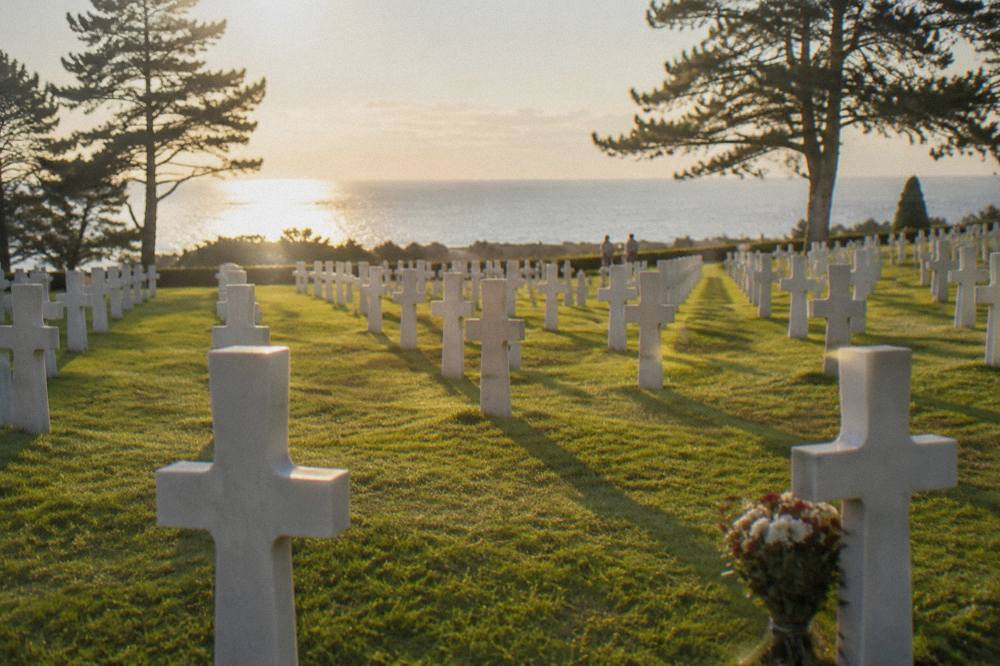
The cemetery sets the tone of any Omaha visit. The American Battle Monuments Commission keeps it open daily from 9 a.m. to 5 p.m., last admission 4:30 p.m., closed only 25 December and 1 January, and admission is free; the ABMC's cemetery page is the reference for rules and any pre-registration for capacity, so check it before you go. Conduct rules are strict and plainly stated: respectful dress and behavior, no sitting or lying on the grass or monuments, no running, bicycles or games, no real or replica weapons, and service and guide dogs only. The walking path from the cemetery down to the beach has been closed since 2016, so you reach the sand separately by road.
Several tours fit an Omaha-first plan. The Omaha Morning Half Day Tour from Bayeux covers Omaha Beach, the cemetery and Pointe du Hoc in four hours from $112 per person, rated 5 from 260 reviews, which suits a short stay. The full-day Bayeux tour described above adds depth and time. And for cruise passengers docking at Le Havre, the Le Havre Shore Trip with Packed Lunch, from $102 per person and rated 4.9 from 512 reviews, runs a 10-hour shared-coach day with pickup and drop-off at the cruise port and a homemade packed lunch listed.
Why Does Utah Beach Suit Airborne-Story Followers?
Utah Beach suits airborne-story followers because it sits beside the places that story centers on: Sainte-Mere-Eglise, the Airborne Museum, and the Band of Brothers sites at Brecourt Manor. This cluster of stops is one no other beach can match, so if the airborne side of the landings is what draws you, Utah Beach is the pick. The Utah Beach Museum, open daily with seasonal hours and an adult ticket of 10 euros, anchors the southern end of the beach, and the whole western corner of the landing zone tells the paratrooper side of 6 June. It is usually quieter than Omaha in terms of crowds.
The full-day American-sector options from Bayeux are the natural fit here. The From Bayeux: American D-Day Sites in Normandy Full-Day Tour, from $213 per person and rated 4.9 from 620 reviews, lists guided stops at Sainte-Mere-Eglise, Utah Beach, Pointe du Hoc, Omaha Beach and the American Cemetery in eight hours by Mercedes minivan. The Bayeux: Normandy D-Day Landing Beaches Full-Day Guided Tour, from $169 per person and rated 4.8 from 258 reviews, follows a similar line with a Utah Beach lunch listed. And for the Easy Company thread specifically, the Band of Brothers Full Day Tour from Bayeux, from $160 per person and rated 4.9 from 143 reviews, ties Omaha and the cemetery to Sainte-Mere-Eglise, Ravenoville and the Manoir de Brecourt.
Distance is the trade-off. Utah sits at the far western end of the landing zone, roughly an hour or more from Caen and well beyond comfortable reach on a short half-day. Cherbourg-based visitors have the easiest card: the From Cherbourg: D-Day Beaches Shore Excursion skips Utah and heads for Pointe du Hoc, Omaha and the cemetery in an eight-hour shared-bus day from $168 per person, rated 4.5 from 30 reviews, and the drive from Cherbourg to Utah and Sainte-Mere-Eglise runs about one to one and a half hours by road.
What Do Gold Beach And Arromanches Offer?
Gold Beach, with Arromanches at its heart, offers the best choice for travelers who want to see what the invaders built rather than where they fell, because the remains of the artificial Mulberry harbor still sit in the water just offshore, letting you take in the visible legacy of the invasion's engineering right from the shore. The rusted concrete caissons are visible from the seafront at low and high tide alike, and the town's Musee du Debarquement, adult ticket 12.90 euros, explains the whole engineering story with an included audioguide. For visitors who find battlefield beaches themselves sparse, Arromanches delivers something visually unmistakable.
Gold is a British-sector beach, so the tour logic changes. The From Gold Beach to Caen - On the Path to Liberation tour, from $169 per person for four hours by van, covers Arromanches, the British Normandy Memorial and the Beny-sur-Mer Canadian War Cemetery from the Caen Memorial meeting point, with the Memorial's entrance ticket included. The tour carries only 11 reviews, too few a pool for a star rating to mean much. The Gold, Juno and Omaha guided small group tour from the same operator, from $275 per person for ten hours with lunch at the Memorial de Caen bistro listed, is one of the few products that crosses the British and American sectors in one day; it also has a small review pool of 12.
Independent travelers can do Arromanches by train and bus from Bayeux or Caen on a fair-weather day, but the combined museum-and-beach loop is easier with a guide. The Musee du Debarquement keeps seasonal hours, roughly 9 a.m. to 7 p.m. in the high season and shorter in winter, and closes over the early-January period and around 24, 25 and 31 December, so check its official prices and hours page before planning a winter visit.
Is Juno Beach The Best Pick For Canadian Visitors?
Juno Beach is the clear answer for anyone with a Canadian connection, because the Juno Beach Centre at Courseulles-sur-Mer is a Canadian-run museum built beside the sand its countrymen landed on, and one dedicated Paris tour serves it directly. The center's adult museum ticket is 9 euros, it closes through January and on 25 December, and ticket sales end 45 minutes before closing; a guided bunkers tour is offered as an add-on in the April-to-October window. The Centre's practical information page carries the current detail.
The Small-Group Canadian Normandy D-Day Juno Beach from Paris tour, from $270 per person for a 13-hour day by minibus of up to eight, rated 4.9 from 197 reviews, with lunch extra, is the dedicated option. For a slower, two-wheeled introduction there is the Juno & Gold Beach guided bike tour, a new tour with no reviews yet, from $247 per person for four hours meeting at Courseulles-sur-Mer, with bicycle, helmet, a snack and a drink included and stops from the Juno Beach Centre to the British Normandy Memorial.
Juno also sits at the practical center of the landing zone, close to Caen and the eastern beaches, which makes it a good base for combining sectors. Canadian families who want both the museum and the cemeteries usually manage it best across two days rather than one, using Caen as the hub; the question of Caen versus Bayeux as a base is covered in the guide to staying in Caen or Bayeux.
What About Sword Beach?
Sword Beach, the easternmost landing beach, is the least tour-served of the five in the tours compared here, but it rewards self-guided visitors because it sits beside Ouistreham, Pegasus Bridge and the airborne story of the very first minutes of the landings. No tour in this comparison names a Sword Beach stop except the private British Sector D-Day Discovery Tour, from $955 per group for nine hours with pickup in Caen, and stops at Sword, Juno, Gold, Pegasus Bridge, Café Gondrée and the Merville Battery. It carries only 2 reviews, so treat the description, not any rating, as the signal. Since that same tour also calls at Gold, you can weigh it against a self-guided day with the guide to Gold Beach, Arromanches and the Mulberry harbour remains, which explains what to see and which tours run there.
For most travelers Sword works as an add-on rather than a destination. A day based in Caen can take in the Memorial museum, whose adult ticket is 20.80 euros, before a short drive to the coast. If a private, go-anywhere day appeals, the guide to planning a private Normandy tour sets out how per-group pricing behaves across these tours.
Which Beach Fits Which Traveler?
Omaha suits first-timers and cemetery visitors, while Utah appeals to airborne and Band of Brothers followers; Gold and Arromanches reward those drawn to engineering and harbor remains, Juno fits Canadian visitors best, and Sword serves travelers wanting Pegasus Bridge or self-guided eastern loops. Time, starting point and whether a cemetery visit matters usually settle the question faster than scenery does. The table lines each beach up against its museum anchor and the tour types that serve it.
| Beach | Sector | Museum anchor | Typical tour fit |
|---|---|---|---|
| Omaha | American | Overlord Museum, adult 9.90 euros; cemetery free | Most served; half-day and full-day from Bayeux, full-day coach from Paris, shore trips from Le Havre |
| Utah | American | Utah Beach Museum, adult 10 euros | Full-day from Bayeux or Cherbourg; Band of Brothers days |
| Gold | British | Musee du Debarquement, adult 12.90 euros | Short tours from Caen Memorial; self-guided from Bayeux |
| Juno | Canadian | Juno Beach Centre, adult 9 euros | Dedicated small-group day from Paris; bike tour from Courseulles |
| Sword | British | Pegasus Bridge area | Private tours from Caen; self-guided |
Two closing notes on the table. The Overlord Museum's hours shift by season and it closes between early January and mid-February, so its hours and fees page is worth a look for winter trips. And every beach above is free to walk at any time; the only paid items are the museums and the tours.
How Do You Turn Your Beach Pick Into A Tour Route?
Match the beach to the route, not the other way around: American-sector picks from Bayeux or Paris, Juno from the dedicated Paris departure or a Courseulles bike tour, Gold from a Caen-based half-day, and Sword only from a private vehicle. The tours here make this mapping unusually clean, because each product's listed stops tell you exactly which sand it touches. A tour that does not list a beach does not cover it, whatever the brochure mood suggests.
If the answer after all this is still "a bit of everything," two products stand out. The From Paris: Normandy D-Day Landing Beaches Full-Day Tour, from $298 per person for 12 hours in a minibus of up to eight, rated 4.9 from 791 reviews, lists the Longues-sur-Mer battery, Omaha Beach, the Overlord Museum, Pointe du Hoc and the cemetery, with museum entry included and lunch extra. And the Paris coach day trip described earlier threads Pointe du Hoc, Omaha, the cemetery, Arromanches and Juno into one 14-hour loop from $190 per person. Whichever route you settle on, the tour picker on the homepage of Normandy D-Day Tour narrows the tours by departure city and sector in one screen.
One planning caution whatever you choose: Pointe du Hoc, the clifftop site between Utah and Omaha that appears on many routes, is free to enter but in the middle of a restoration project running into 2027. The visitor center has been closed since early 2026 and sections of the paths and bunkers close at times, so the tour details and the ABMC page determine what is open on a given day.
Common Questions About The Best D-Day Beach
Can you visit more than one D-Day beach in a day?
Yes. Full-day tours from Bayeux typically combine Omaha, Utah, Pointe du Hoc and the American Cemetery, and some Paris coach days add Arromanches and Juno. Beaches sit apart by road, so a car or a guided tour is the only realistic way to string several together.
Are the D-Day beaches free to visit?
Yes, all five landing beaches are public and free to walk year-round. The paid items are the museums, such as the Utah Beach Museum at 10 euros or the Juno Beach Centre at 9 euros, and any guided tour.
Which D-Day beach is closest to Paris?
None is close; the drive or train from Paris to Bayeux takes about two and a quarter hours, and the beaches sit beyond that. The Paris day tours run 12 to 14 hours for that reason, and an overnight in Bayeux or Caen usually makes a calmer trip.
Which beach is best without a car?
Omaha Beach, via a tour from Bayeux. Bayeux-based minivan tours, such as the full-day American beaches tour from $160 per person, meet in central Bayeux and cover the beach, Pointe du Hoc and the cemetery without any driving on your side.
Is Juno or Gold better for a half day from Caen?
Both work. The Gold Beach to Caen tour covers Arromanches, the British Normandy Memorial and the Beny-sur-Mer Canadian cemetery in four hours from the Caen Memorial, while the Juno bike tour from Courseulles covers the Juno Beach Centre and Arromanches in the same time by bicycle.