Is Bayeux Worth Visiting?
Bayeux is the most practical base for visiting the D-Day beaches, with its own medieval center and a Battle of Normandy museum within walking distance of every tour departure point.
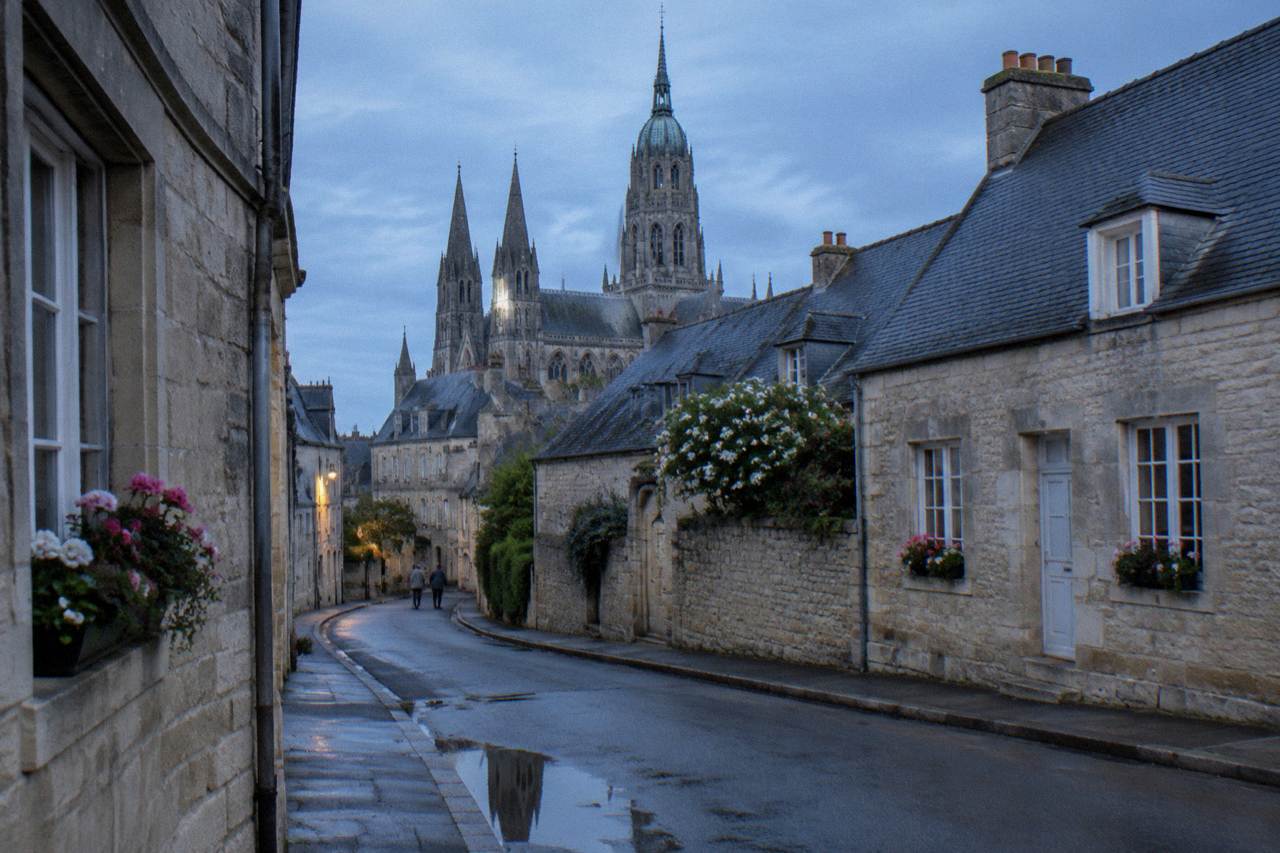
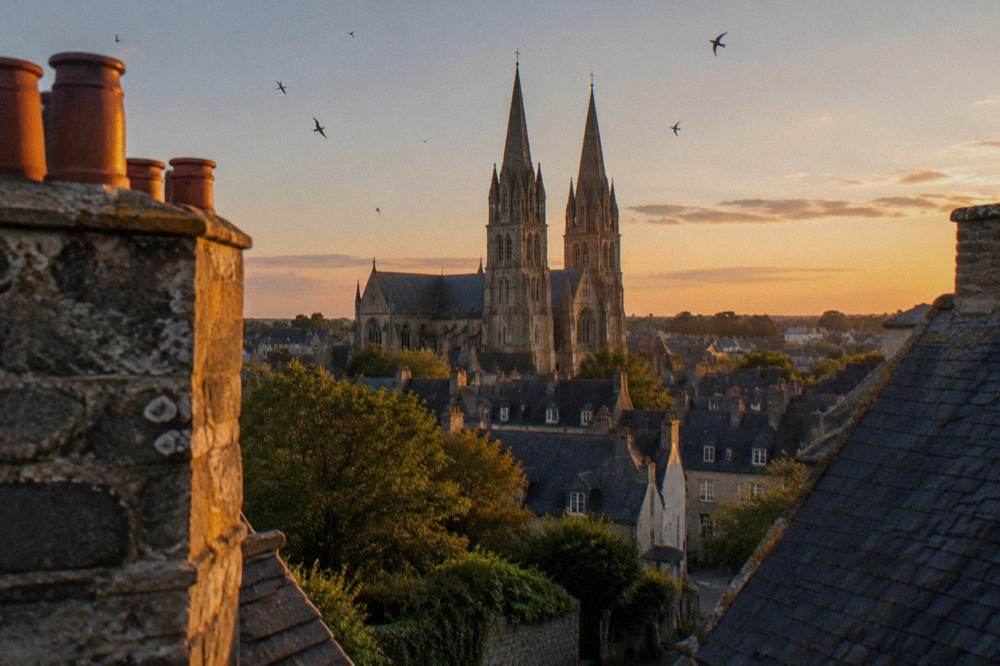
Bayeux was the first sizeable French town liberated after the D-Day landings on 6 June 1944, and it came through the war almost untouched. That single fact shapes everything a visitor experiences there today: a medieval core of stone and timber houses, a Gothic cathedral and a museum devoted to the battle that unfolded twenty minutes to the west. It is also, by a wide margin, the most convenient place to sleep if your trip is about the landing beaches. More tours leave from Place du Quebec in Bayeux than from anywhere else. For the full picture of what runs from where, start with Normandy D-Day Tour.
Why Do Most D-Day Visitors End Up Sleeping In Bayeux?
Bayeux sits between the American and Commonwealth sectors, which puts almost every major D-Day site within a short drive and makes the town the natural overnight base for a two or three day visit. The alternative, a day trip from Paris, costs about fourteen hours door to door and leaves little time on the ground.
The geography does the heavy lifting. Utah Beach, Pointe du Hoc, the Normandy American Cemetery, Gold Beach, Arromanches and Juno Beach all ring Bayeux to the north, east and west. A visitor based in the town wakes up twenty minutes from the first stop instead of three hours. That matters for the cemetery in particular, which closes to new arrivals at 16:30, and for the small museums whose ticket desks shut an hour before closing time. All that time on sand, cliff paths and cemetery gravel rewards the right shoes, so read this guide to clothing and footwear for the D-Day beaches before you pack.
The transport links matter too. Direct and one-change trains from Paris Saint-Lazare reach Bayeux in about 2h19, with roughly thirteen services a day, and advance fares start from about 17 euros. So a visitor can leave Paris in the morning, check into a Bayeux hotel by early afternoon, and be on a tour at 08:30 the next day. This Paris to Normandy train guide works through the timing in detail.
Then there is the depth of the tour supply, which no other town in Normandy matches. The small-group minibus day from Bayeux, rated 4.9 from 2,637 reviews and priced from $160 per person, runs nine hours through the American sector and meets at Place du Quebec in central Bayeux. The Bayeux half-day afternoon trip, from $106 per person, suits anyone with only half a day to spare. And the private D-Day experience from Bayeux, rated 5 from 638 reviews, from $394 per person, gives a party of up to seven its own guide and minivan. If your days in Normandy revolve around the beaches, these three frame the decision.
What Can You See In Bayeux Without A Car?
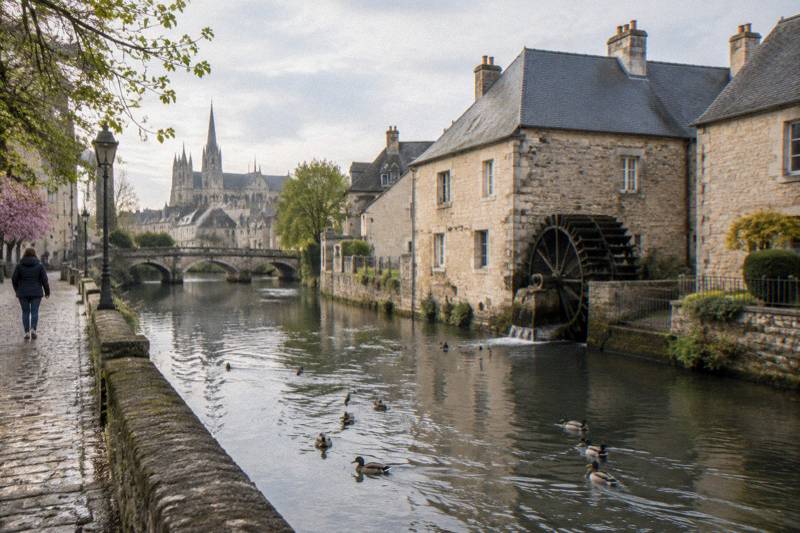
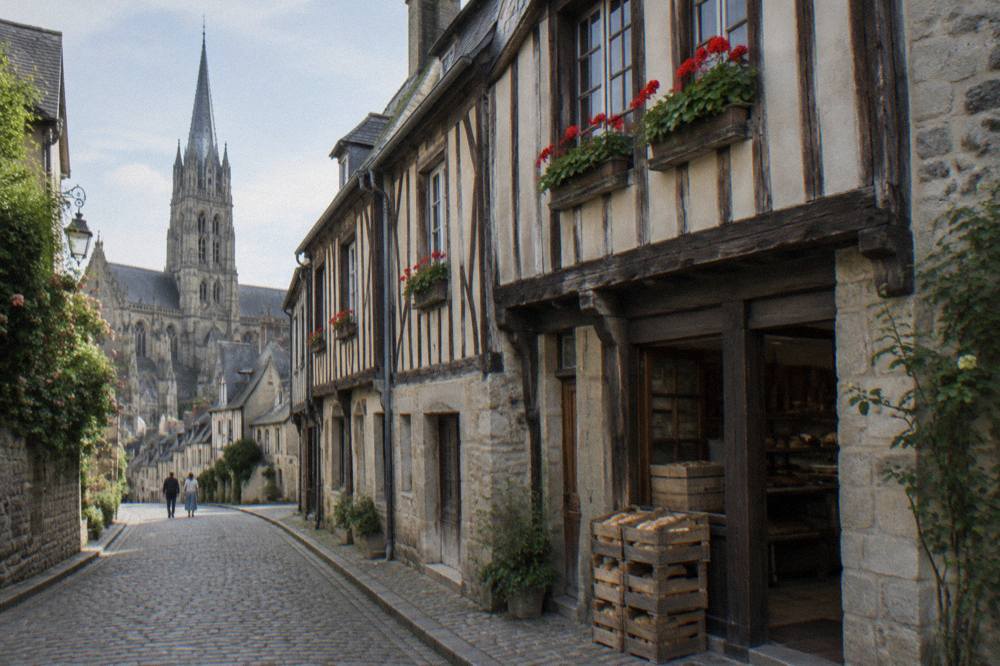
Bayeux's own sights fill a full day on foot: the cathedral, the old town's streets and waterwheels, the Museum of the Battle of Normandy at 8.50 euros for an adult, and the largest Second World War Commonwealth cemetery in France, all within about fifteen minutes' walk of one another. The Bayeux Tapestry is not on view here at present: its museum closed on 1 September 2025 for rebuilding and is due to reopen in autumn 2027, and it is on loan at the British Museum in London from 10 September 2026 to 11 July 2027. For a D-Day traveler, the town is not just a bed for the night, it is part of the story.
The Bayeux Tapestry is the headline act, a seventy-meter cloth telling the story of the Norman conquest of England. This Bayeux Tapestry guide covers what it depicts. The cathedral itself, where the cloth was kept for centuries, towers over the old town and is free to enter.
Closer to the war, the Museum of the Battle of Normandy sits on the road out toward the ring of Commonwealth cemeteries. The adult ticket is 8.50 euros, reduced 6.50, veterans enter free, and the museum is open 9:30 to 18:30 May through September with a midday break in the winter months. The operator's own visit page lists the current hours and combined passes with the town's other museums. It is the best single place in Bayeux to understand the campaign that followed the landings, not just the first day.
The Bayeux War Cemetery, with its CWGC headstones and the graves of combatants from several nations, sits a few minutes beyond the museum. It asks a different kind of attention than the American Cemetery at Colleville-sur-Mer, and visiting both in one trip shows two nations' two ways of remembering. Treat both with quiet respect: the rules at the ABMC sites are explicit about conduct, and the commission's pages set them out plainly.
One caveat: none of this makes Bayeux a two-week destination. Two days in the town, one for the beaches and one for the town itself, is the sweet spot for most travelers, and this piece on how many days you need in Normandy breaks down the trade-offs.
Where Do The Beach Tours Leave From In Bayeux?
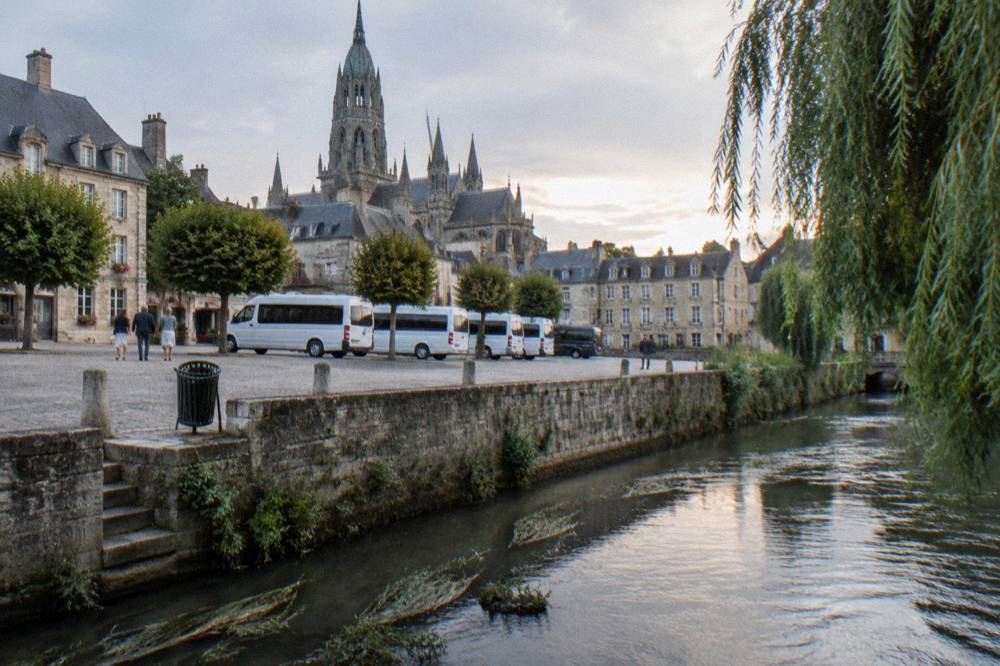
Most Bayeux tours meet at Place du Quebec, the square beside the river in the town center, though a few list pickup from selected Bayeux hotels instead; every departure point is stated on each tour page, and none of the Bayeux products collect from Paris. Knowing the pattern saves a cold wait on the wrong corner.
The full-day American-sector minivan tour from Bayeux meets at Place du Quebec, or at Bayeux station for visitors arriving on the 8h42 train, and the day ends back at Place du Quebec. Several other products, including the full-day American D-Day sites tour from Bayeux, from $213 per person with a maximum of nineteen passengers in Mercedes minivans, and the Band of Brothers full-day tour from Bayeux, from $157 per person with a licensed guide and headsets, both name Place de Quebec as the meeting point. The square is small, signed, and two minutes from the tourist office.
Half-day options use the same square. The morning Omaha half-day tour, from $112 per person, rated 5 from 260 reviews, visits Omaha Beach, the American Cemetery and Pointe du Hoc in four hours from Place du Quebec. That is a realistic choice for a traveler taking an afternoon train back to Paris: tour in the morning, the Battle of Normandy museum after lunch, cathedral before dinner.
One thing to plan around: Pointe du Hoc is in the middle of a restoration running into 2027. The visitor center is closed, and east-side paths, bunkers and the crater bridge close at times, with access sometimes limited to the west pathway. The site is free to enter and remains open, but no tour can promise a specific path on a specific day; the tour page and the ABMC page set what is open.
Is Bayeux Or Caen The Better Base?
Bayeux wins for the American sector, since its tours start closer to Omaha and Utah and the town itself is walkable, while Caen wins for the Commonwealth sector and museum-heavy itineraries, because the Caen Memorial anchors several tours that depart from its esplanade. The two towns are forty minutes apart by road and both sit on the Paris rail line, so the choice is about which beaches and which museums, not about convenience in the abstract.
Caen's strength is the Memorial. The Caen Memorial combination tour, from $169 per person, pairs a five-hour guided van tour of Pointe du Hoc, Omaha Beach and the American Cemetery with a museum entry ticket for a self-guided visit. The British and Canadian sector tours include a Gold Beach to Caen liberation tour from $169 per person and a private British sector day from $955 per group. The liberation tour also uses the Memorial as its meeting point, while the private British sector day collects you in Caen. A visitor whose interest runs to Gold, Juno or Sword will spend less time driving from Caen.
Bayeux's strength is proximity and atmosphere. It is smaller, quieter in the evenings, and its cathedral and old streets make the after-tour hours pleasant rather than dead. The practical comparison, with hotel and rail angles, is worked through in this piece on whether Caen or Bayeux is the better stay. For a first visit built around the American beaches, Bayeux is the easier call.
| Base town | Nearest major sector | Signature tours departing there | Rail time from Paris |
|---|---|---|---|
| Bayeux | American | Full-day minivan tour from $160, half-day from $106, Band of Brothers day from $157 | About 2h19 |
| Caen | Both, museum-led | Memorial combination from $169, Gold Beach liberation from $169, private British sector from $955 per group | About 2h |
How Many Days Should You Give Bayeux?
Two nights is the practical minimum, one full day for a beaches tour and one day for the town, and a third night opens the Band of Brothers sites, the British sector or a bike ride along Juno without rushing the museums. A single night works if the tour is the entire agenda. The Bayeux Tapestry Museum closed on 1 September 2025 for rebuilding and the new museum is due in autumn 2027, so give the spare hours to the cathedral, the Battle of Normandy museum or the old town.
The one-day version is tight but possible: a morning half-day tour from Place du Quebec covering Omaha and the cemetery, an afternoon in the old town or the cathedral, and an evening train back. The two-day version is the one most travelers should aim for. Day one on the full-day American-sector tour, day two for the Battle of Normandy museum, the Commonwealth cemetery and the old town, with a cathedral visit whenever the weather turns.
Day three is where the town's tour hub really pays off. The Band of Brothers full-day tour from Bayeux, rated 5 from 106 reviews, reaches Brecourt Manor, Sainte-Mere-Eglise and the airborne country that no Paris day trip can touch. The Juno and Gold Beach bike tour, a new option at from $247 per person departing from Courseulles-sur-Mer, adds a completely different pace to a third day, riding between the Juno Beach Centre, the Arromanches harbor remains and the British Normandy Memorial with a guide, a bike and a snack included.
What Does A Bayeux Trip Cost?
The tour itself runs between 106 and 394 dollars per person depending on group size and length, the train from Paris starts from about 17 euros booked ahead, and the Battle of Normandy museum costs 8.50 euros, so the shape of the budget depends almost entirely on the bed and the tour you choose. Measured against the equivalent days out of Paris, Bayeux removes the cost of the long coach round trip.
The biggest single variable is the tour. The shared options from Bayeux cluster between $106 and $213 per person, which is a different proposition from the fourteen-hour coach day from Paris at from $124, because you are not paying for the Paris round trip. The private step-up, from $394 per person for the private D-Day experience or from $790 per group for a private American beaches vehicle, suits families and anyone tracing a relative's unit. The budget detail, including the small daily costs that add up, is laid out in the Normandy trip cost guide. To see how the day actually unfolds, this hour by hour guide to a full day on the D-Day beaches covers everything from the morning departure to cemetery conduct, lunch, and which tour format suits your walking pace.
| Item | Typical figure | Basis |
|---|---|---|
| Train Paris to Bayeux | From about 17 euros | Advance fare, about 2h19 each way |
| Battle of Normandy museum | 8.50 euros | Adult, reduced 6.50, veterans free |
| Half-day beach tour from Bayeux | From $106 per person | Afternoon minivan trip, 5 hours |
| Full-day beach tour from Bayeux | From $160 per person | Small-group minivan, 9 hours, meets at Place du Quebec |
| Private full-day experience | From $394 per person | Private minivan up to 7 |
Whether the town justifies the journey comes down to what you want from Normandy. If the answer is the beaches, Bayeux is not merely worth visiting, it is the place the tours are built around. A traveler can sleep in the old town, walk to a departure square in the morning, stand at Omaha and Pointe du Hoc by midday, and spend the evening beneath a cathedral that stood long before the armies came ashore. Few towns that size carry that much weight on both sides of 1944.
Common Questions About Visiting Bayeux
Can you visit the D-Day beaches from Bayeux without a car?
Yes. Numerous shared minivan and van tours depart from Place du Quebec or collect from selected Bayeux hotels, covering the American sector in half-day and full-day formats. The town itself is walkable, and the Paris train arrives close to the center.
How far is Bayeux from Omaha Beach?
Omaha Beach and the Normandy American Cemetery are a short drive west of Bayeux, typically under half an hour on tour itineraries. Utah Beach and Sainte-Mere-Eglise lie farther west, which is why full-day tours from Bayeux run about eight to nine hours.
Is one day in Bayeux enough?
One day covers either the beaches or the town, not both comfortably. A morning half-day tour plus an afternoon visit to the cathedral, the Battle of Normandy museum or the old town is possible, but two days, one for a tour and one for the town, is the practical minimum most travelers enjoy.
What is there to do in Bayeux while the Bayeux Tapestry museum is closed for rebuilding?
The Gothic cathedral, the Museum of the Battle of Normandy at 8.50 euros for an adult, the Commonwealth war cemetery, and the old town's streets and waterwheels. The Bayeux Tapestry guide here details the famous work, which is off view in Bayeux until the rebuilt museum opens in autumn 2027.