What Does D Stand For In D-Day?
The D in D-Day simply stands for Day, a military placeholder used for any planned operation date, and it was in use long before 6 June 1944.
The most searched question about the Normandy landings is not about tanks or tides. People type it because the term looks like a cipher, and the answer that comes back from every serious history source is stranger than a code word: the D stands for Day, and that is the whole secret.
The Letter D Simply Means Day
The D in D-Day stands for Day, and the redundancy is the point. D-Day is the military shorthand for the day an operation begins, paired with H-Hour for the hour it starts, a system the US Army used for planning decades before the Normandy landings. The letter was a placeholder so orders could be written before the date was fixed.
That is the standard explanation, the one given when the question is put directly: the D is a variable, an alliterative marker meaning the day of a planned action, and every other lettered explanation that circulates, departure, decision, doom, debarkation, is a later folk invention. The National D-Day Memorial makes the same point in its educational material. When planners wrote "D minus 2" they meant two days before the assault, and "D plus 3" meant three days after it, whatever the calendar date turned out to be.
The paired expression works the same way with hours. H-Hour is the hour the attack begins, so H minus 30 is half an hour before the first boats touch the beach. This let the enormous Normandy machine be sequenced on paper well before the calendar date was chosen, with thousands of units, ship movements and supply drops timed against a day nobody had picked yet, because the date depended on moonlight, tides and weather.
For the operation that became the Normandy landings, D-Day was 6 June 1944, and H-Hour on the American beaches fell in the early morning. The term survived into the postwar vocabulary because this D-Day became the most consequential one, and because reporters filing copy in June 1944 used the shorthand their briefings gave them. For readers whose curiosity stops at the definition and turns toward seeing the coast, the featured Paris day trip, a 14-hour guided coach tour from $124 per person rated 4.8 across 10,452 reviews, covers Utah Beach, Pointe du Hoc, Omaha Beach and the American Cemetery with a two-course lunch and free cancellation listed.
Why Was 6 June 1944 The Day?
The date was fixed by nature, not symbolism. The landings needed a late-rising moon for paratroopers, a low dawn tide to expose German beach obstacles, and enough daylight after for follow-up waves, and 5 June was the first date in June 1944 that qualified. A 24-hour weather delay pushed the operation to 6 June, which then became the D-Day of the war.
General Eisenhower's staff had narrowed the requirements to a small set of June dates, and the forecast for 5 June deteriorated badly enough that the fleet, already partially at sea, was recalled and held. A predicted window of marginal improvement on the 6th was enough. The Germans, reading the same worsening weather, expected nothing, and the German high command's assessment that an invasion in those conditions was unlikely is one of the more consequential misjudgments of the war.
On the day itself, about 160,000 Allied troops came ashore or dropped inland, including about 73,000 Americans, along a front divided into five named beaches. The National WWII Museum is the standard source for those landing figures and for the casualty estimates historians still debate, since no single official tally exists for the single day.
Visitors tracing the timeline on the ground usually start where the landings started. From Bayeux, the half-day morning tour to Omaha Beach, Pointe du Hoc and the American Cemetery, from $112 per person and rated 5 from 260 reviews, follows the first hours of the American assault, while the Canadian story is told from Courseulles-sur-Mer on a four-hour guided bike tour from $247 per person that links the Juno Beach Centre with the British Normandy Memorial at Ver-sur-Mer.
Was Normandy The Only D-Day?
No, and this is where the placeholder reading is confirmed rather than weakened. The US Army used D-Day language in earlier operations, including the Saint-Mihiel offensive in World War I and the landings on Sicily and in the Marshall Islands earlier in World War II. Normandy's D-Day became the D-Day only through scale and consequence, not by definition.
In print archives from both world wars, D-Day and H-Hour appear as routine staff vocabulary, no more dramatic than a modern project's "go live date." The World War I usage is well documented in Army orders for Saint-Mihiel, and war reporting from the Pacific theater earlier in World War II casually mentions the D-Day of a given island landing. The National D-Day Memorial's educational pages walk through these earlier uses, and the Center of Military History's own note on the abbreviation records that the office was asked the question so often it kept a standing answer.
What made the shorthand stick to Normandy was the sheer size of the event, the largest amphibious operation ever attempted, and the fact that postwar culture kept returning to it. Every later use of "D-Day" in books and films borrows the gravity of 6 June 1944. English speakers say "it was their D-Day" about surgery or exams, and that metaphor only works because one Tuesday in June on the French coast absorbed the term permanently.
For travelers who want the full arc of the day, from the airborne drops inland to the afternoon push off the beaches, the American Beaches and US Airborne full-day tour from Bayeux, from $157 per person, rated 4.9 from 100 reviews, lists stops at Sainte-Mère-Église, the Airborne Museum, Utah Beach, Pointe du Hoc, Omaha Beach and the cemetery, with entry tickets to the Airborne Museum included.
What Do The Beach Code Names Mean?
The five beach names, Utah, Omaha, Gold, Juno and Sword, were arbitrary code words drawn from a standard Allied naming system, not descriptions of the ground. Utah and Omaha were the American sector, Gold and Sword British, and Juno Canadian, and the names existed purely to keep the invasion plan off enemy intercepts before the day itself.
The code words carried no meaning beyond secrecy, which is why a fishing port, a farming coast and a resort town all received names that told an eavesdropper nothing. Once the landings succeeded, the code names replaced geography permanently, and that is why the world says "Omaha Beach" rather than the village names of Saint-Laurent-sur-Mer and Colleville-sur-Mer that French maps had used for centuries. The rest of the planning pages sit on Normandy D-Day Tour.
| Beach | Sector | What It Is Known For Today |
|---|---|---|
| Utah | American | Utah Beach Museum, adult 10 euros, and Sainte-Mère-Église's Airborne Museum, adult 11.50 euros |
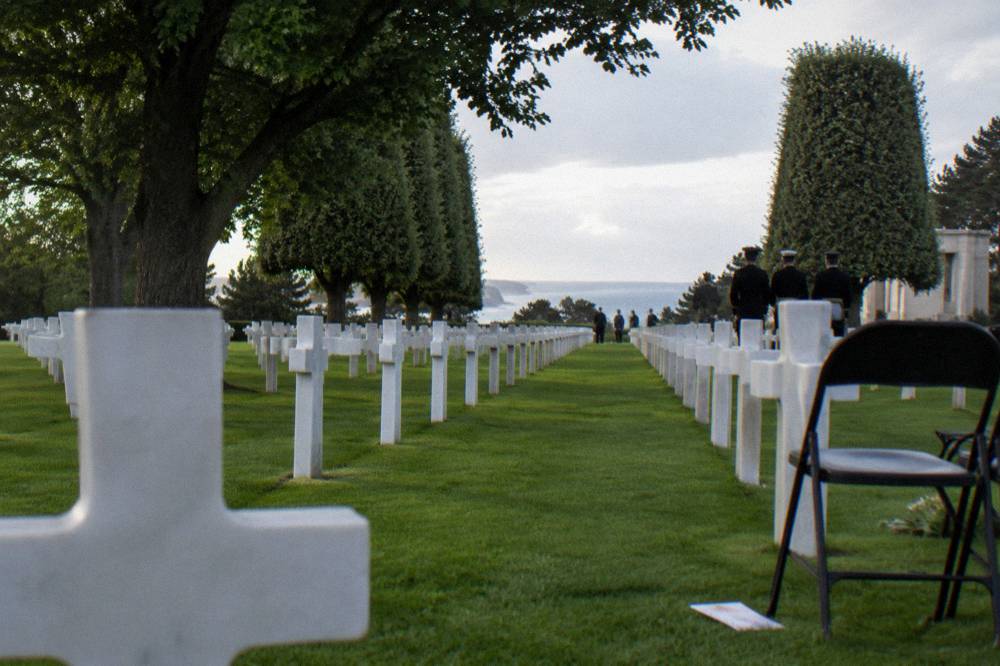
| Omaha | American | The American Cemetery at Colleville-sur-Mer, free and open daily 09:00 to 17:00, and the Overlord Museum, adult 9.90 euros |
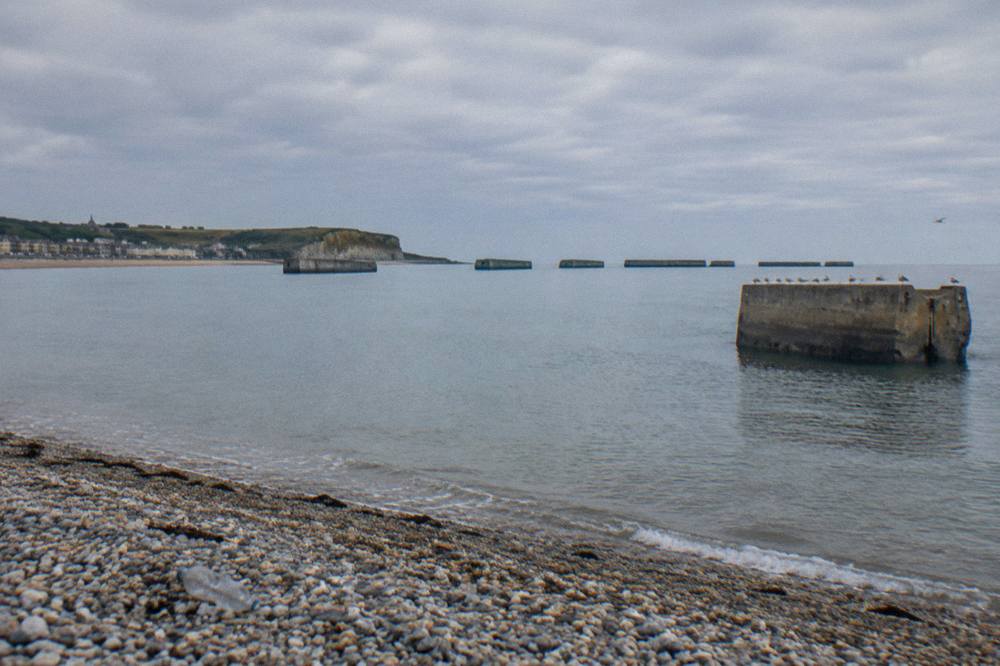
| Gold | British | Arromanches, the remains of the artificial Mulberry harbor visible from the shore, and the Musée du Débarquement, adult 12.90 euros |
| Juno | Canadian | The Juno Beach Centre at Courseulles-sur-Mer, adult 9 euros, closed in January |
| Sword | British | Ouistreham and the Pegasus Bridge area |
The British and Canadian beaches have gained visibility fast in recent years, helped by the British Normandy Memorial, which has become a regular stop on Gold sector itineraries. A four-hour guided tour from the Caen Memorial, from $169 per person, covers Arromanches, the British memorial and the Bény-sur-Mer Canadian cemetery with a certified Memorial guide, and its museum ticket can be used on the same day or a later one, which suits visitors building their own two-day plan. Readers weighing towns against each other can start with the question of Caen or Bayeux as a base, since the two anchor the opposite ends of the landing coast.
How Did The Term D-Day Become So Famous?
The shorthand went global through wartime reporting and then postwar film. Correspondents embedded for the landings used the planning vocabulary they were given, and the film The Longest Day, followed decades later by Saving Private Ryan, fixed 6 June 1944 as the D-Day in the popular imagination, displacing every earlier D-Day the Army had planned.
Saving Private Ryan in particular reattached the term to one stretch of sand. Its opening sequence put Omaha Beach in front of audiences who had never read a page about the invasion, and the film still sends visitors to the coast. The site's companion piece on Saving Private Ryan filming locations in Normandy covers what the film got right, what it compressed, and which real sites appear in it, and it is worth separating Hollywood's timeline from the documented one, since the film's claims are drama, not history.
The annual commemorations now do as much as cinema to keep the date alive. At the 82nd anniversary ceremony at the Normandy American Cemetery, 29 World War II veterans attended as guests of honor, and regional programming around early June has grown into a week of parades, airborne ceremonies and vehicle exhibitions centered on Sainte-Mère-Église and the beach towns. Attendance pressure is real: accommodation around Bayeux and Caen books out months ahead for anniversary week, and roads along the N13 corridor close repeatedly during the ceremonies.
Where Can You See The Day The Letter Stood For?
The landing coast runs along some 50 miles of Norman shoreline between Utah Beach in the west and Sword Beach in the east, and every site tied to 6 June 1944 is visitable today. Guided tours run from Paris, from Bayeux and Caen, from the cruise ports of Le Havre and Cherbourg, and as private trips, with the museum anchors at Utah Beach, Arromanches and Caen open most of the year.
How many days you need depends on how many sectors you want. A single well-chosen day covers the American sector, and a second day adds Gold, Juno and Sword, as the site's guide to how many days to spend in Normandy breaks down. Travelers who prefer to go alone will find the beaches themselves public and free, which the piece on visiting the D-Day beaches without a tour sets out in full.
The practical split by starting point looks like this:
| Starting Point | Typical Format | Example Tour | Price Basis |
|---|---|---|---|
| Paris | Full-day coach, about 14 hours | D-Day sites and cemetery day trip with lunch, 4.8 from 10,452 reviews | from $124 per person |
| Bayeux | Half or full day, small group up to 8 | American beaches full-day tour, 4.9 from 2,637 reviews | from $160 per person |
| Bayeux | Full day, up to 16 | Omaha and Utah beaches tour, 5 from 1,448 reviews | from $174 per person |
| Caen | Five-hour van tour with Memorial ticket | Guided D-Day sites tour and museum entry, 4.8 from 570 reviews | from $169 per person |
| Le Havre cruise port | Shore excursion, up to 45 | UNESCO D-Day beaches tour with packed lunch, 4.9 from 512 reviews | from $102 per person |
Two of the Bayeux options deserve a closer look for first-time visitors. The American beaches full-day tour from Bayeux runs about 9 hours in a minivan of up to 8, meets at Place du Québec in central Bayeux, and lists Sainte-Mère-Église, Utah Beach, Pointe du Hoc, Omaha Beach and the cemetery among its stops, at from $160 per person with free cancellation. The Omaha and Utah beaches tour, from $174 per person, carries up to 16 guests in a shared vehicle from Place du Québec and holds a 5 rating from 1,448 reviews, the highest rating among the larger Bayeux tours.
Visitors with a family connection, or simply a fixed idea of what they want to see, are often better served by a private guide, and the site's comparison of private versus small group tours walks through the trade-off. The private D-Day experience from Bayeux, from $394 per person for up to 7 with a 5 rating from 638 reviews, includes hotel pickup and drops in Angoville-au-Plain, a stop most shared itineraries skip, while the Band of Brothers full-day tour from Bayeux, from $160 per person, follows Easy Company's story to Brecourt Manor for fans of the series.
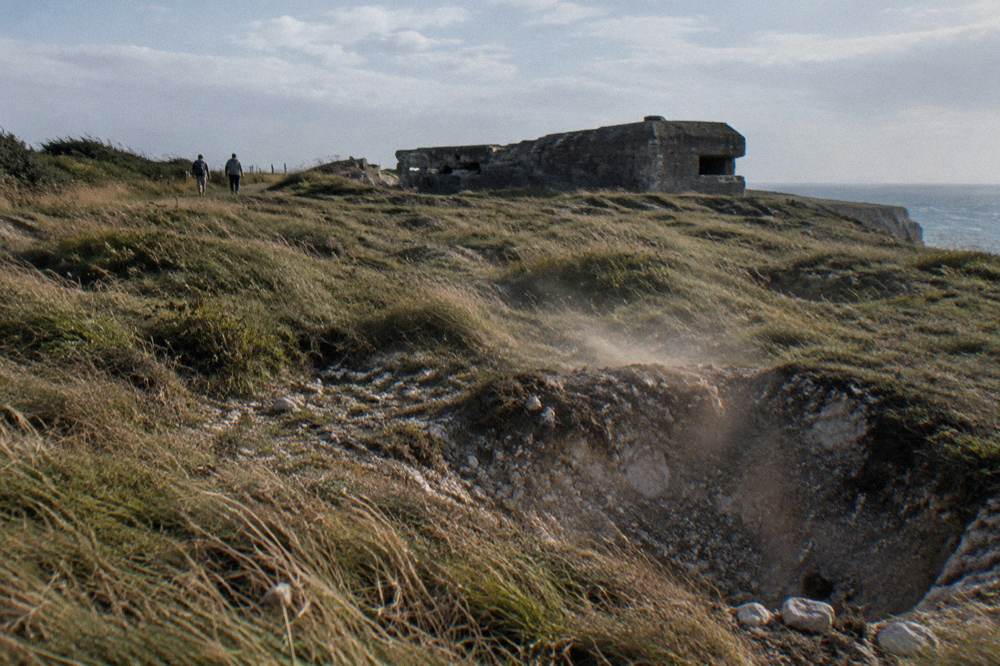
However the visit is built, it lands on the same quiet arithmetic. The D in D-Day stood for nothing but the day itself, and the day itself has become one of the most visited stretches of coast in Europe, with roughly 1.8 million visitors a year walking the corridor before any recent anniversary surge. That is the full circle: a bureaucratic placeholder, chosen so orders could be typed early, now names a place people cross an ocean to stand on.
Common Questions About The Term D-Day
Was 6 June 1944 the first D-Day?
No. The US Army used the abbreviation in World War I at Saint-Mihiel and in earlier World War II operations including Sicily. Normandy became the famous D-Day through its scale and its consequences.
What does H-Hour mean?
H-Hour is the hour an operation begins, the time-based twin of D-Day. Times were counted from it, so H minus 30 meant thirty minutes before the first landings and D plus 1 meant the day after.
Why were the beaches named Utah, Omaha, Gold, Juno and Sword?
The names were arbitrary code words from the Allied naming system, chosen to keep the invasion plan unreadable if intercepted. Utah and Omaha were the American sector, Gold and Sword British, and Juno Canadian.
Is D-Day the same as the Battle of Normandy?
No. D-Day is 6 June 1944, the day of the landings. The Battle of Normandy is the wider campaign that followed on through August 1944, which is what the Bayeux Museum of the Battle of Normandy covers.